The 2026 Australian Grand Prix marked the debut of the Cadillac Formula 1 team, a race marred by controversy as other teams resisted sharing a portion of the lucrative commercial revenue distributed by the championship. In reality, Cadillac is the first new team to join the Formula 1 grid since Haas arrived in 2016. Therefore, we decided to compare their debut performance to that of the last ten teams that arrived with a completely new structure (excluding cases like Brawn GP, Toro Rosso, Red Bull, and others that were continuations of existing teams through acquisitions, renamings, etc.). To complete the top 10 teams, we had to go back more than 30 years, using the average of two criteria to rank the teams’ debuts: percentage difference from the pole-position time in the debut race, and final classification in the debut race. With this, we defined the surprising ranking below:
10. Mastercard Lola Formula One Racing Team – Lola T97/30 Ford
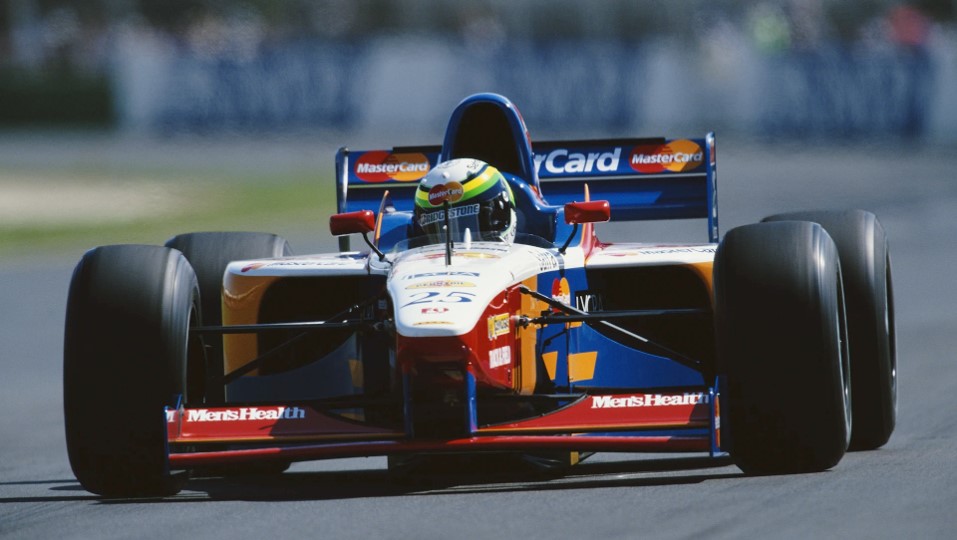
In the 1997 season, one of the most infamous projects in the category’s recent history emerged: the MasterCard Lola Formula One Team, the result of a partnership between the traditional British manufacturer Lola and the credit card company MasterCard. Initially planned for 1998, due to pressure from Mastercard, the T97/30 was hastily built and arrived at the championship opener in Australia completely unprepared. In qualifying, the team recorded a staggering 112.98% deficit compared to pole position, far exceeding the 107% limit allowed by the rule. Unable to start a single race, the project was abandoned immediately after its debut.
9. Hispania Racing F1 Team – Hispania F110 Cosworth
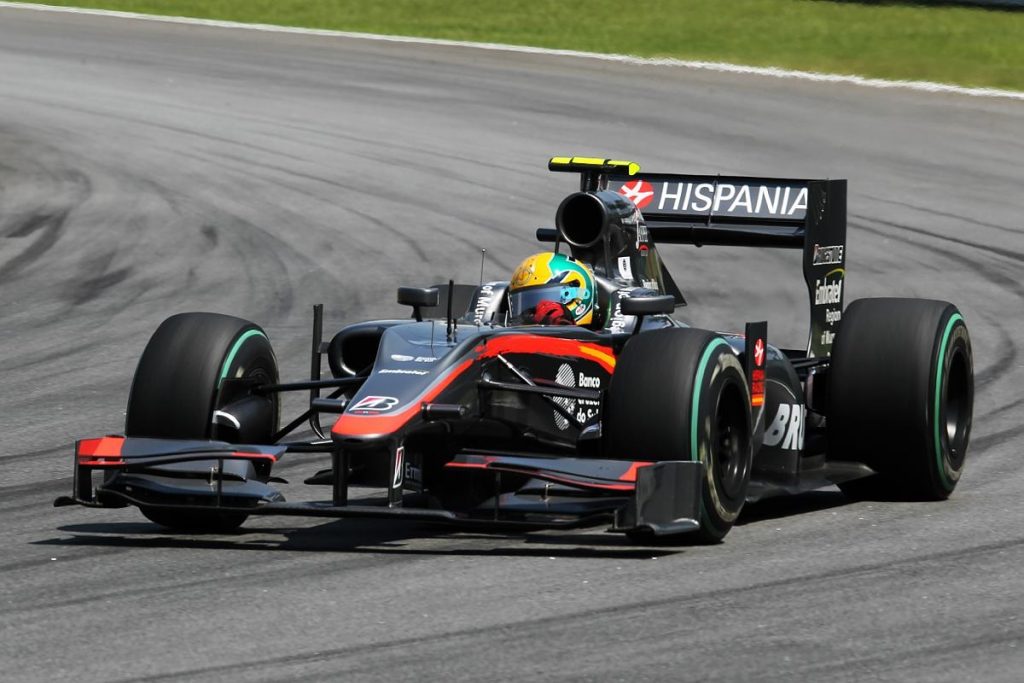
The large expansion of the grid in 2010 brought three new independent projects, under the premise of a spending cap that would only be implemented more than a decade later. One of the newcomers was the modest Hispania Racing Team (HRT), born from the ashes of Adrian Campos’ Campos Meta F1, which suffered from financial problems even in the pre-season and was saved by José Ramón Carabante just two weeks before the start of the championship. As a result, the team arrived at the first race practically without testing and used a chassis hastily designed by the Italian company Dallara. The structural difficulties were evident: the team’s best car, driven by Bruno Senna, was 108.01% of the time on pole position. None of the Hispania cars finished the race, with Bruno Senna completing only 17 laps for what would have been a hypothetical 19th place.
8. Japan Super Aguri F1 Team – Super Aguri SA05 Honda
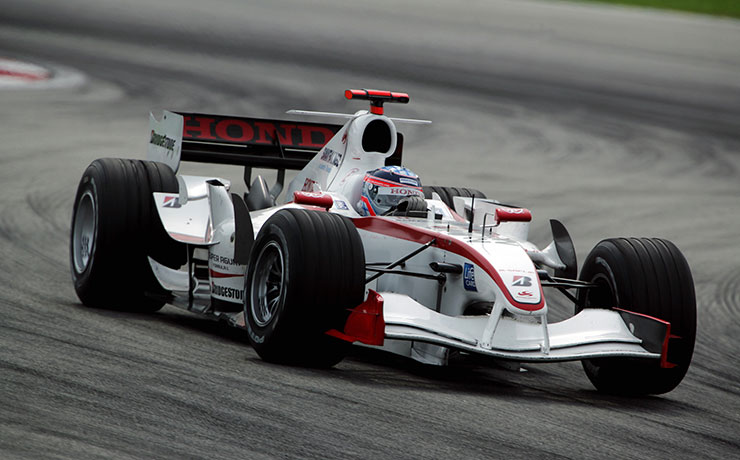
In 2006, the Super Aguri F1 Team emerged, a project created by former Japanese driver Aguri Suzuki with strong support from Honda. The team was hastily formed to get Takuma Sato back on the grid and initially used a chassis adapted from the 2002 Arrows A23. With an already old car adapted to the new regulations, a small structure, and limited resources, its debut performance was limited: in qualifying, the fast Takuma Sato was 106.54% off the pole position time and only managed 18th place overall. Even so, the team would become known for heroic moments in subsequent seasons.
7. Parmalati Forti Ford – Forti Corse FG01
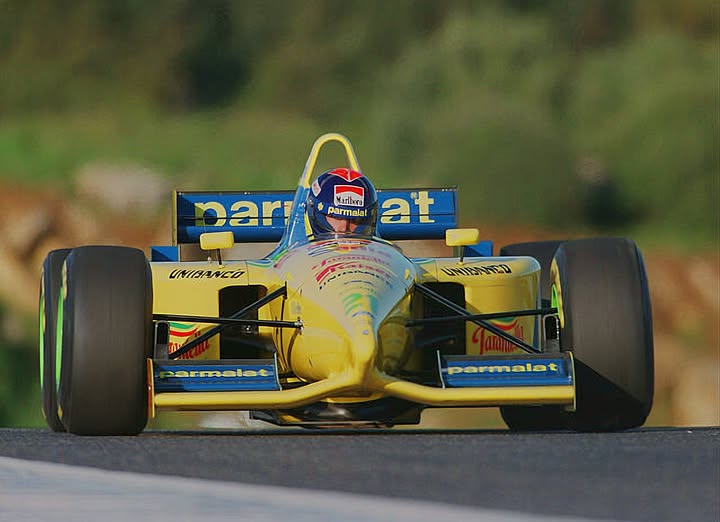
In the early 1990s, the small Italian racing team Forti Corse decided to take a bold step towards Formula 1. After years competing in junior categories, the team of Guido Forti and Paolo Guerci built the FG01 for the 1995 season. The car used a Ford-Cosworth ED V8 engine and was driven by Roberto Moreno and Pedro Diniz. In qualifying, Forti’s best car, driven by the inexorable Roberto Pupo Moreno, achieved 108.18% of the time on pole position and secured a 10th place finish with Pedro Paulo Diniz’s car at the Brazilian Grand Prix. Despite its modest structure, the team managed to regularly qualify on the grid, although it did not score any points during its debut season.
6. Virgin Racing – Virgin VR01 Cosworth
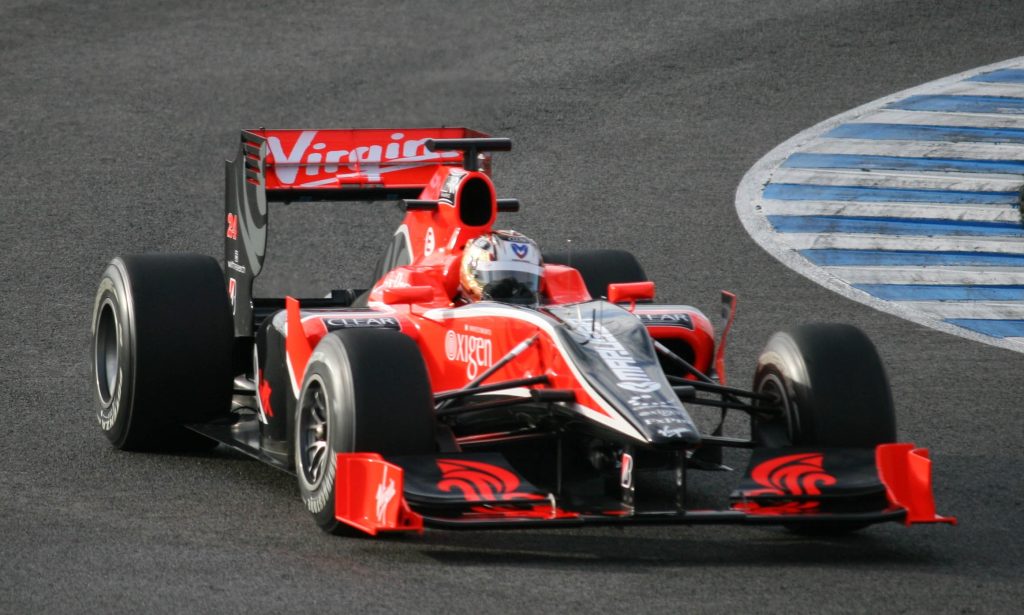
Another newcomer in the 2010 season was Virgin Racing, created by Richard Branson in partnership with engineer Nick Wirth. The VR-01 car attracted attention for having been developed almost exclusively using CFD, without extensive use of a wind tunnel. The innovative approach did not bring immediate performance: the team recorded a time with Timo Glock that was 104.93% worse than the pole position, and the best-placed car in the Bahrain GP was also Timo Glock’s, retiring from the race after only 16 laps in a virtual 20th position.
5. Cadillac Formula 1 Team – Cadillac MAC-26 Ferrari
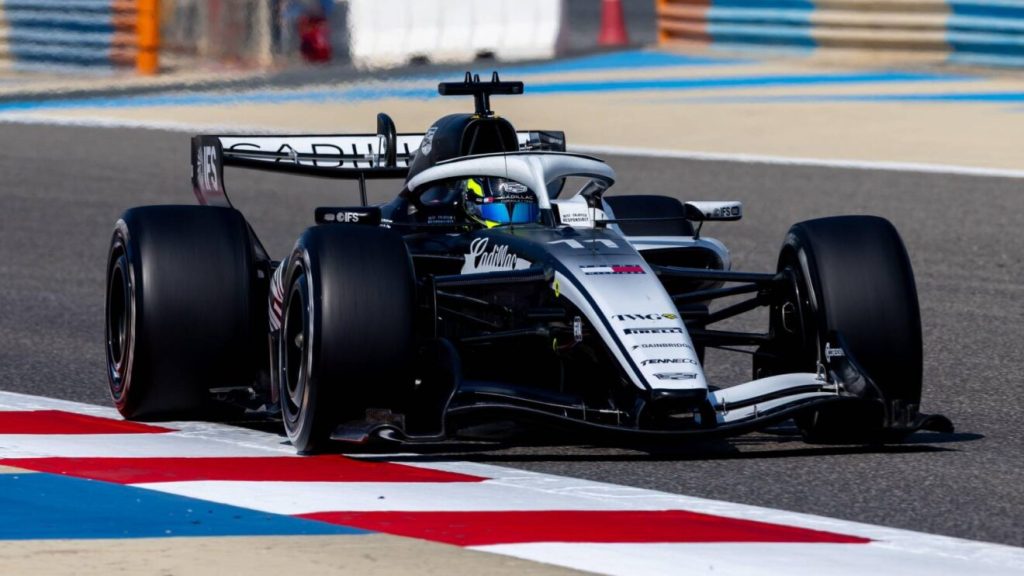
The most recent Formula 1 debutant was the Cadillac F1 Team, as part of a project supported by General Motors. At the Australian Grand Prix, the team’s best car, driven by Sergio Perez, qualified 105.21% off the pole position time. Only the Mexican driver finished the race for Cadillac, in 16th and last place, 3 laps behind George Russell’s Mercedes.
4. Lotus Racing – Lotus T127 Cosworth
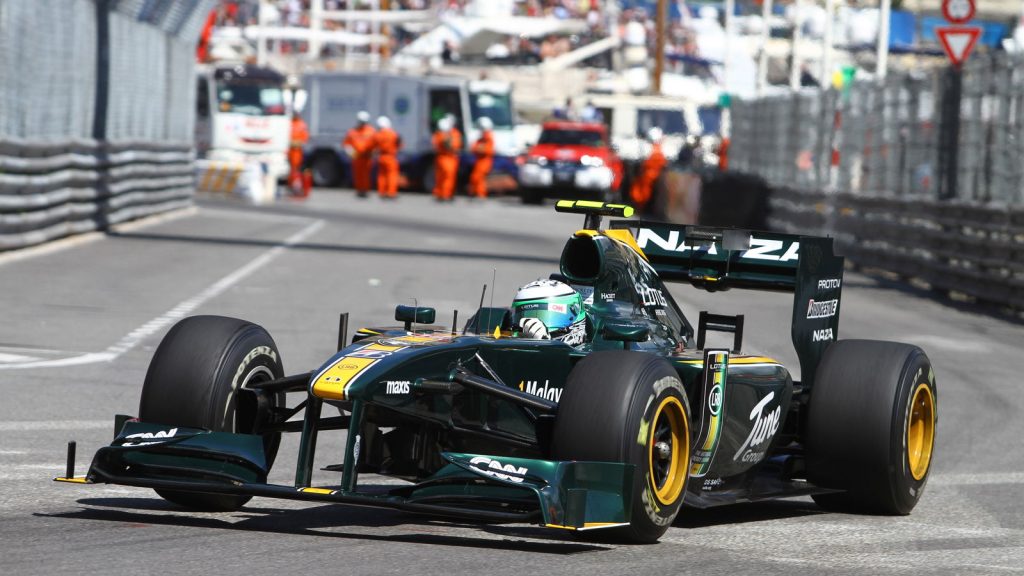
Another newcomer in 2010 was Lotus Racing, which had no connection to Colin Chapman’s legendary Team Lotus. With a Cosworth engine and its own chassis, the car showed similar performance to its direct rivals among the rookies, with Jarno Trulli’s car qualifying in 20th position, 105.04% of the pole time. In the race, only the Lotus cars finished among the smaller teams, with Heikki Kovalainen finishing in 15th position, two laps behind Fernando Alonso’s Ferrari.
3. Haas F1 Team – Haas VF-16 Ferrari
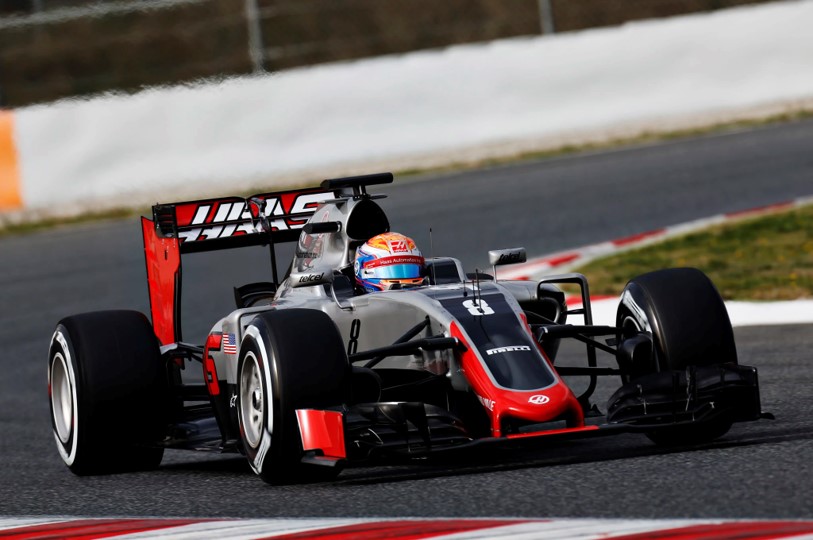
In 2016, the Haas F1 Team debuted, the first American team of the modern Formula 1 era. Unlike other newcomers, Gene Haas’s team adopted a technical model based on a strong partnership with Ferrari, using several components supplied by the Scuderia. In qualifying, the VF-16 had a modest performance, with Romain Grosjean setting a time equivalent to 105.35% of the pole position, but surprising everyone with a sixth place in the final classification.
2. HSBC Malaysia Stewart Ford – Stewart SF01 Ford
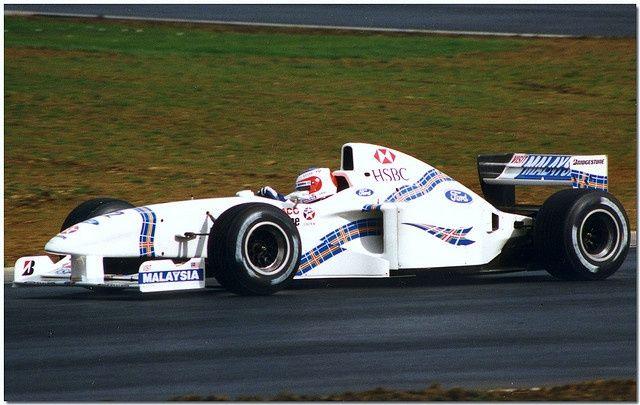
In 1997 came the ambitious Stewart Grand Prix team, founded by three-time world champion Jackie Stewart and his son Paul. Unlike many newcomers, the project was born with strong support from Ford and a professional structure from the start. The first car, the SF01 with a Ford-Cosworth engine, showed promising speed, with Rubens Barrichello recording a time equivalent to 104.15% of Jacques Villeneuve’s pole position. In the final classification, Barrichello retired after 49 laps, in what would have been 11th place.
1. Panasonic Toyota Racing – Toyota TF102
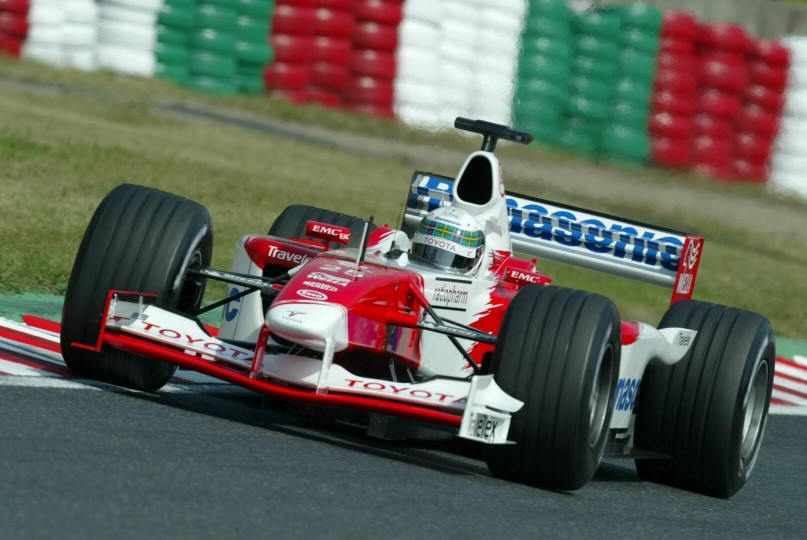
In the early 2000s, the Japanese giant Toyota F1 Team decided to invest heavily in Formula 1 with a completely new project. The team built a modern factory in Cologne, Germany, and developed the chassis and engine in-house. The debut took place in 2002 with the TF102, driven by Mika Salo and Allan McNish, but the preparation was extremely meticulous: in 2001 the team built a car, the TF101, and completed almost 23,000 kilometers of testing on 11 Formula 1 championship tracks in addition to Paul Ricard. Even as a debut, the car demonstrated reasonable competitiveness, with Mika Salo qualifying in 14th position with a time equivalent to 103.92% of the pole position time and a surprising 6th place finish.
Sources:
2026 Australian Grand Prix. Available at: https://en.wikipedia.org/wiki/2026_Australian_Grand_Prix
LXXXI Rolex Australian Grand Prix. Available at: https://www.chicanef1.com/racetit.pl?year=2016&gp=Australian%20GP&r=1.
VII Gulf Air Bahrain Grand Prix. Available at: https://www.chicanef1.com/racetit.pl?year=2010&gp=Bahrain%20GP&r=1
III Gulf Air Bahrain Grand Prix. Available at: https://www.chicanef1.com/racetit.pl?year=2006&gp=Bahrain%20GP&r=1.
LXVII Foster’s Australian Grand Prix. Available at: https://www.chicanef1.com/racetit.pl?year=2002&gp=Australian%20GP&r=1.
LXII Qantas Australian Grand Prix. Available at: https://www.chicanef1.com/racetit.pl?year=1997&gp=Australian%20GP&r=1.
XXIV Grande Prêmio do Brasil. Available at: https://www.chicanef1.com/racetit.pl?year=1995&gp=Brazilian%20GP&r=1.