In 1994, the famous driver Francisco “Chico” Lameirão and the engineer Lauro Carneiro Neto founded CLR (Chico Lameirão Racing) with the goal of designing and manufacturing a Brazilian Formula 3 car in partnership with Embraer, the CLR F3 Embraer. A 1:2.5 scale model was even tested in the CTA wind tunnel with promising results, but the privatization of Embraer prevented the project from continuing. The company continued preparing cars for third parties and successfully manufacturing karts for various competitions, until in 1998 a partnership began with Chamonix to develop a racing car based on the 550 S, a replica of the legendary Porsche 550 from the 1950s.
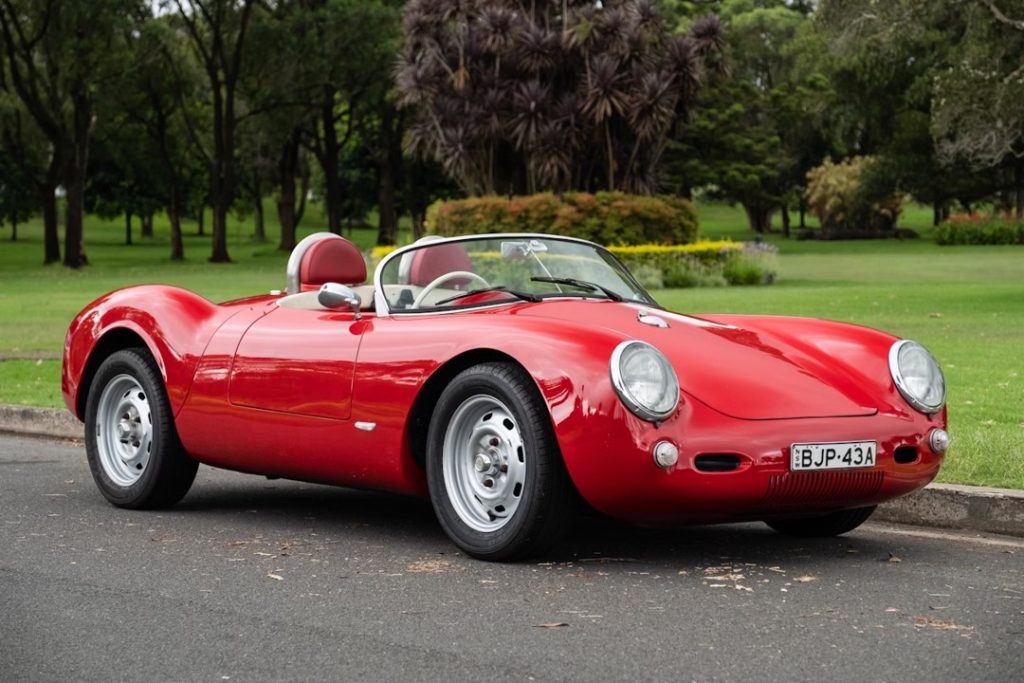
The CLR 550 was developed with the support of design engineer Ricardo Bock, coordinator of the Automotive Engineering course at the Faculty of Industrial Engineering (FEI) in São Bernardo do Campo, and received new aerodynamics developed through computer simulation at Anglia Politech.
Following the wing-car principle, the lower part of the car consists of a wing with a chord of 4.25 meters inserted into a 60-centimeter-wide channel, with an extractor in the rear section of the bodywork.
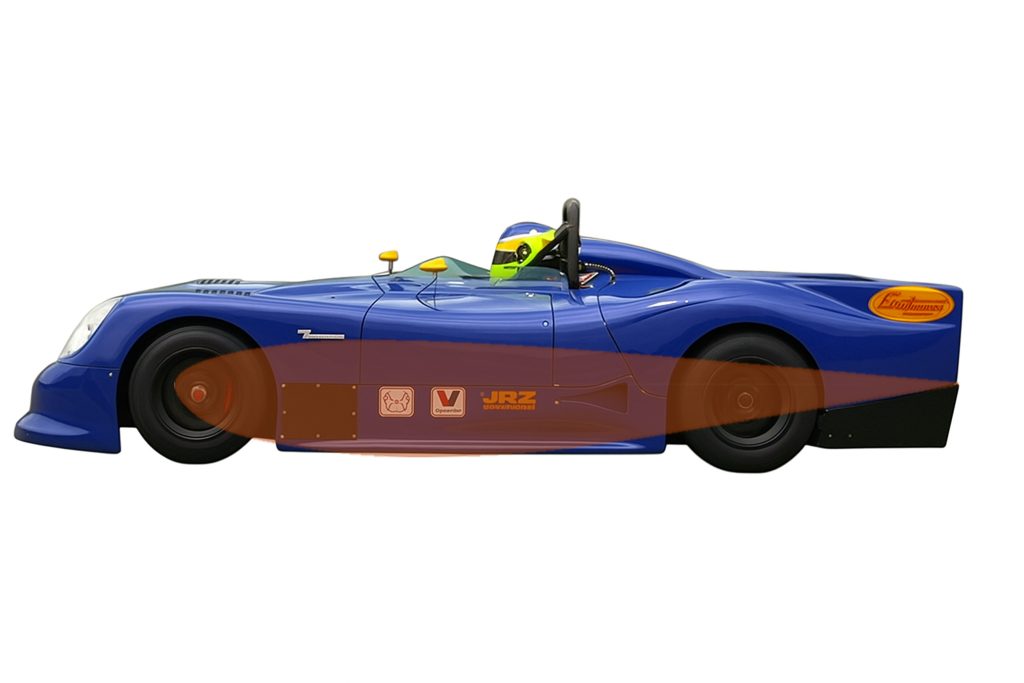
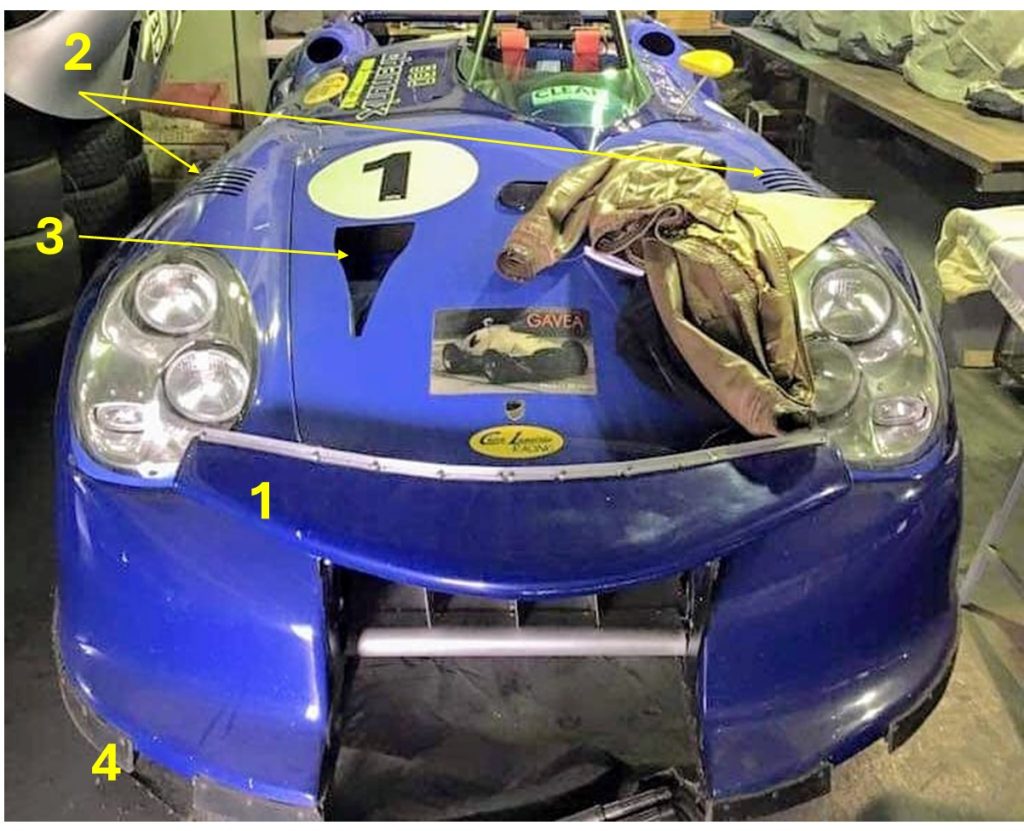
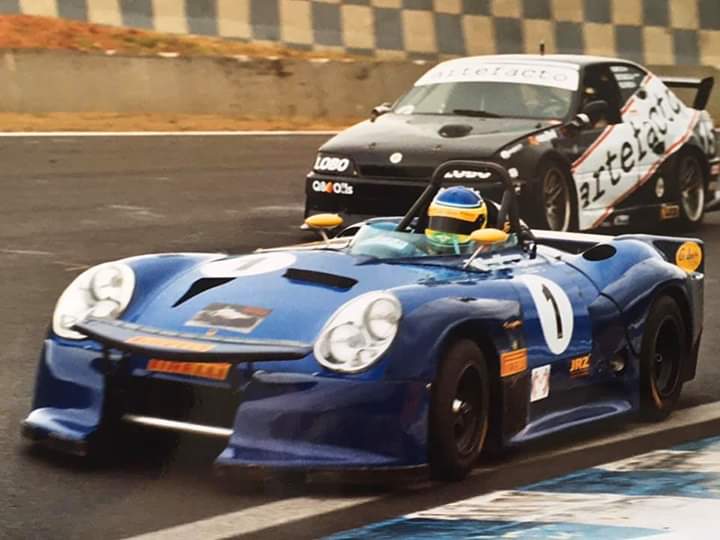
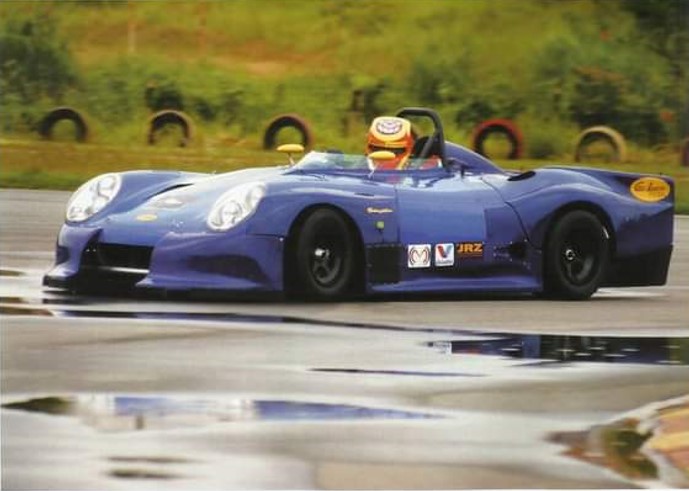
All the fiberglass bodywork was developed with aerodynamic optimization in mind, such as the convex mirrors and the “V” radiator that make up the aerodynamic package of the car. During development, CLR even equipped the prototype with a small front wing (1). The headlight assembly was also modified, and louvres (2) were added above the front fenders as well as a Naca duct in the hood (3) and skirts to seal the aerodynamic floor (4).
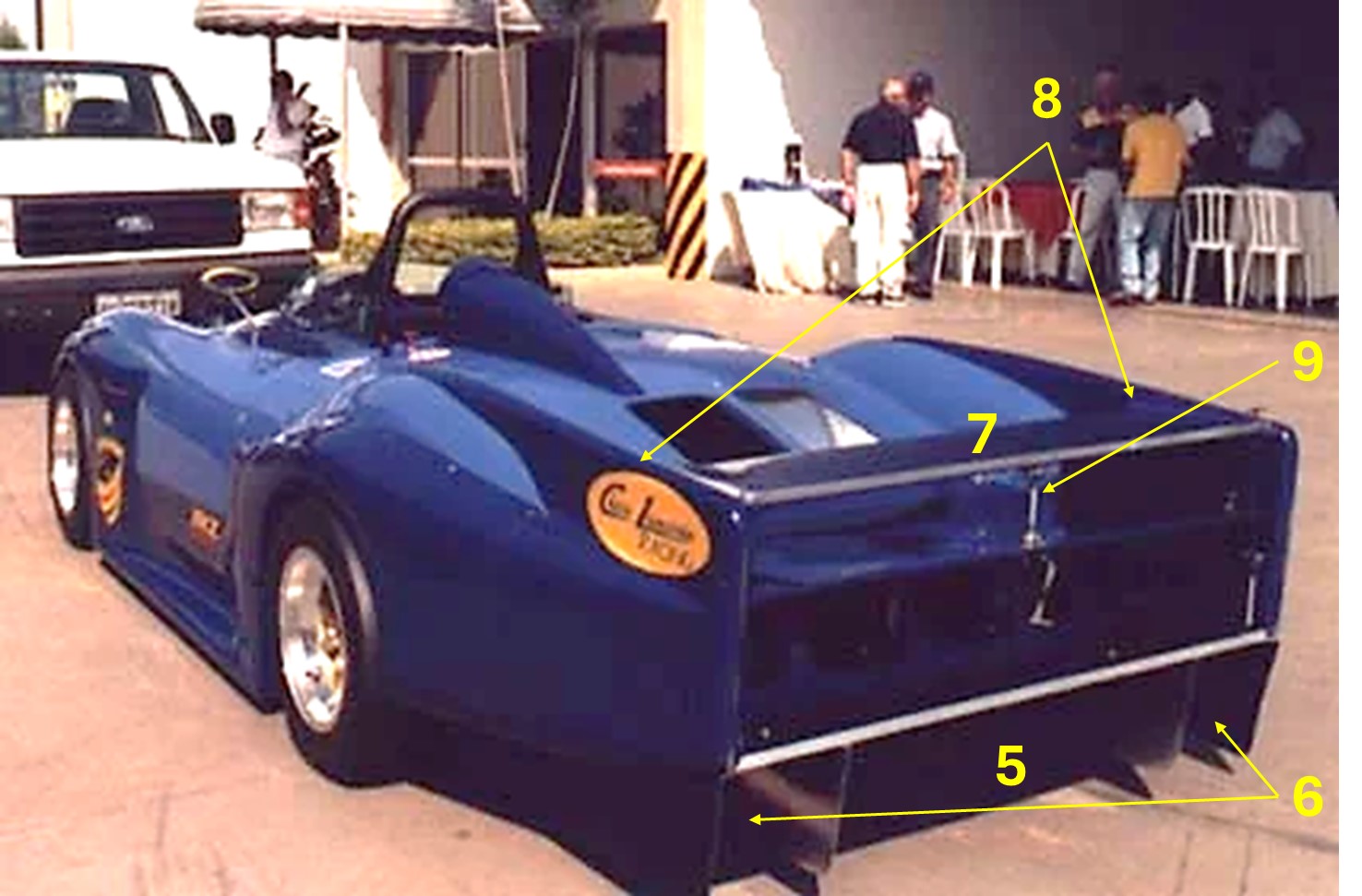
In relation to the standard 550, the rear section was lengthened to allow for longer tunnels, and in addition to the tunnel exits leading into a diffuser with separation into three visible sections: 1 large central section (5) and two lateral areas (6) to separate the flow coming from the rear wheel wells. Furthermore, a single-element airfoil (7) was added with two lateral strakes (8) on the bodywork also functioning as wing endplates, which also has a small central support (9).
The chassis is a tubular chrome-molybdenum steel frame with a 90-liter fuel tank. The suspension maintained a similar layout to the 550 S, with semi-trailing double wishbones at the front and De Dion type at the rear, with adjustable JRZ shock absorbers on all four wheels, Brembo brakes from the Porsche 911 GT2 and Pirelli PZero 265-540-13 tires at the front and 235/45 VR 13 at the rear.
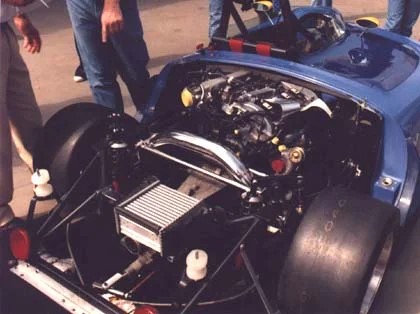
The chosen engine was an Audi 1.8 Turbo with a turbo pressure of 1.0 kgf/m³, tuned to produce 270 hp and coupled to a 5-speed Audi Tipo 013 transmission from the Volkswagen Santana. This combination resulted in a weight of 550 kg (a good reduction compared to the already meager 680 kg of the street-legal 550 S), and in this configuration, the top speed for the 550 CLR was estimated at 270 km/h.
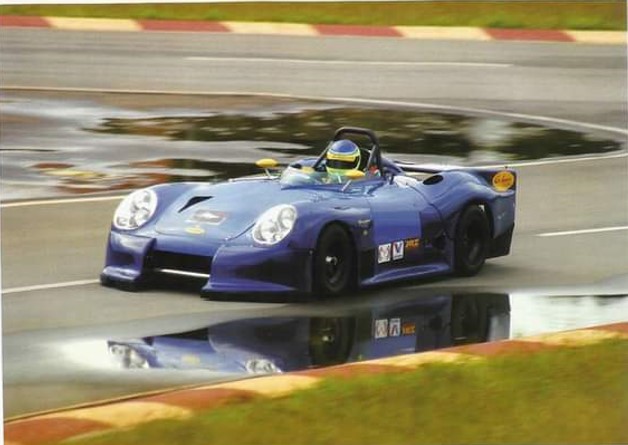
The plan was to enter the 550 CLR in the Mil Milhas race in 2003, but its track debut would come a few months later, in the traditional 500 Kilometers of Interlagos. Drivers César Urnhani and William Freire were entered in Class I (for FIA GT1/GT2, DTM models and prototypes with turbocharged or naturally aspirated engines over 2 liters). In qualifying, the duo recorded a time of 1m49s642, finishing 30th overall and 13th in their class. In the race, they retired after only 13 laps, finishing 50th based on the number of laps completed.
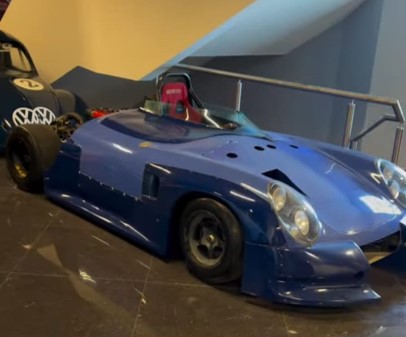
Unfortunately, the lack of sponsorship meant that the prototype could not be further developed, and consequently, it became outdated compared to the new prototypes and GTs that were arriving on Brazilian racetracks. Currently, the car rests at the Brazilian Automobile Museum in Passo Fundo, Rio Grande do Sul.
Sources:
Chamonix. Available at: https://www.autolivraria.com.br/classicos/chamonix-2.htm.
CLR. Available at: https://www.lexicarbrasil.com.br/clr/.
Grandes feras: Entrevista com Francisco Lameirão. Available at: http://www.speedonline.com.br/public_html/montatela.php?t=news&sql_query=11768.
You might also be interested in:
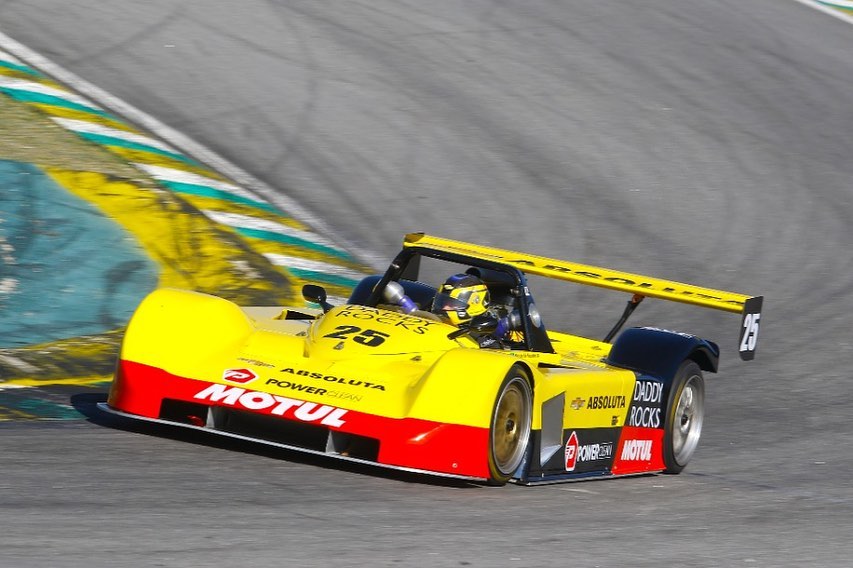
Absoluta ABS01 / Braspress Alfran 450A (2021 – )
The Absoluta ABS01 prototype is a project by João Alfran, and was originally built in 2005 for Urubatan Helou’s Braspress team. Now the project is given new life by Ney Faustini, to compete in the competitive P2 category of Endurance Brasil.
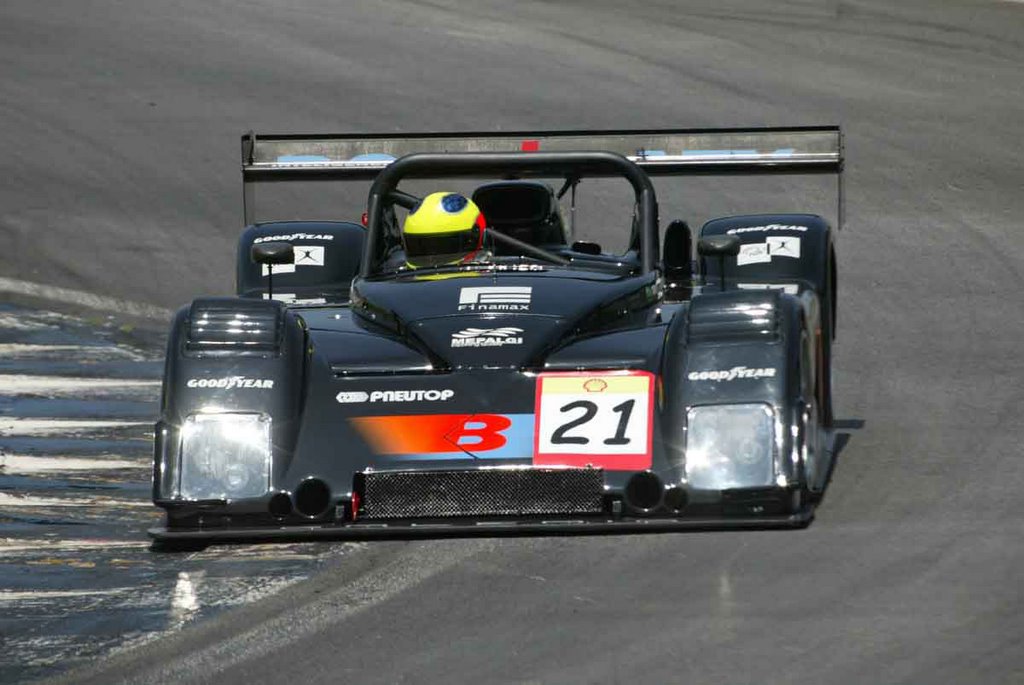
ZF01 (2004 – 2006)
The ZF01 was a Brazilian version of the American Riley&Scott Mk III, produced under license by JL, now Giaffone Racing.
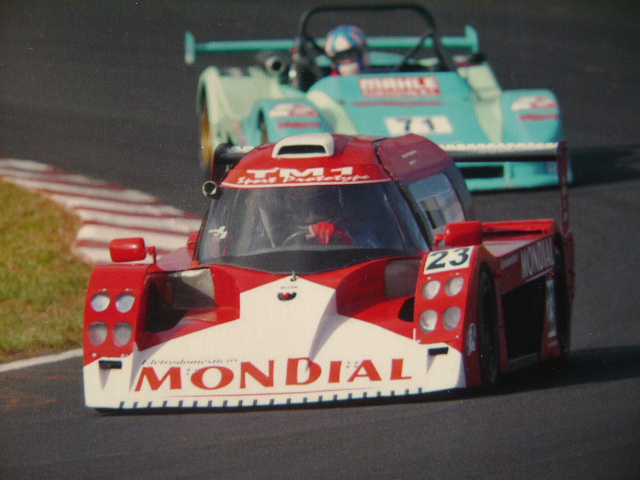
TM1 (2003 – 2004)
The TM1 is a grassroots project from the early 2000s, built on a Muffato Formula 2 chassis and with bodywork “inspired” by the Toyota GT-One.