In its 70 years of competition, the Mil Milhas race has collected stories of drivers, teams, and cars that fought for victory, whether they were victorious or not. Others, equally fascinating, never completed a competitive lap. Whether due to rule changes, budgets, politics, or deadlines, these race cars that never raced exist in a strange in-between space—built with purpose, passion, and performance in mind, but deprived of their moment under the starting lights.
In today’s post, we’ll remember ten of these cars that sought Immortal Glory but never even saw the start of the race.
1. 1967 – Caçador-de-estrelas (Star Fighter)
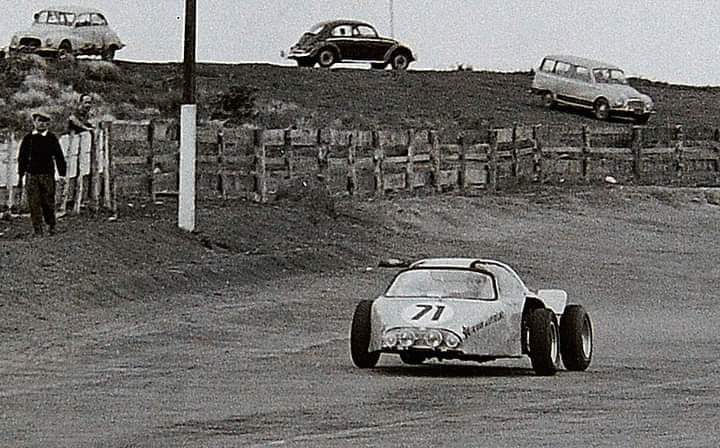
Starting our list, we have a classic of the Mil Milhas, the Star Hunter. Designed by Romanian Bica Votnamis, the idea was to use the powertrain of traditional road cars in a car designed for the track. Initially, the car would be similar to the single-seaters of Mecânica Nacional, with a front engine, but in the middle of the project Bica decided to change the engine to a central position in the chassis. However, this left no room for the driver, who ended up in a unique position, in front of the front axle. The car was even entered and participated in free practice, but was eventually banned from competing after race control deemed it too unsafe to race. Read more here.
2. 1993 – BMW M1 Replica by Santilli
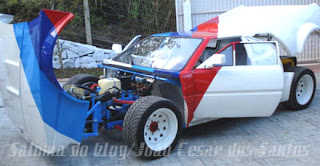
A veteran of the Mil Milhas from the carreteras era, Alfredo Santilli decided to build a replica of the Procar BMW M1s in 1991, already at 70 years of age. Starting from a tubular frame, the car received the V8 engine from the old Carretera coupled to a Chevy D20 gearbox (third gen Chevy C/K series truck built in Brazil) with a Dana 44 differential, F4000 brakes (Fifth gen Ford F-Series medium-duty truck), and slick tires. The goal was to compete in the 1993 race, and in the first tests the car reached 260 km/h, but after two years of dedication and work, Santilli felt sorry to put the car on the track and it never competed. Read more here.
3. 1994 – Mythos F40R
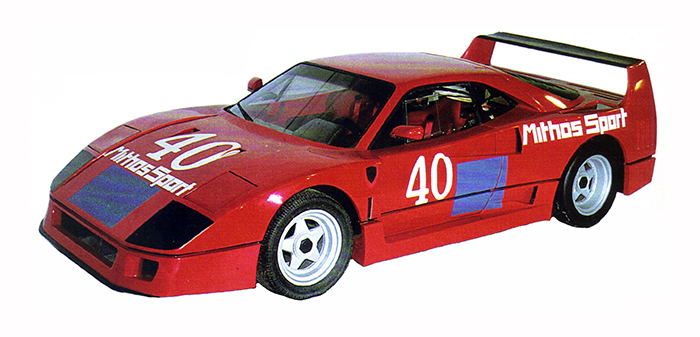
One of the largest pre-registration lists for the Mil Milhas race occurred in 1994, with 107 candidates, of which only 78 showed up for qualifying and 66 started. One of the entries that did not appear was the Mythos F40R, a replica developed by the company Mythos Sport with a tubular chassis, a GM 6-cylinder Stock Car engine, and a Hewland transmission. Read more here.
4. 2002 – Sbarro GT40
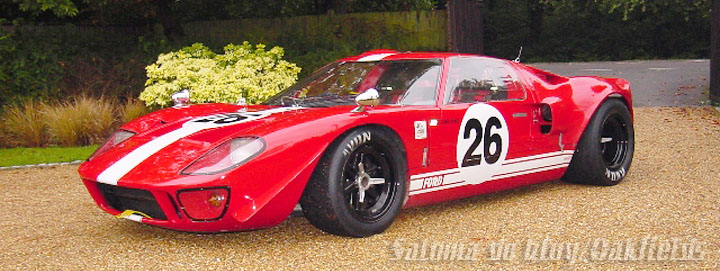
The 2002 Mil Milhas marked a new phase in Brazilian motorsport, also marking the first phase of the Brazilian Endurance Championship. One of the great news for the race was the arrival of the Lister Storm from the Capuava Racing team, which by then had recently arrived in Brazil and whose sets of tires for the race were held up in customs. Perhaps as a plan B in case it wasn’t possible to compete with the Lister, perhaps just to be able to train with the car, the team also entered Alcides Diniz’s Sbarro GT40, a replica built by the Swiss company Sbarro in 1969. Read more here.
5. 2003 – Chamonix CLR 550
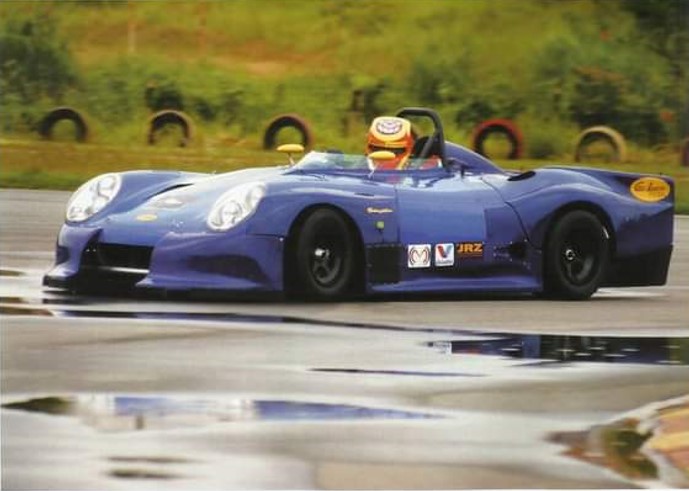
Developed by CLR (Chico Lameirão Racing) based on the Chamonix 550, the CLR 550 was designed with the support of engineer Ricardo Bock following the wing-car principle, with an Audi 1.8 Turbo engine and brakes from the Porsche 911 GT2. The original plan was to enter the car in the 2003 Mil Milhas race, but the car’s debut and only race took place months later during the 500 km of Interlagos, where it was driven by César Urnhani and William Freire. Currently, the car is in the collection of the Brazilian Automobile Museum in Passo Fundo. Read more here.
6. 2005 – Fulgor SP
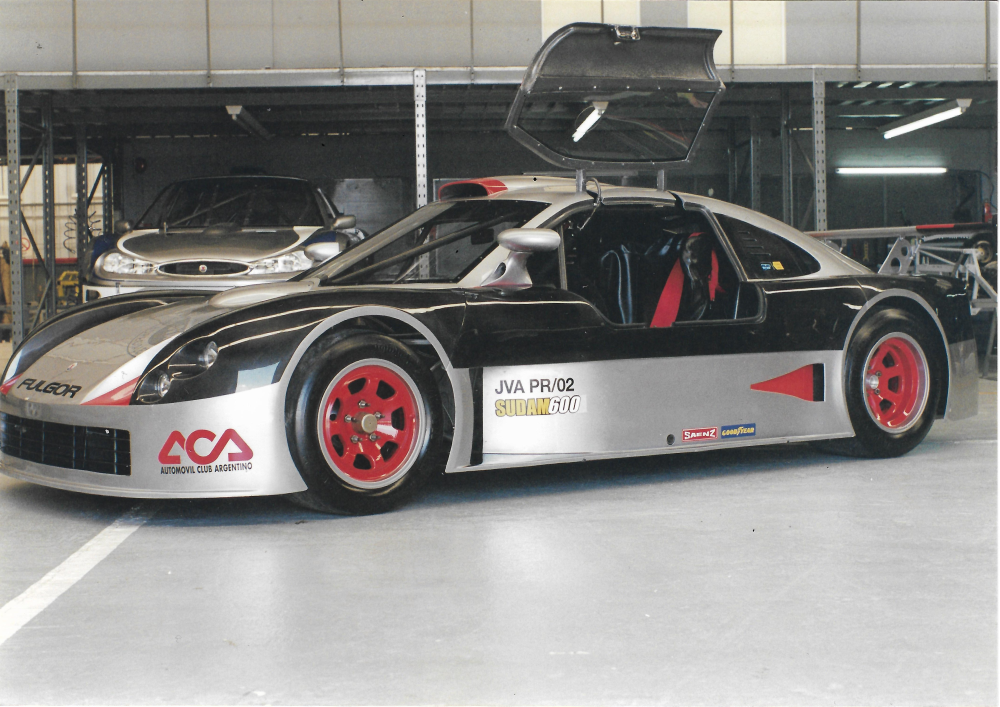
In the early 2000s, Gustavo Donadio partnered with Jorge Vázquez to create a new category in Argentina for silhouette models, equipped with V8 engines and bodywork inspired by mid-size sedans like the Vectra, Mondeo, and Stratos. The first car was built using a Chevrolet 5.8 V8 engine, Saenz SP910 transmission, and 15-inch wheels, with the bodywork copied from a Mondeo that was rented by JVA (Jorge Vázquez’s company that produced replicas of classic cars like the Porsche 550). Despite initial enthusiasm, the proposed category didn’t receive enough support to take off and ended up being reformulated into a prototype called Fulgor SP (SP for Sport Prototype) for a category called SUDAM 600, a South American category proposal sponsored by Petrobras. In the advertising brochures of the time, Fulgor’s participation in South American free-class races was even considered, including the 2005 Mil Milhas. We thank our friend Lucas Marandola for sharing this story.
7. 2005 – Minelli BlueBird
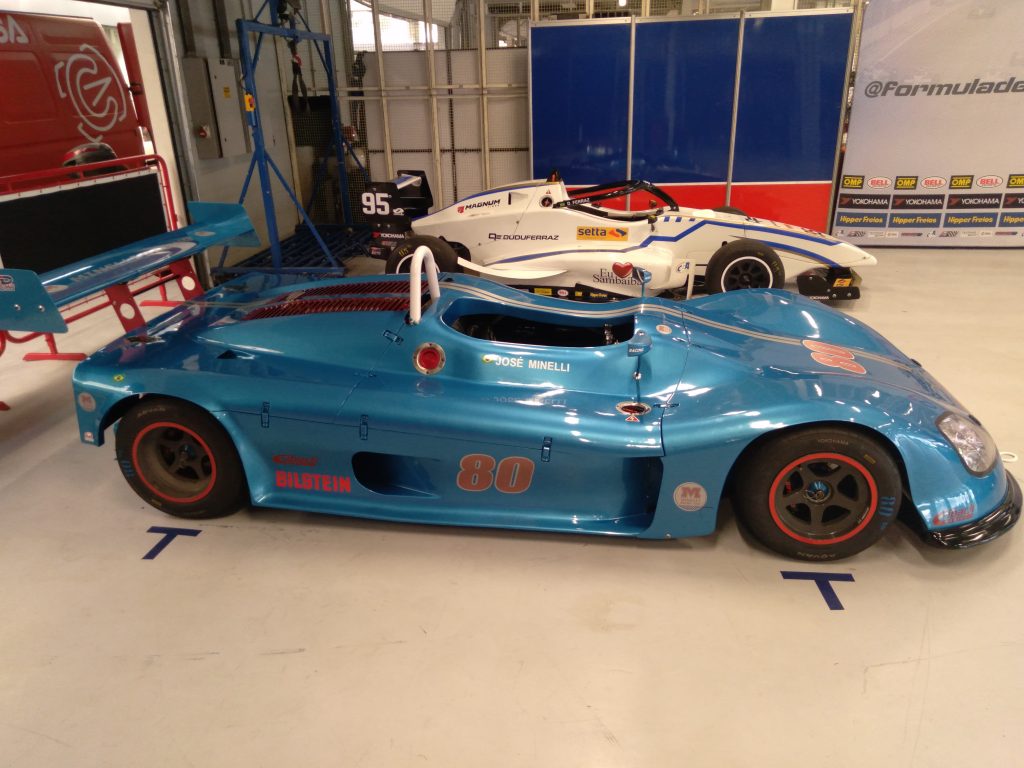
With the consolidation of the Brazilian Endurance Championship in the mid-2000s, several national manufacturers prepared new machines for Class I of the competition, where national prototypes would face cars from the GT1 and DTM classes. This period saw an explosion of new models being built such as the GeeBee R1, Alfran 450A, ZF01, FT32 – and some others that never got to compete. In the second category is the BlueBird prototype from Minelli Racing. Developed at the request of the Brasília duo Aloisio Albuquerque and Vicente de Paula, the car was originally equipped with an Alfa Romeo V6 engine and a Hewland FT200 transmission with the intention of competing in the 2005 Mil Milhas, but it never got to compete. After years of being stored away, the car finally underwent a shakedown during a Track Day at Interlagos in 2024, driven by Mauro Kern. Read more here.
8. 2005 – Chevrolet Monte Carlo Late Model (Howe)
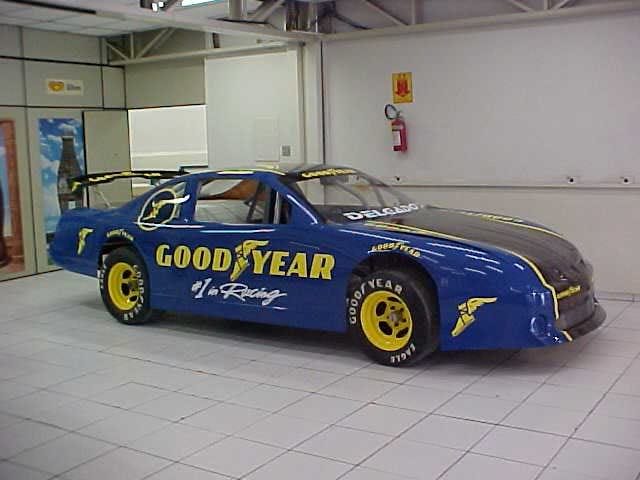
The 2005 edition of the Mil Milhas had one of the most eclectic grids in the race’s history, including LMP prototypes (ZF01), FIA GT1 cars (Lister Storm, Saleen S7R and Viper GTS/R), DTM (Audi TT-R), FIA N-GT (Porsche 911 GT3 RS and Ferrari 360 Modena), in addition to the traditional Brazilian prototypes. However, the race also featured a list of the biggest unfulfilled promises in the MM P1 class: Alfran 450A (now Absoluta ABS01), Ayres 001, Minelli BlueBird and Fulgor SP. To add even more color, in the weeks leading up to the race, an American Late Model was even listed among the entries. The project, spearheaded by drivers Guido Borlenghi and Arquimedes Delgado, envisioned the national assembly of a Late Model Howe Enterprises chassis with Chevrolet Monte Carlo bodywork and a 700 HP V8 engine, which would be registered with the number 99. The car was present at Interlagos, but did not participate in the Mil Milhas race that year. Eventually, the project evolved into the Super V8, which was developed during the 2010s and participated in some rounds of the São Paulo state motorsport championship. Currently, the car is being used for “electric chair” type events where motorsport fans are invited or pay to take a few laps as passengers with a professional driver. Read more here.
9. 2021 – Leal Race Cars LR01
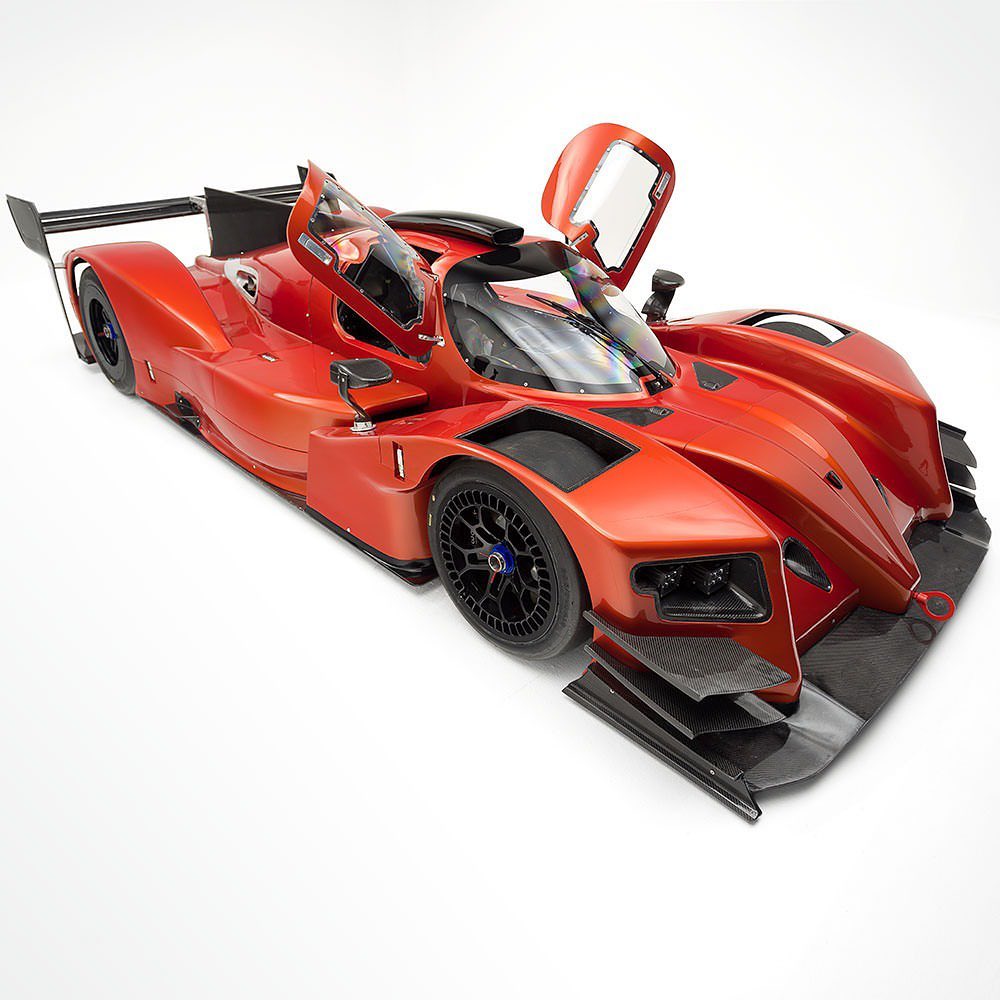
Developed by Julian Leal in Colombia, the LR01 is a tubular-frame prototype with a Duratec Turbo engine and inspired by Le Mans prototypes, built to compete in Colombian free-class races such as the 6 Hours of Bogotá. During the car’s presentation, its participation in free-class races throughout the continent was considered, including the 1,000 Miles, but since then Leal Race Cars has shifted its development focus to the LR02, a “cage” style prototype for regional races with a Hayabusa engine. Read more here.
10. 2022 – Porsche 914 Silhouette by MC Tubarão
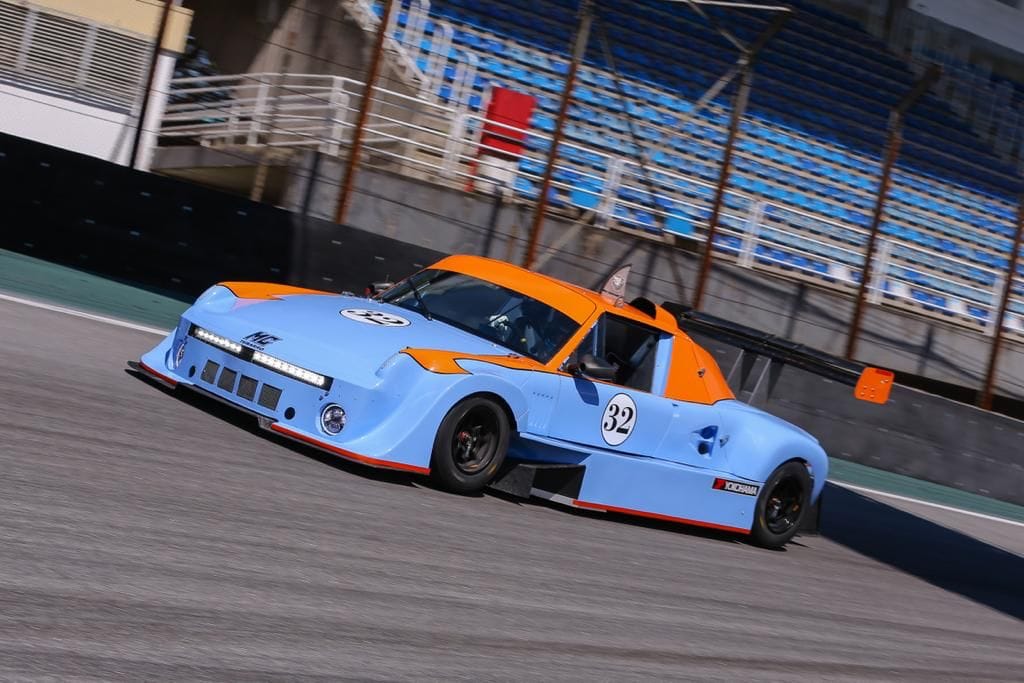
Developed by MC Tubarão, the Porsche 914 Silhouette used Honda K20 mechanics and was intended for the GT class of the Rio Grande do Sul Super Touring Championship. The car was built throughout 2021 and was supposed to debut in the 2022 1,000 Miles race, where it would be driven by Paulo Sousa, Mauro Kern, and Galid Osman. It even participated in the free practice sessions until it suffered a breakdown the day before qualifying. As a result, the team was forced to bring the MRX-Tubarão prototype that competed in the Endurance Brasil series, and the Porsche-Tubarão never competed in the traditional São Paulo race. Read more here.