Francisco Cavalcanti began his career in the 1950s, having completed a course in Hydramatic Systems provided by General Motors of Brazil, becoming the technical manager responsible for assembling CKD kits for Chevrolet pickups and trucks and Plymouth sedans. After this experience, he founded Servi-Volks, the first workshop specializing in Volkswagen in Rio de Janeiro. With his experience in German cars, he built his first prototype, a small jeep with Volkswagen mechanics and a steel body in 1965, and between 1967 and 1968 he began preparing a Formula Vee single-seater.
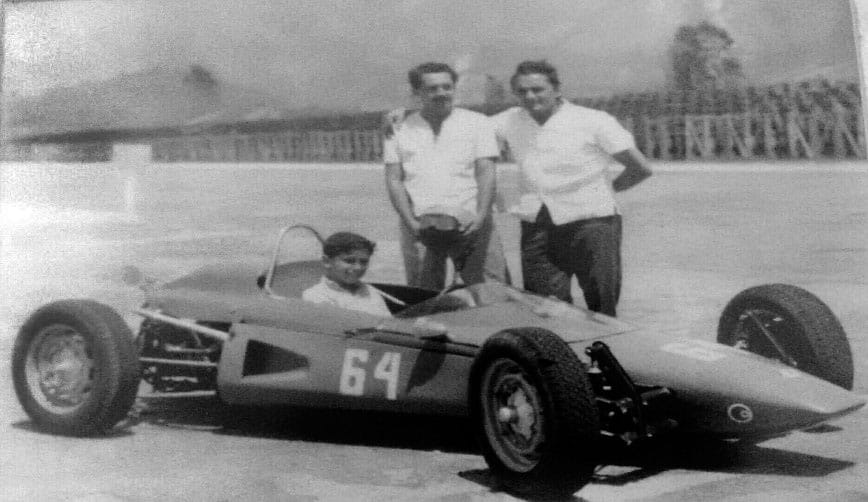
In 1969, he created a vehicle for the Força Livre category, the Casquinha, using an original 1953 Beetle body lowered by 20 cm, with 15” wheels and a Volkswagen 1600 air-cooled engine, which held the unofficial record for the category at the old Jacarepaguá Circuit.
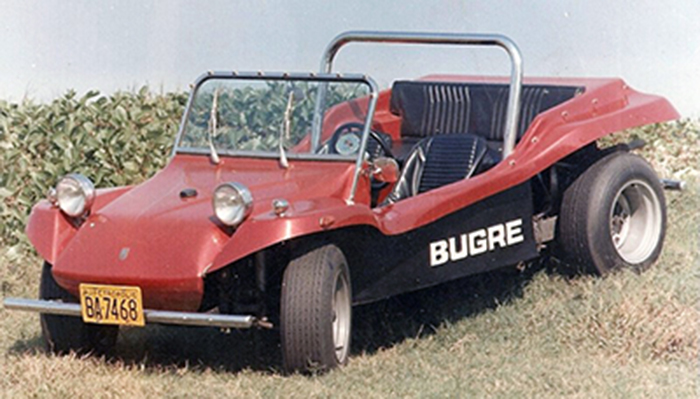
In 1970, he founded Bugre to manufacture buggies, which were very popular in Brazil at the time. The first model launched was the Bugre I, followed by the Bugre SS in 1971 and the Bugre II in 1972.
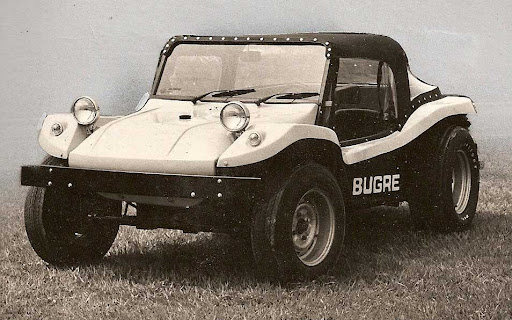
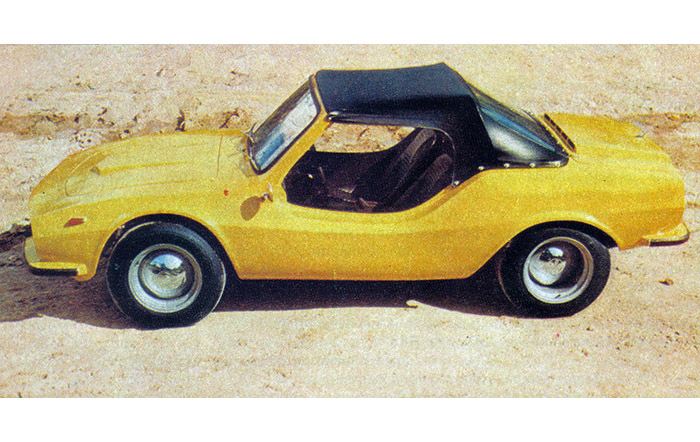
Also in 1972, the Bugre M-150 was presented during the Fittipaldi Motor Show, in both street and competition configurations. With lines inspired by European sports cars like the Lotus Europa, the fiberglass body of the street model weighed only 100 kg and could be mounted on any Volkswagen chassis (except the Variant).
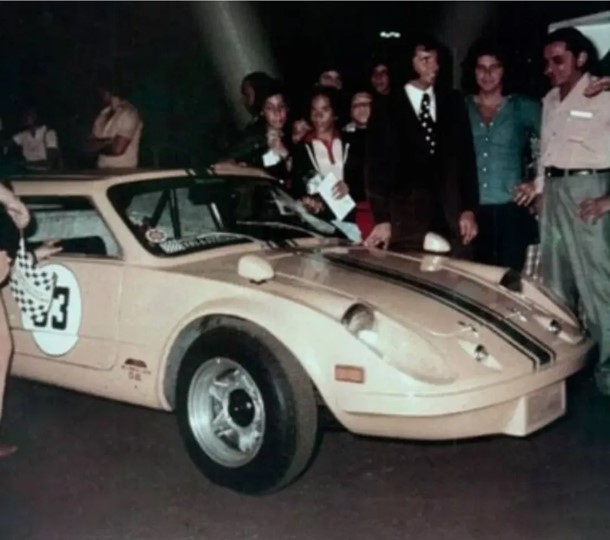
The competition version was prepared by Volks-pol, which had already been competing in the Rio de Janeiro championship with a Bugre SS.
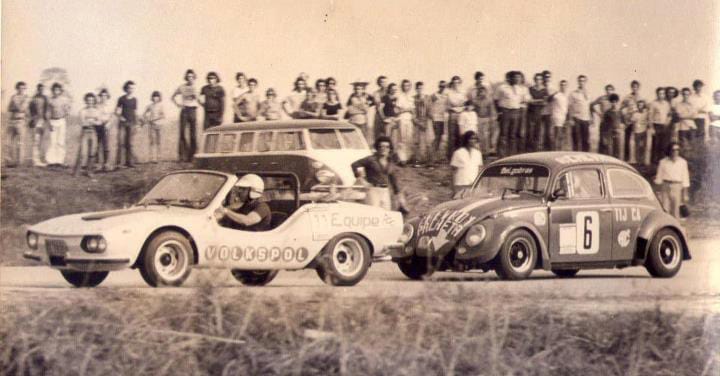
Compared to the street version, the track-ready M-150 had a special, slightly lower body, with a more inclined windshield and weighing only 60 kg. It also featured a roll cage and air intakes at the rear, above the engine cover, and on the sides, as well as a hardtop.
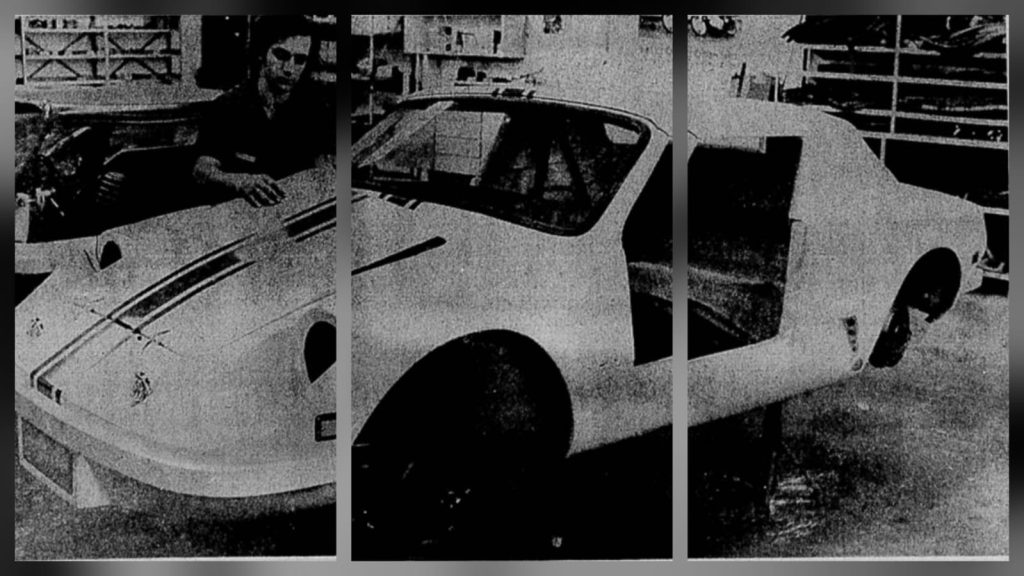
The name M-150 was a tribute to the Sesquicentennial of Independence, celebrated in 1972, a patriotic theme that was repeated in the green stripes that ran along the prototype’s bodywork.
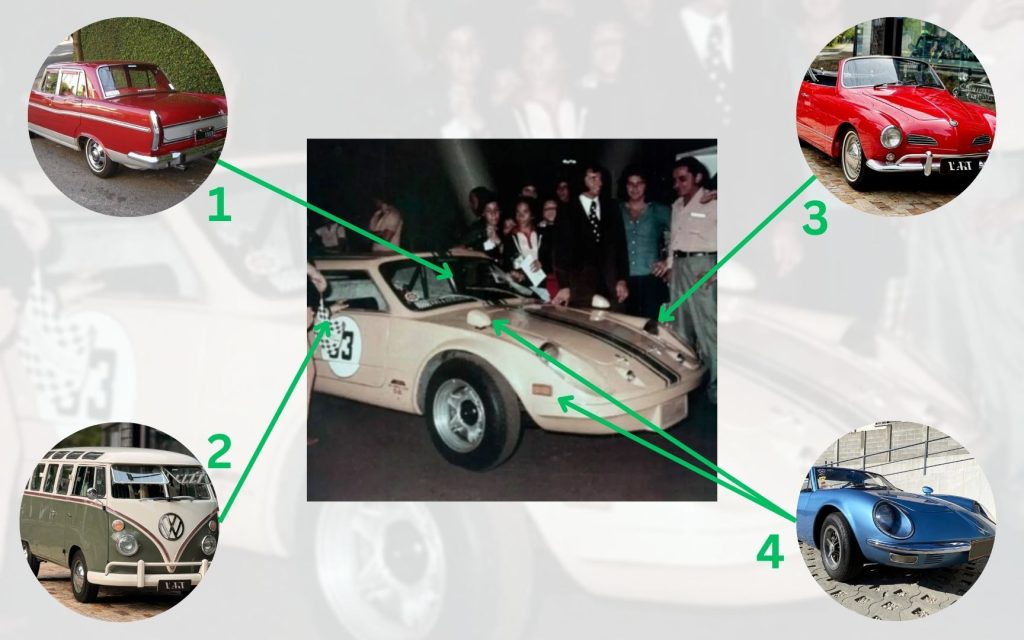
Like every Brazilian special edition car, the M-150 used a mix of components borrowed from other cars: the windshield was the rear window of the Simca Esplanada (1), door handles came from the side door of the Kombi (2), headlights from the Karmann Ghia (3), Randon taillights, rearview mirrors, reflectors and hinges of the rear and front covers from the Puma GT (4).
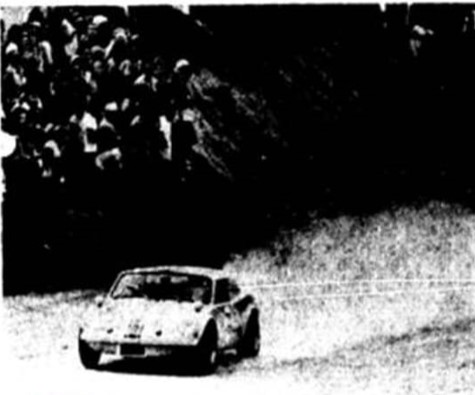
This competition version of the Bugre M-150 debuted in the Rio de Janeiro Automobile Championship in 1972, becoming champion of the 1972 and 1973 seasons with driver Paulo Lesser. During this period, it also won a 6-lap exhibition race held at the Adrianópolis Autodrome in Nova Iguaçu.
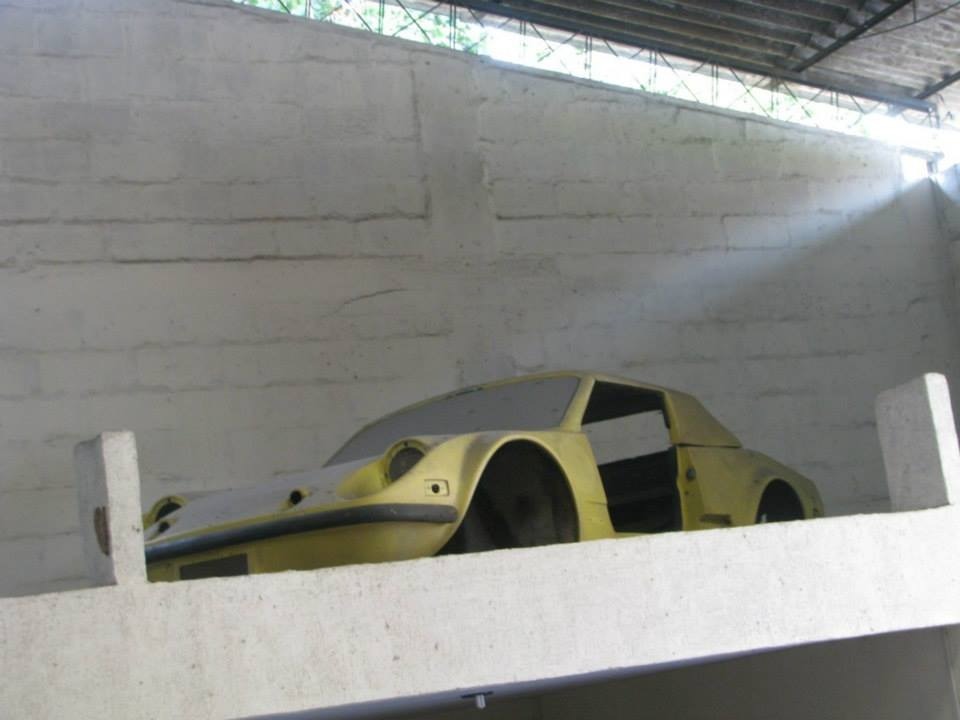
After that, the M-150 prototype was cannibalized; the chassis and engine were used to build a Bugre II, which was sold to a Flamengo player, while the bodywork remained stored at Bugre’s headquarters until it was spotted on a rooftop by engineer Luiz Mendes in a video recorded at the Bugre factory. Luiz, who had already restored a Bugre SS, made an offer for the bodywork and is now in the process of restoring it.
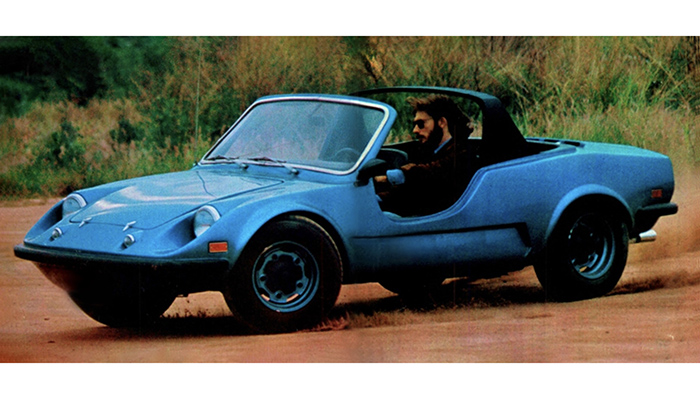
The M-150 entered production only in 1974, with significant differences from the 1972 prototype: the hardtop was replaced by a canvas top, and the doors gave way to recesses in the side of the body. In addition, the windshield was replaced with that of the TL/Variant line. The M-150 remained in production for 10 years, with 970 units produced.
Regarding the restoration process, Luiz informed us that he has already acquired another street-legal M-150 to utilize the documented chassis and the 1600 engine, which is currently undergoing restoration. As for the bodywork, Paulo (son of Francisco Cavalcanti) remade the doors and the undercarriage in fiberglass, and the bodywork remains at Bugre’s headquarters, where the restored chassis will be taken for alignment and final assembly using factory jigs. Virtually all the parts needed to complete the restoration have already been purchased; what remains is to finalize the chassis restoration, assemble and align the body, and paint and final assemble the car.
Acknowledgements:
We thank engineer Luiz Mendes for sharing with us the story of how the M-150 Prototype was found and images from his collection that helped illustrate this publication.
Sources:
História. Available at: http://bugre.ind.br/index.php/historia-empresa.
Equipe Bugre. Available at: https://bugre.ind.br/index.php/equipe-bugre-2.
Bugre. Available at: https://www.lexicarbrasil.com.br/bugre/.
O Bugre M-150 é um carioca leve e ágil. Revista Quatro Rodas, Número 168 de Julho de 1974.
Bugre vence prova em Adrianópolis. Jornal do Brasil, segunda-feira, 5 de Fevereiro de 1973.
Bugre 150 venceu prova no Autódromo de Adrianópolis. O Fluminense, 6 de Fevereiro de 1973.
You might also be interested in:
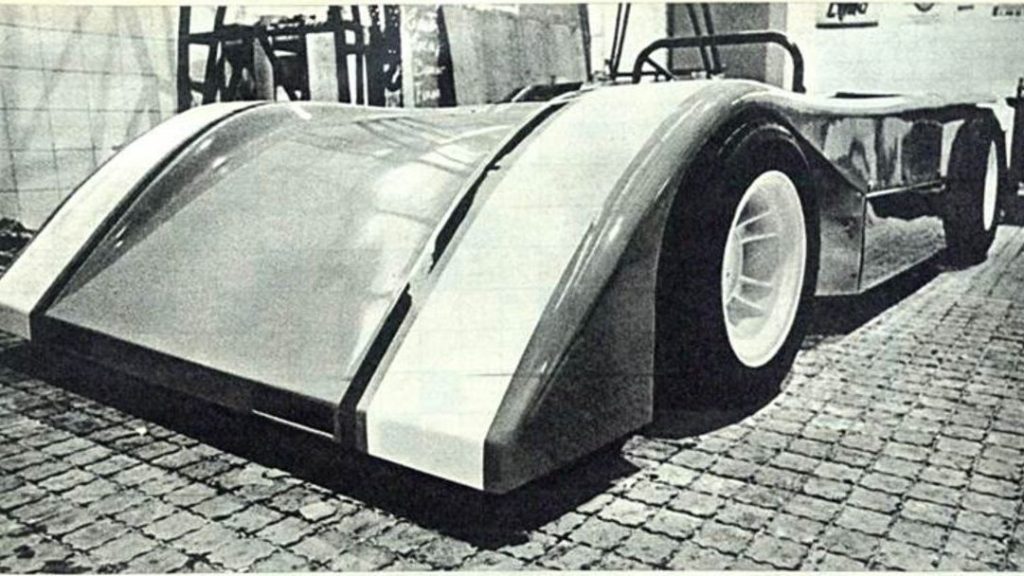
ENE-272 (1972)
Developed as a graduation project by six graduating students from the Engineering course at UFRJ, the ENE-272 never got to compete.
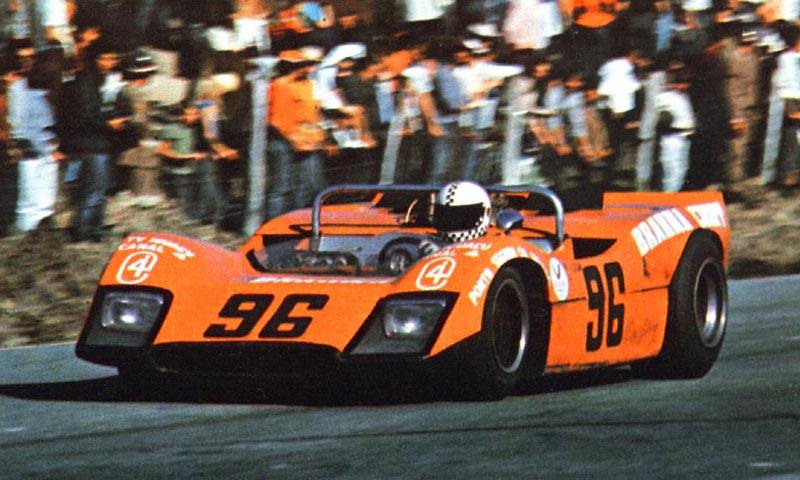
Casari A1 230 (1970 – 1972)
Developed by Norman Casari without support or sponsorship, the Casari A1 was the first modern Brazilian prototype with a V8 engine.