Ferrari has built its reputation as an extremely secretive brand when it comes to supplying engines to third parties. Unlike other manufacturers, Maranello has always treated its engines as strategic assets, provided only in very specific circumstances and, in most cases, outside of any official factory program. Therefore, each project that has used a Ferrari engine outside of the Scuderia’s “purebred” cars carries, in itself, an exceptional character.
In this special feature, you’ll discover racing cars and prototypes that defied this tradition, whether through one-off agreements, private initiatives, the reuse of street engines, or projects that never involved Ferrari directly. From Indianapolis to Brazilian motorsport, from Group C to Formula 1, these stories reveal how, even without official support, the simple use of a Ferrari engine elevated the prestige – and complexity – of any project.
1. 1956 – Kurtis Kraft Ferrari Special
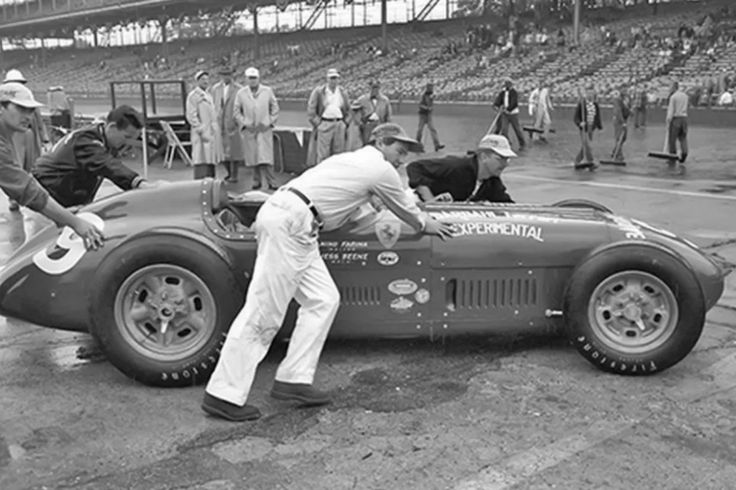
In the 1950s, the Indianapolis 500 was part of the Formula One World Championship, although it followed a completely different regulation and race format from the other stages of the championship. Enzo Ferrari’s team was already prominent in European races at that time, but the attempt to adapt the 375 model for the 1952 Indy 500 was unsuccessful. In 1956, at the initiative of Luigi Chinetti, a new 4.5 V12 engine based on the 375 was commissioned, this time to be mounted on a chassis built by Kurtis-Kraft, an American manufacturer that was experiencing a period of dominance in the Indy 500, having won every race between 1950 and 1955. The car received sponsorship from Bardahl, also being known as the Bardahl Special, but proved difficult to fine-tune, with problems of weight distribution and overheating. Furthermore, a problem with the fuel supply system prevented the car from qualifying, becoming a dark chapter in the history of the Prancing Horse brand.
2. 1970 – Fúria-Ferrari
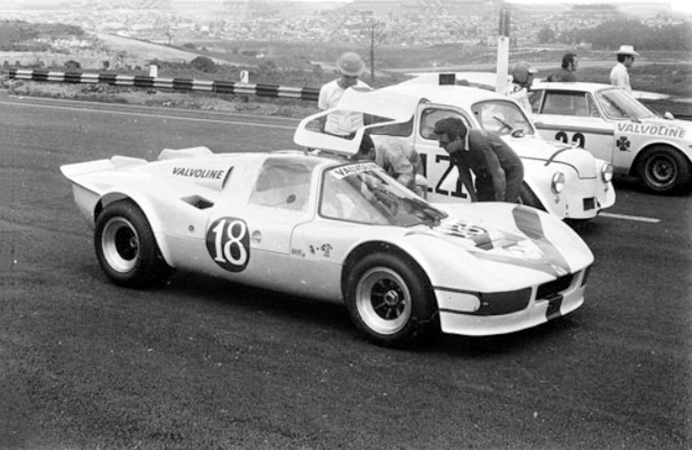
Toni Bianco was already a well-known name in Brazilian motorsport in the 1960s, having worked on several winning projects such as the Willys Gavéa, the Bino prototype, and culminating in the Fúria prototype, which was born in the early 1970s. One of the distinguishing features of this project was that various engines could be used thanks to a movable rear structure that could be modified and replaced to allow for different types of installation. Fúria prototypes were manufactured with FNM 2150, Chevrolet 151 4-cylinder, BMW, Lamborghini, and Dodge V8 engines, and, commissioned by the legendary Camillo Christófaro, a Fúria prototype was built with a Ferrari V12 Testa Rossa engine from Jean Louis Lacerda’s car, coupled to a Hewland FT200 transmission, to debut in the 1971 Copa Brasil competing in Division 5 (Brazilian-made cars with imported engines). The Fúria-Ferrari still competed in the 200 Kilometers of Belo Horizonte in 1972, but with the imminent ban on imported cars and engines in Brazilian motorsport, the Fúria received the Chrysler V8 engine in 1972, with which it competed in the 1972 and 1973 seasons.
3. 1972 – Momo 5000
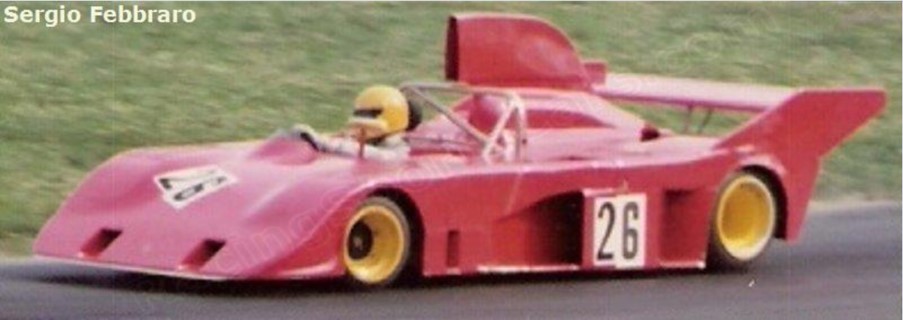
Gianpiero Moretti is best known for MoMo (Moretti-Monza), a traditional manufacturer of steering wheels and equipment for sports cars, and also for his long history on the track, largely aboard Ferrari racing cars. In 1971, Moretti decided to switch from driver to constructor, hiring the Italian engineer Giorgio Valentini who initially developed a prototype equipped with a 2-liter Abarth engine. During the European summer of 1972, a second car was designed based on the Momo 2000 chassis, but widened to accommodate a Ferrari 512M V12 engine and a Hewland DG600 transaxle. The first version of the car, called Intermedio, made its track debut during the 1972 Interlagos 500 Kilometers race, where it performed far below expectations. With this, a new chassis and bodywork were built, resulting in the Momo 5000 Finale which competed in the Casale Interserie race in 1974. Since then, the car has not participated in other races and is currently in Australia without its Ferrari engine, where it will undergo a restoration process. You can read the full story here.
4. 1982 – Lancia LC2 Ferrari
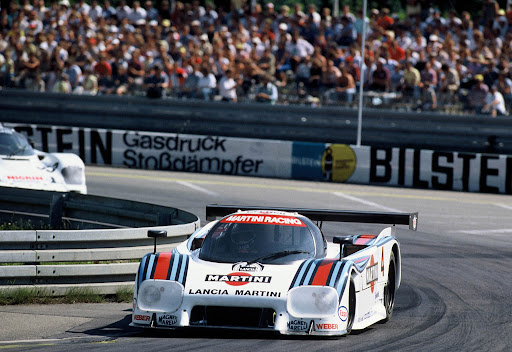
With the requirement to use cars compliant with Group C regulations to score points in the World Sportscar Championship, Lancia was forced to develop a new car for the 1983 season. As the LC2’s 1.4 Turbo engine was unable to meet Group C’s fuel consumption targets, Lancia opted for an engine derived from the Ferrari 308, with its displacement reduced to 2.6 liters and the addition of two KKK turbochargers. The chassis was developed jointly by Abarth and Dallara, consisting of an aluminum monocoque with carbon fiber and Kevlar bodywork. In general, the car was faster than the Porsche 956s in qualifying conditions, but a series of problems prevented this potential from translating into victories, with only 3 wins in the four seasons the LC2 competed for the Lancia factory team. After 1986, the car continued to participate in races in the hands of private teams, but the evolution of the competition made the LC2 obsolete, generally struggling to qualify for events.
5. 1990 – Alfa Romeo SE 048 SP
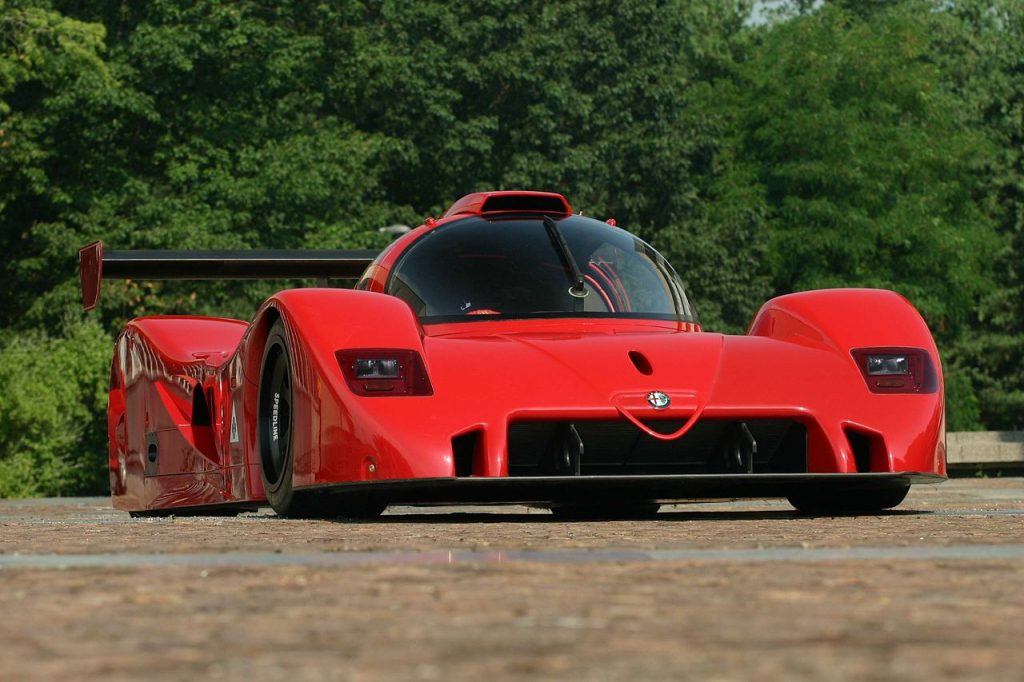
With the LC2 becoming obsolete, the Fiat Group was studying the feasibility of a successor to compete in Group C, which by the end of the 1980s rivaled Formula 1 in popularity. Initially, the plan was to develop a new car powered by the 3.5 V10 engine that would be supplied to Ligier and used in the Alfa Romeo 164 ProCar project. The chassis was designed by Giuseppe Petrotta, a former Osella designer, but initial tests using an LC2 chassis showed that the V10 engine would require significant investment to become a viable option. Again, the Fiat Group used its extensive portfolio of brands to seek the Ferrari Tipo 036 V12 engine used in the 1990 season. Despite the Alfa Romeo management’s enthusiasm for the program, the project was considered too costly and risky and was eventually cancelled in favor of the 155 Super Turismo project, which yielded numerous titles and publicity more closely linked to Alfa Romeo’s product line at the time.
6. 1991 – Minardi M191-Ferrari
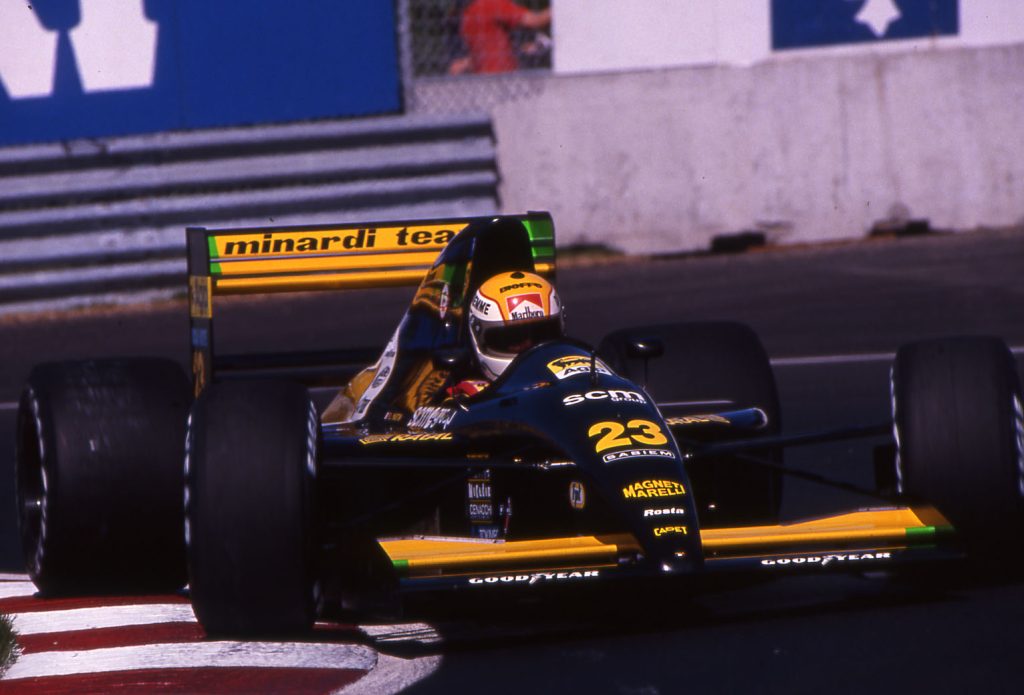
While most of the cars on this list were independent initiatives, the Minardi M191, designed by Aldo Costa, was the first team to use Ferrari customer engines in Formula 1. The car was completely designed around the Tipo 037 engine, and its Achilles’ heel was the transmission developed by Minardi itself, which suffered from frequent clutch failures. Even so, the car was a regular in the Top 10 of qualifying with the Italian duo Pierluigi Martini and Gianni Morbidelli, achieving two fourth places in San Marino and Portugal, which earned the Italian team a valuable 6 points, and seventh place in the constructors’ championship – the best result for the Faenza team in its 20 years in Formula 1.
7. 1996 – Minelli-Ferrari
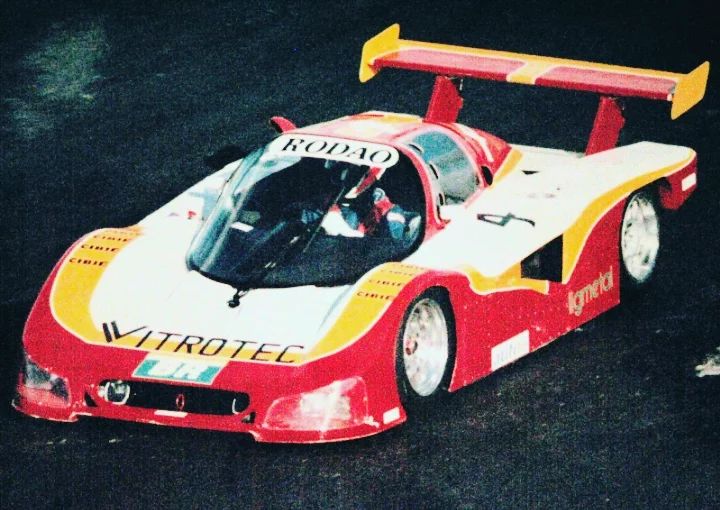
In the 1990s, the Brazilian Mil Milhas (1000 Miles) began to attract a higher level of technical competition. On the one hand, the arrival of imported cars such as the Porsche 911, BMW M3, and others, presented a significant challenge to smaller teams, which until then had used modified national cars, mainly the already aging Stock Car Opalas. In this scenario, some teams began to invest in prototypes, whether they were revivals of the old Division 4 and 5 (Avallone and Lola-Avallone) or based on limited-production cars like Aldee and Aurora. But the major turning point was the AS Vectra, a car with modern concepts designed specifically for the track that performed excellently in the 1995 race. In this context, Minelli Racing Cars, led by the experienced designer José Minelli, developed a new prototype based on the mechanics of a wrecked Ferrari 348. The engine, transmission, and brakes came from the Ferrari, while the chassis, bodywork, and suspension were developed by Minelli Racing. The car participated in the Mil Milhas race in 1996, starting among the top 10, and in 1998, starting in 12th position, retiring from both races.
8. 1997 X250 WSC
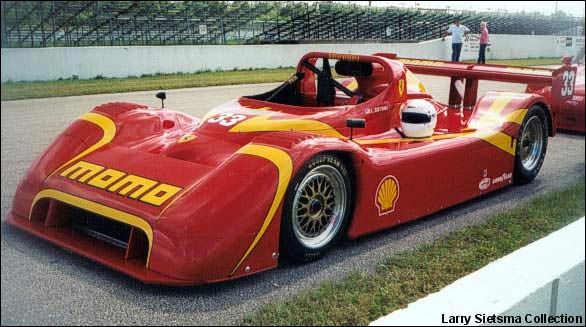
To understand the X250, we first need to go back in time to the Group C regulation change, which saw the adoption of 3.5-liter naturally aspirated engines in an attempt to unify the engine regulations of sports cars with Formula 1. At that time, Nissan had successful programs in both Japan and the United States with the GTP regulations, which were considerably similar to Group C, but the engine change meant that a new car had to be developed. Development was handled by Yoshi Suzuka and NPTI, who led the development of Nissan prototypes at that time. Three monocoques in P35 specification were built in the United States, while an NP35 variant with a longer wheelbase and more adapted for the short races of the All Japan Sports Car Championship. While the NP35 did compete in one race in Japan, the single P35 never did, with Nissan’s programs canceled and NPTI closed as a result of the Japanese financial bubble. However, in 1997 the P35 was converted into an open WSC prototype to compete in IMSA by John Christie and a group of former NPTI employees. The car was renamed X-250, in honor of the 250 employees who worked at NPTI before its closure, and received a Ferrari 3.4 V8 engine based on the Ferrari 348 engine, in addition to the necessary modifications to adapt to the regulations such as a flat bottom, steel roll cage and the removal of the roof. In this configuration, the car participated in the 12 Hours of Sebring, retiring after 21 laps, marking its only race.
9. 2001 – Dallara Euroc Racecar
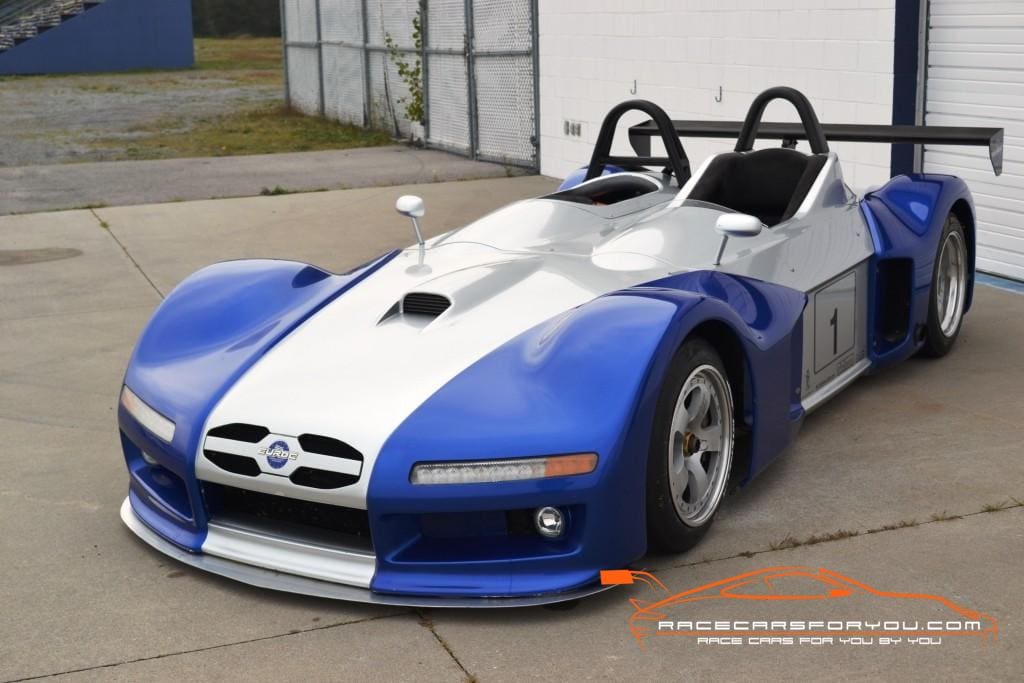
The Euroc Racer is a front-engined prototype intended for the European Roadster Championship, a series created by well-known names in the world of motorsport: Jochen Neerspasch (manager of the German Super Touring series), Wilhelm Weber (manager of Michael and Ralph Schumacher’s careers), Wilhelm Krämer, and Michael Butz. The category was scheduled to begin racing in 2000 with 10 rounds across Europe. The cars, designed by Dallara, would feature a standard aluminum foam sandwich monocoque chassis built by Karmann and a carbon fiber body designed by Pininfarina, weighing only 950 kg. Equipped with a 6-speed Hewland NLT transmission, the only thing that would differentiate the competitors would be the engines, which could be any production V8 capable of delivering around 600 hp. In 2025, four cars will appear for sale: one without an engine, two with Chevy 383 ci V8 engines, and the last with a Ferrari F131 V8, for a price of around US$40,000 (R$240,000).
10. 2008 – A1GP Powered by Ferrari
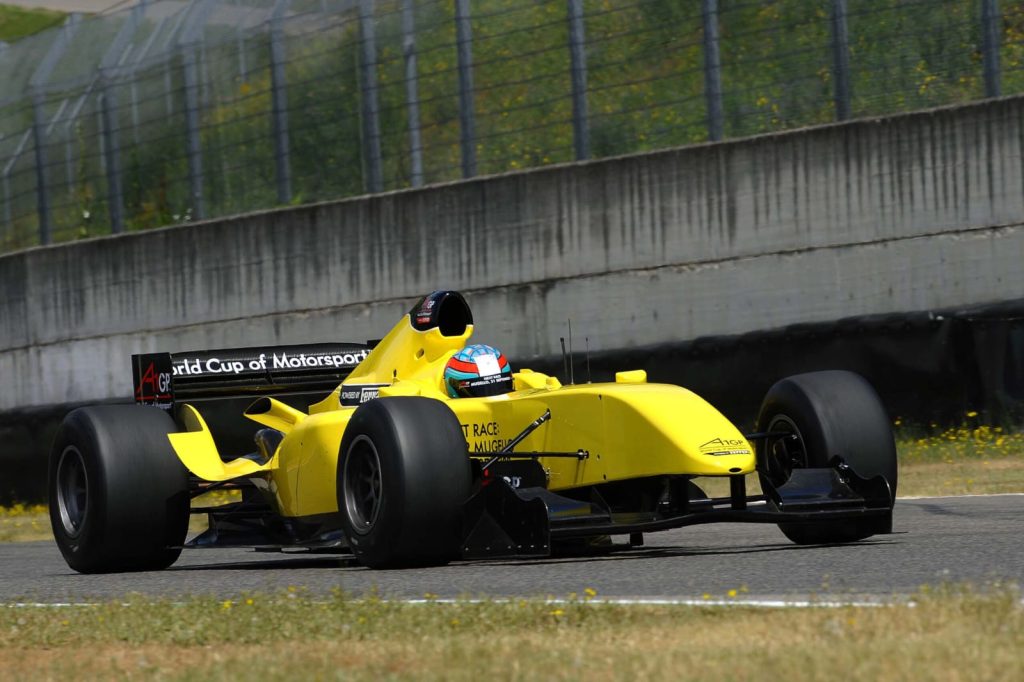
Following relative success with the first generation of cars based on a Lola F3000 chassis, A1 GP decided to take a bold step by creating a new car for what would be the championship’s fourth season. After established constructors like Panoz, Lola, and Dallara declined due to the championship’s tight schedule, A1 GP took charge of the project, bringing all development in-house. The carbon fiber components would be manufactured by URT, while final assembly was carried out by A1 GP itself. The chassis design was the responsibility of John Travis (whose resume included Champ Car models for Penske and Lola, as well as the Epsilon Euskadi ee01 and the ill-fated Formula Superfund SF01). To power the car, a partnership was established with Ferrari for the supply of F136 V8 engines similar to those used in the Ferrari 458, coupled to a 6-speed Xtrac transmission. The chassis, incidentally, is a design specific to A1 GP, unrelated to Ferrari, but styled to resemble the Ferrari F2004 Formula 1 car. Ferrari’s chief engineer, Rory Byrne, acted as a consultant on the project, and there are rumors that Ferrari provided 3D models of the F2004 to assist in the styling of the A1 GP Powered by Ferrari. The car, which ended up becoming more complex and expensive to operate, contributed to the championship being canceled at the end of the 2008-09 season.
Over nearly seven decades, these cars have become technical and historical rarities, precisely because Ferrari almost never lends its mechanical heart. Did we miss any other project?