
De tempos em tempos, uma fabricante afirma ter construído — ou estar construindo — um carro capaz de superar um carro de Fórmula 1 em um circuito de corrida. A maioria nunca prova isso. Algumas chegam notavelmente perto. Pouquíssimas realmente conseguiram. Há décadas, a Fórmula 1 representa a referência máxima de desempenho em circuitos. Sempre que uma fabricante afirma que sua criação mais recente pode “superar um carro de F1”, ela está, na prática, alegando ter superado os carros de corrida regulamentados mais rápidos do mundo.
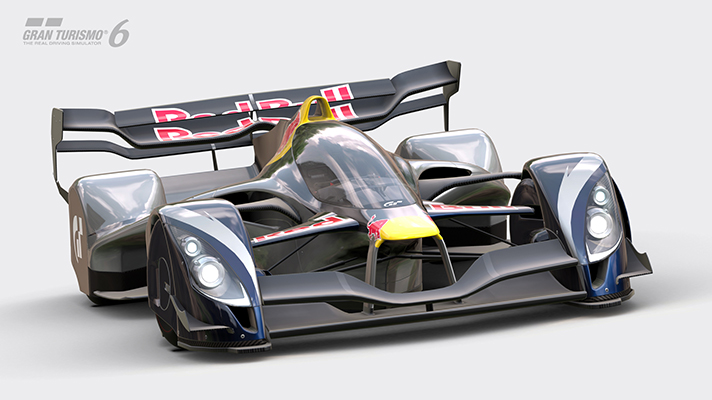
Antes de prosseguirmos, vamos definir “pista de corrida” — para os fins desta discussão — como um circuito misto, sendo essa a definição adotada para tais afirmações. Naturalmente, em outras modalidades, outros carros especializados podem ser (e serão) mais rápidos do que um carro de F1; por exemplo, um carro da Indy pode ser mais rápido em um circuito oval, ou um dragster da categoria Top Fuel pode superar um F1 em uma pista de arrancada.
Aqueles que já chegaram lá
Dito isso, é importante ressaltar que, embora a F1 seja indiscutivelmente mais rápida do que qualquer outra modalidade do automobilismo atual em pistas com curvas para a esquerda e para a direita, houve uma época em que a situação não era bem assim. No final dos anos 60 e início dos anos 70, enquanto os carros de F1 estavam limitados a motores aspirados de 3 litros que produziam cerca de 500 cv, os carros esporte e os protótipos viviam uma realidade bem diferente. O regulamento do Grupo 7, utilizado na Can-Am e na Interserie, permitia o uso de motores de grande cilindrada e turbocomprimidos, com potências que variavam de mais de 800 cv a bem acima de 1.100 cv em configuração de classificação — o que compensava com folga a agilidade e a destreza dos carros de F1 nas curvas. Além disso, carros esporte do Grupo 6, como o Porsche 917, podiam utilizar motores de grande porte; essa característica, somada à carroceria de baixo arrasto aerodinâmico e à potência muito superior, tornava-os adversários formidáveis para os carros de F1 em certos traçados.

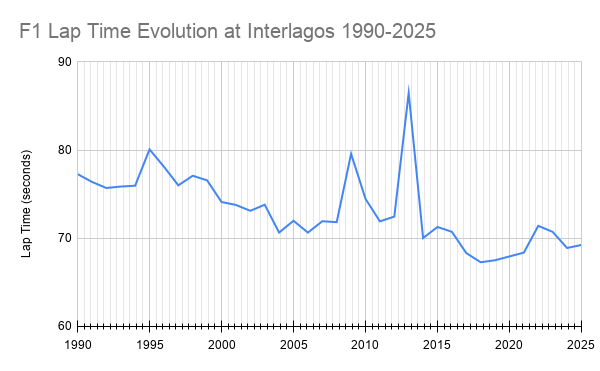
No entanto, após a loucura da era Turbo da F1 nos anos 80, os carros de corrida de categorias de sports cars passaram a ser regulamentados para conter o desempenho; já na F1, mesmo com revisões ocasionais no regulamento que reduziam ligeiramente a performance, os tempos de volta geralmente continuaram a melhorar, apesar de várias reformulações das regras ao longo das últimas três décadas. Isso criou uma diferença significativa em relação às categorias de corrida mais rápidas de outras modalidades, fossem elas de monopostos ou de sports cars.
Assim, há quase 50 anos, a F1 permanece como o auge da performance e, consequentemente, como uma referência para quem deseja promover seu carro como um veículo veloz. Nos últimos anos, após o encerramento de seu programa no WEC no final de 2017, a Porsche decidiu libertar o 919 Hybrid das restrições do regulamento da LMP1 para criar o 919 Evo — um demonstrador de tecnologia livre das limitações impostas pelas competições. Primeiramente, foram eliminados os limites de fluxo de combustível e de alocação de energia híbrida do regulamento da LMP1, permitindo que o motor produzisse 720 cv, enquanto a quantidade máxima de energia recuperada por volta em Spa-Francorchamps foi aumentada de 6,37 MJ para 8,49 MJ.
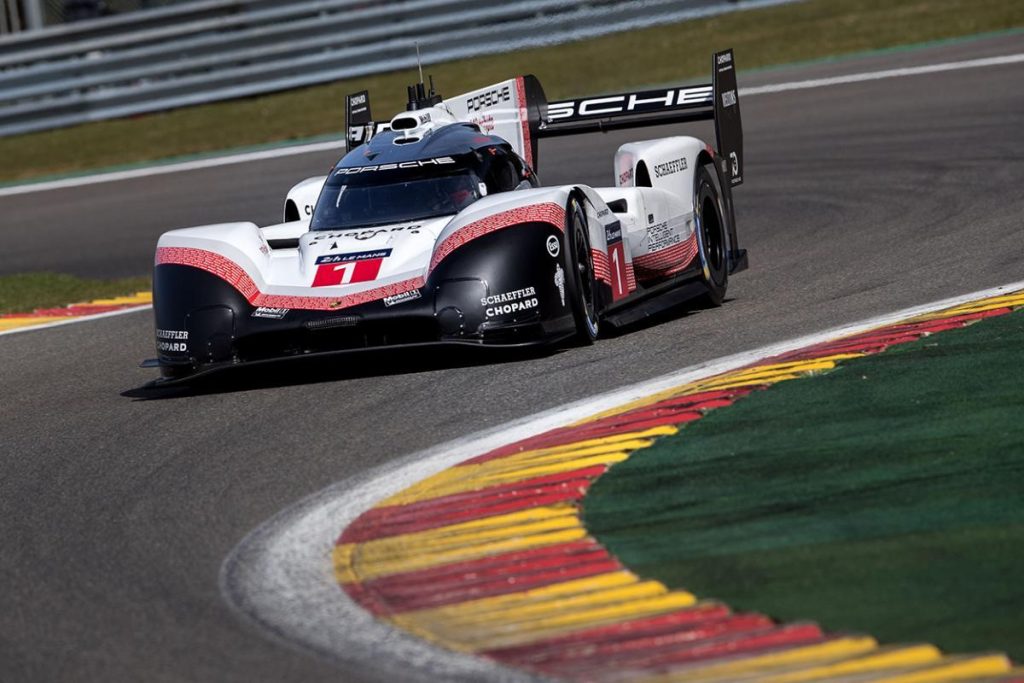
O peso foi reduzido em 39 kg com a remoção de faróis, limpadores de para-brisa, ar-condicionado e outros equipamentos elétricos, e a nova carroceria foi projetada com DRS ativo, aerofólio traseiro maior, difusor dianteiro mais largo e saias laterais fixas. Com Neel Jani ao volante, o carro registrou o tempo de volta de 1min41s770, superando a marca da pole position de 2017 obtida por Lewis Hamilton com a Mercedes F1 W08 EQ Power+ (1min42s553). Esse recorde foi posteriormente quebrado e pertence agora à pole position de Oscar Piastri com a McLaren MCL39 Mercedes para o Grande Prêmio da Bélgica de 2025, com o tempo de 1min40s510.
O Paradoxo de Newey
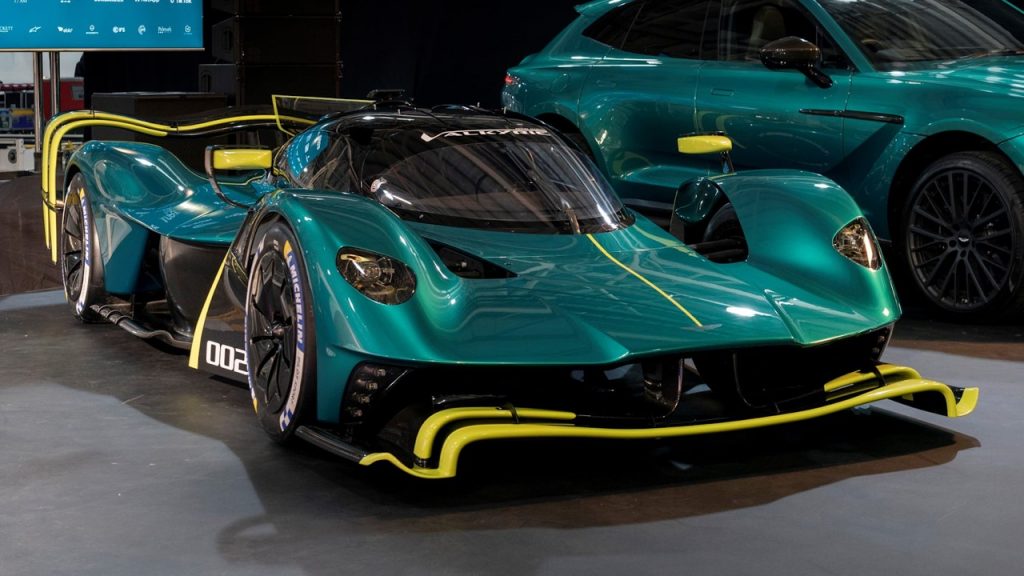
Embora o 919 Evo tenha provado que isso era possível, outros indivíduos e organizações fizeram afirmações semelhantes nos últimos anos. Se existe alguém capaz de extrair esse tipo de desempenho de um carro, certamente é Adrian Newey. Com uma carreira que abrange as categorias IMSA GTP, CART e Fórmula 1 — durante a qual projetou alguns dos carros de corrida mais rápidos já construídos —, Newey aventurou-se no desenvolvimento de um hipercarro duas vezes na última década. Primeiramente, o Valkyrie surgiu da parceria entre a Red Bull e a Aston Martin. Na época do lançamento do carro, o Diretor de Criação da Aston, Marek Reichman, afirmou em entrevista que a versão de pista do Valkyrie seria capaz de completar uma volta em um circuito mais rapidamente do que um carro de F1 com especificações de 2016. Mais tarde, durante um leilão, a casa RM Sotheby’s divulgou que o carro registrava tempos de volta confortavelmente na casa de 1min48s no Circuito Internacional do Bahrein — marca quase 20 segundos mais lenta que a pole position de Fernando Alonso na F1 em 2005 (1min29s848) e ainda 7 segundos acima do recorde da categoria LMP1 na mesma pista.
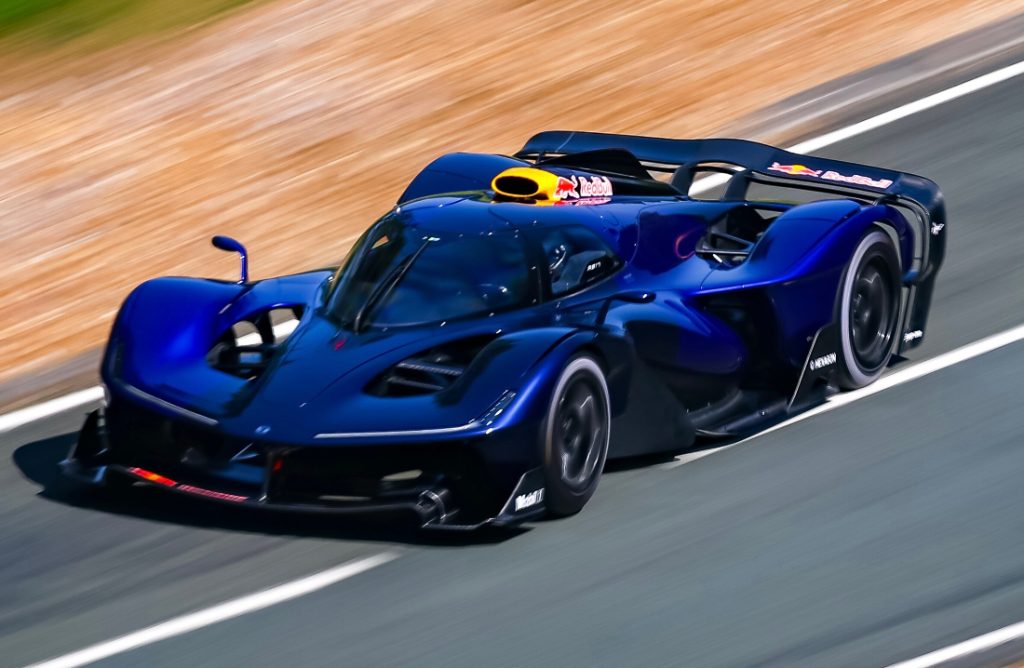
O segundo carro de Newey é o RB17, um hipercarro construído pela Red Bull com uma filosofia semelhante à do Valkyrie. Em 2025, durante um episódio do podcast Talking Bulls, Rob Gray, diretor técnico da Red Bull Advanced Technologies, afirmou que o simulador da equipe previa um tempo de volta em Spa de cerca de 1min38s — marca mais rápida do que o recorde atual da F1. O carro fez sua estreia dinâmica no Goodwood Festival of Speed de 2026, mas a veracidade dessa afirmação ainda precisa ser comprovada.
A abordagem extrema
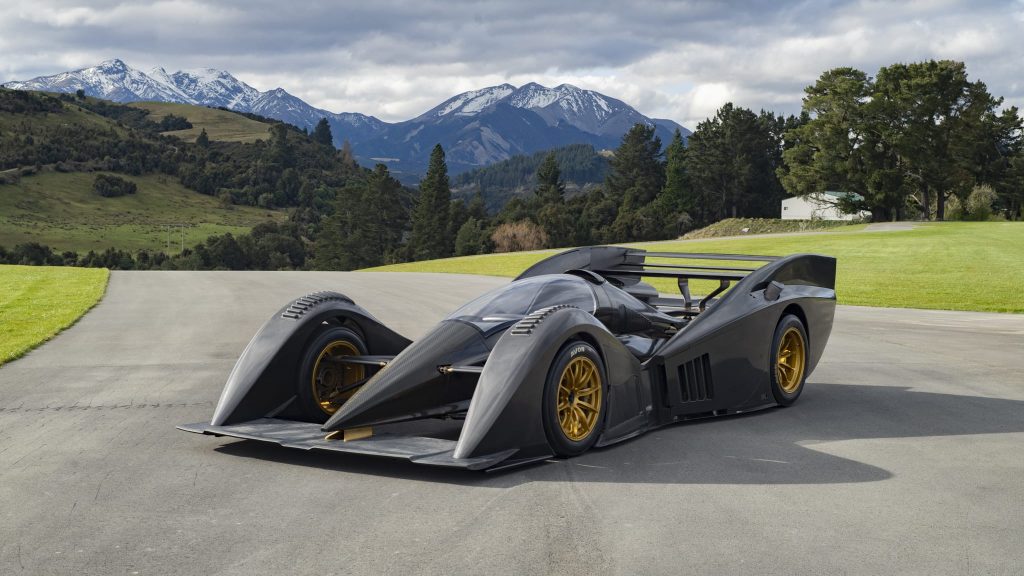
Embora superar um carro de F1 exija um projeto excepcional, o Valkyrie e o RB17 apresentam designs relativamente convencionais. O mesmo não se pode dizer de outras fabricantes, a começar pela neozelandesa Rodin Cars. Há muito tempo, David Dicker alimentava o sonho de desenvolver seu próprio hipercarro, inicialmente adquirindo os direitos do extinto Sintura S99 GT1 e, posteriormente, do malogrado Lotus T125. A Rodin Cars foi fundada na Nova Zelândia em 2016, contando com instalações de última geração; a empresa começou construindo uma versão aprimorada do T125 — rebatizada como Rodin F-ZED — e desenvolvendo seu próprio motor V10 de 4,0 litros, que desde então foi testado no Rodin Sintura atualizado. No entanto, o projeto mais ousado da Rodin é o F-ZERO, que pode ser melhor descrito como um híbrido entre um monoposto e um protótipo esportivo. Com rodas carenadas e cockpit fechado (tipo canopy), o carro futurista será equipado com um motor biturbo de 4 litros capaz de gerar 1.176 cv, pesando apenas 698 kg. Segundo simulações da própria Rodin, o carro será capaz de completar uma volta em Albert Park sete segundos mais rápido do que um carro de F1 — uma afirmação que ainda precisa ser comprovada. O F-ZERO fez sua estreia dinâmica na pista de testes da Rodin em 2023, com a promessa de percorrer o mundo para quebrar recordes de pista e demonstrar as capacidades do veículo.
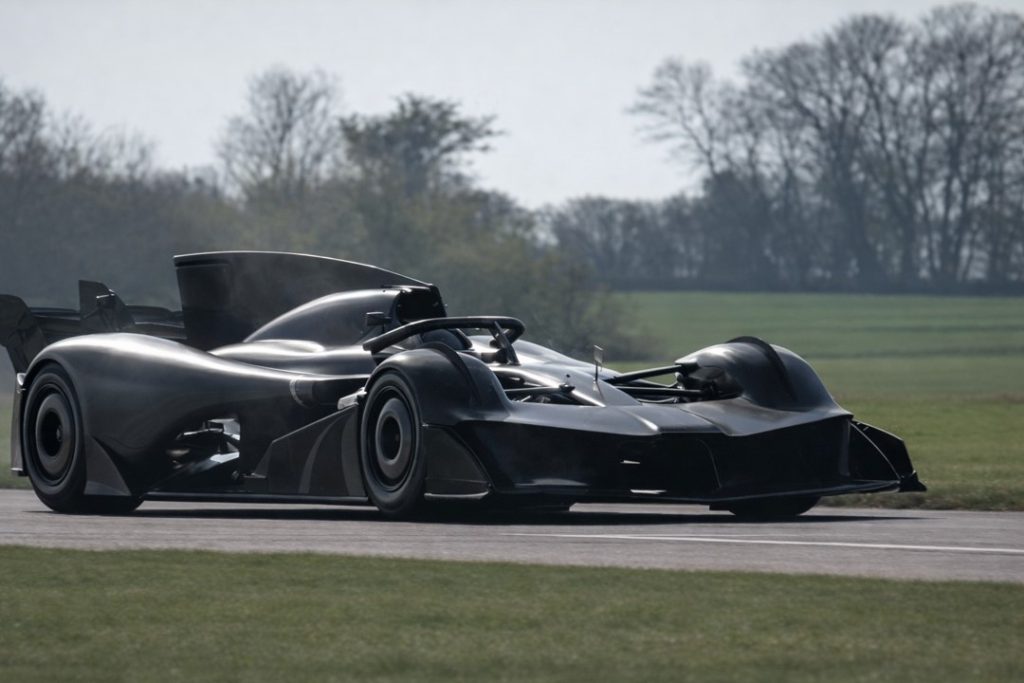
Em uma linha semelhante, um protótipo da Aston Martin foi flagrado realizando testes em circuitos pela Europa. Apelidado de “Chimera“, o protótipo combina características dos carros de F1 e do Valkyrie AMR Pro da marca, e acredita-se que seja uma unidade única encomendada pelo bilionário Ken Griffin. Segundo a publicação Auto Motor und Sport, o carro seria capaz de registrar tempos cerca de 10 segundos mais rápidos do que um carro de F1 com as especificações de 2026, embora esse dado não tenha sido confirmado pela Aston Martin. Até o momento, nada foi divulgado oficialmente sobre o Chimera; o único fato conhecido é que ele utiliza um motor naturalmente aspirado (claramente audível na gravação feita na pista) e a já mencionada combinação de componentes das categorias LMH e F1.
O time dos sonhos
Ao contrário dos outros projetos desta lista, que já atingiram pelo menos a fase de protótipo de desenvolvimento, há um projeto adicional que merece destaque, mas que ainda não foi construído. Desenvolvido pelo engenheiro Sebastien Lamour (profissional com mais de duas décadas de experiência na Fórmula 1 e em corridas de resistência com protótipos, e anteriormente responsável pelo conceito aerodinâmico do Enviate Hypercar), o Le Pinacle busca responder a uma pergunta simples: como seria um carro de corrida se seu desempenho não fosse limitado por regulamentos? O resultado é um conceito de design requintado que, idealmente, seria impulsionado por um motor V6 biturbo de 1,6 litro inspirado na F1, acoplado a um câmbio sequencial de oito marchas. A aerodinâmica combina elementos de carros com ventilador e carros com efeito solo e saias laterais completas; o ventilador gera downforce (pressão aerodinâmica) até os 150 km/h, velocidade a partir da qual a carga vertical passa a ser gerada predominantemente por soluções aerodinâmicas convencionais. Vale ressaltar que o ventilador foi projetado para ser acionado pela caixa de câmbio, em vez de eletricamente, já que a proposta original do Le Pinacle era utilizar exclusivamente motor a combustão interna. Além disso, o projeto dispensa a asa dianteira convencional, alcançando o equilíbrio aerodinâmico por meio do assoalho, de forma semelhante a alguns carros de F1 da década de 1970. O veículo também conta com DRS traseiro ativo, entradas de ar com refrigeração ativa e suspensão ativa; curiosamente, utiliza pneus dianteiros de 18 polegadas para maior rigidez e pneus traseiros de 13 polegadas para melhor tração. Segundo as simulações do projeto, o carro é capaz de atingir uma aceleração lateral de 7G — o que poderia exigir o uso de um traje anti-G, semelhante aos utilizados na Red Bull Air Race, para evitar a perda de consciência induzida pela força G — e, teoricamente, superar o tempo de um carro de F1 em 10 a 15 segundos no circuito de Barcelona, conforme as simulações da Lamtec.
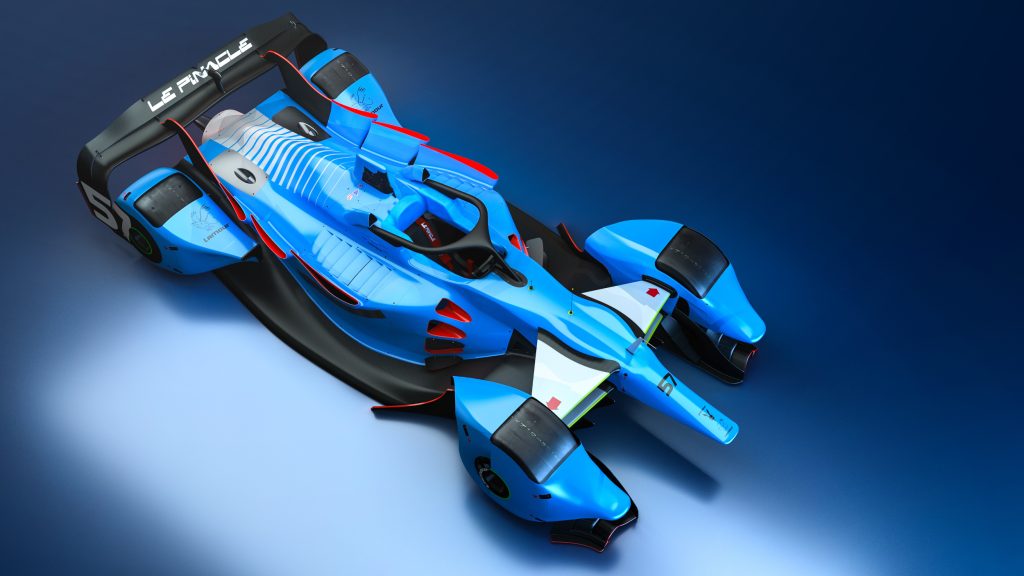
Dando continuidade a esse projeto, o campeão da Fórmula E Lucas Di Grassi apresentou o Lola-DGR, que está sendo desenvolvido com o auxílio de Lamour e sua equipe em parceria com a renascida Lola Cars. O modelo incorpora muitos dos conceitos do Le Pinacle, mas com uma diferença fundamental: em vez de tração traseira e motor a combustão interna, o Lola-DGR foi projetado para ser um carro elétrico com tração integral, capaz de superar o desempenho de um carro atual de Fórmula 1. Para isso, espera-se que ele entregue uma potência combinada de 800 cv, gerada por dois motores elétricos e uma bateria modular de 60 kWh — cujos módulos podem ser removidos para reduzir o peso em voltas rápidas. Com essa configuração, as simulações da Lola indicam que o DGR pode ser 4,3 segundos mais rápido do que um carro atual de F1 no circuito de Mônaco.
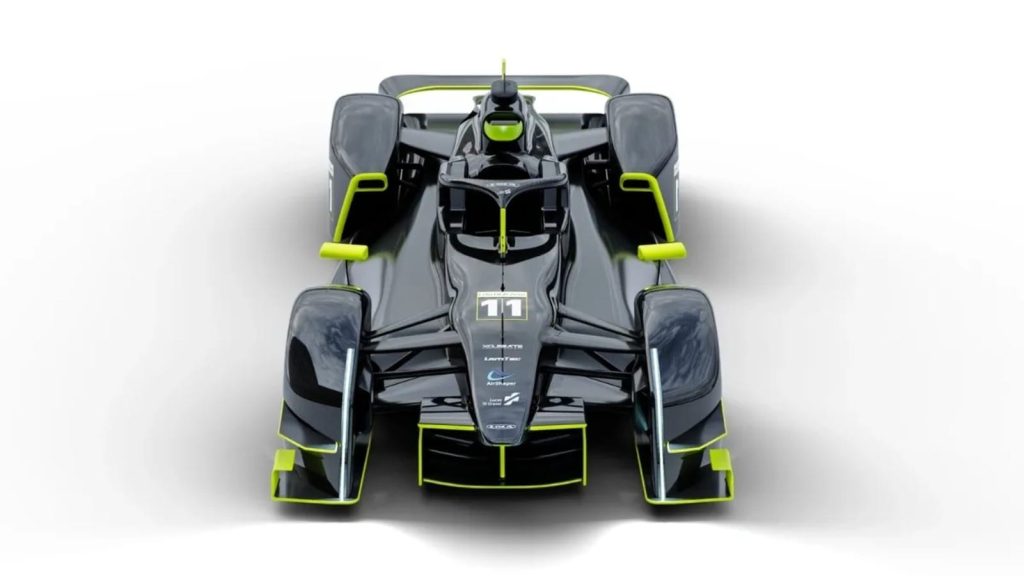
Por mais de meio século, a Fórmula 1 permaneceu como a referência pela qual se mede qualquer carro de pista ambicioso. A Porsche demonstrou que um protótipo sem restrições poderia superá-la, mas apenas após abrir mão das limitações que o tornavam apto a competir. Todas as tentativas subsequentes — seja de Adrian Newey, Rodin, Aston Martin, Lamour ou Lola — chegaram à mesma conclusão: superar a Fórmula 1 é possível, mas apenas saindo do seu regulamento. Talvez esse seja o maior elogio à engenharia dos Grandes Prêmios. Os regulamentos podem mudar, mas a referência permanece a mesma.
Fontes:
Evo-version of Porsche 919 Hybrid breaks Spa lap record. Disponível em: https://www.fiawec.com/en/news/evo-version-of-porsche-919-hybrid-breaks-spa-lap-record/5898.
How the Aston Martin Valkyrie will beat an F1 car. Disponível em: https://www.drive.com.au/news/how-the-aston-martin-valkyrie-will-beat-an-f1-car-gv7uqp/.
2022 Aston Martin Valkyrie AMR Pro. Disponível em: https://rmsothebys.com/ps00/inventory/r5811-2022-aston-martin-valkyrie-amr-pro/.
RB17 hypercar will lap Spa faster than F1 car, claims Red Bull. Disponível em: https://www.racefans.net/2025/08/16/rb17-hypercar-will-lap-spa-faster-than-f1-car-claims-red-bull/.
What is Rodin Cars? The story behind the New Zealand company changing up the motorsport world. Disponível em: https://supercarblondie.com/rodin-fzero-hypercar-new-zealand-faster-f1/.
A track car faster than F1. Disponível em: https://www.goodwood.com/grr/race/modern/a-track-car-faster-than-f1/.
Engineering. Disponível em: https://www.lamourlepinacle.com/engineeringmobile.html.
Lucas di Grassi unveils DGR-Lola electric concept race car. Disponível em: https://lola-cars.co.uk/news/lucas-di-grassi-unveils-dgr-lola-electric-concept-race-car.
Você também pode se interessar por:
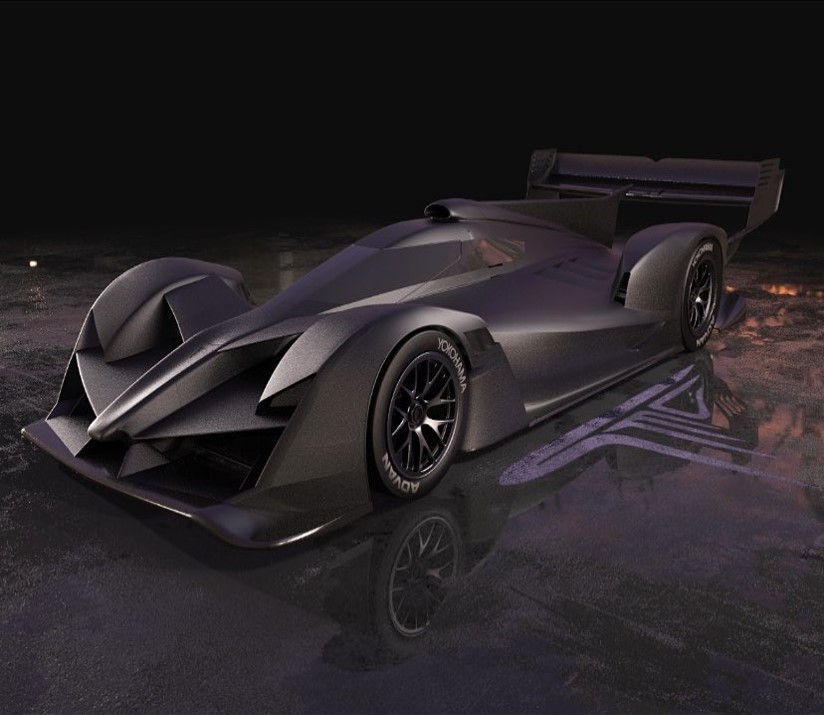
TMC M1 (2021 – )
Um dos projetos mais aguardados no Brasil é o TMC M1, da empresa homônima do ex-F1 Tarso Marques. Mais do que um protótipo de competições, o M1 será um prólogo e laboratório de testes para um hipercarro que está nos planos da TMC.

Estes carros são curiosos, mas pessoalmente nunca é algo que levo a serio justamente porque eles podem pegar um monte de coisas proibidas hoje na F1 e fazer o que bem entender, um vale tudo!
Porém tenho uma curiosidade, como seria um carro hoje neste sistema vale tudo ,usando minisaias iguais os carros asa de 1980 e suspensão ativa?
O mais próximo a isso seriam o Porsche e o Lola, mas como curiosidade no Endurance Brasil algumas equipes chegaram a testar soluções de minissais nos protótipos P1 em um passado recente.