In today’s post, we’ll learn about the Manic PA-II, an exotic Canadian project that mysteriously appeared in Brazil in the 1970s, and whose whereabouts are unknown.
About Manic
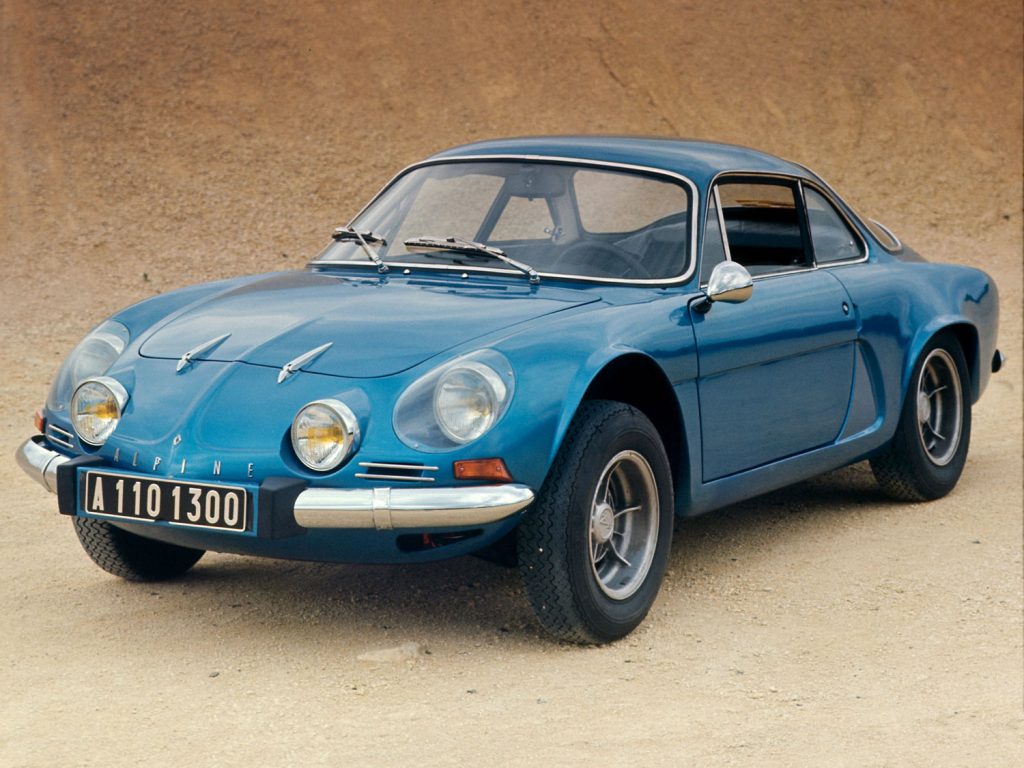
The history of the Canadian manufacturer Manic is deeply intertwined with that of its founder, Jacques About, whose vision gave rise to one of the most unique sports car projects in the Canadian automotive industry. Born in France in 1938, About built an eclectic career including stints as a journalist, driver, and stuntman, before settling permanently in Canada. His entry into the automotive sector came through Renault, where he was tasked with evaluating the commercial potential of the Alpine A110 sports car in the Canadian market. Despite a favorable assessment, the French automaker’s decision not to proceed with the project led About to forge his own path, motivated by the conviction that there was room for a lightweight and affordable sports car adapted to the Canadian reality.
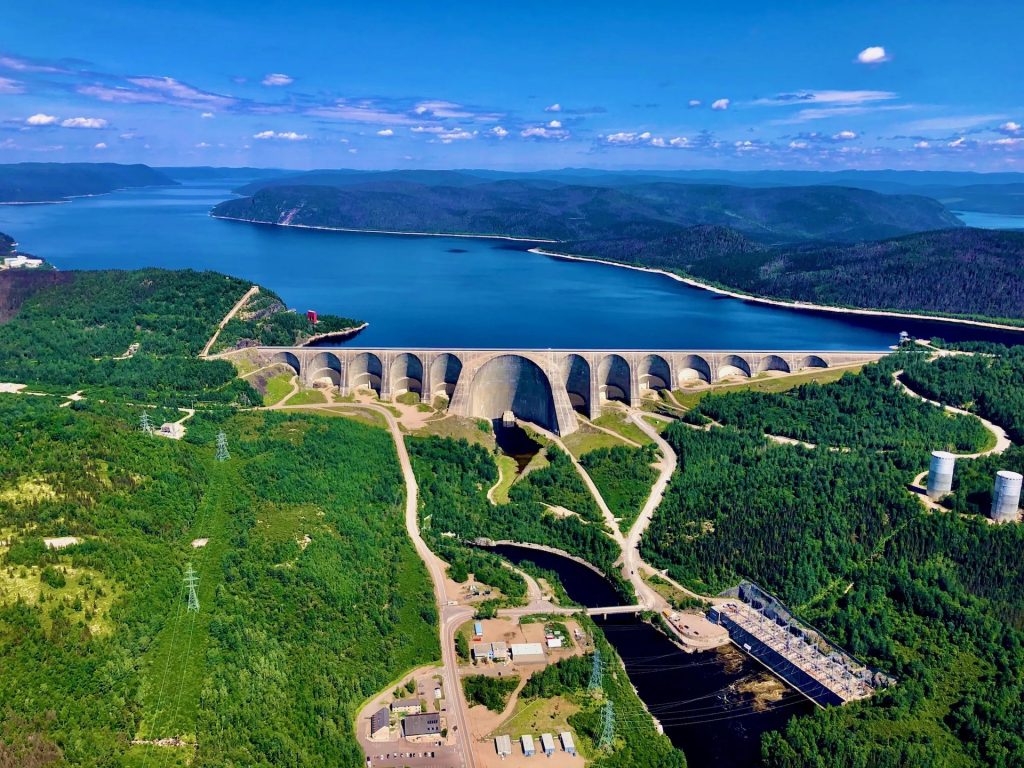
It was in this context that Les Automobiles Manic emerged in 1968. The name “Manic” was inspired by the Manicouagan River region in Quebec, and especially by the Manic-5 hydroelectric complex, a symbol of modernity and Canadian industrial ambition—values that About sought to reflect in his company.
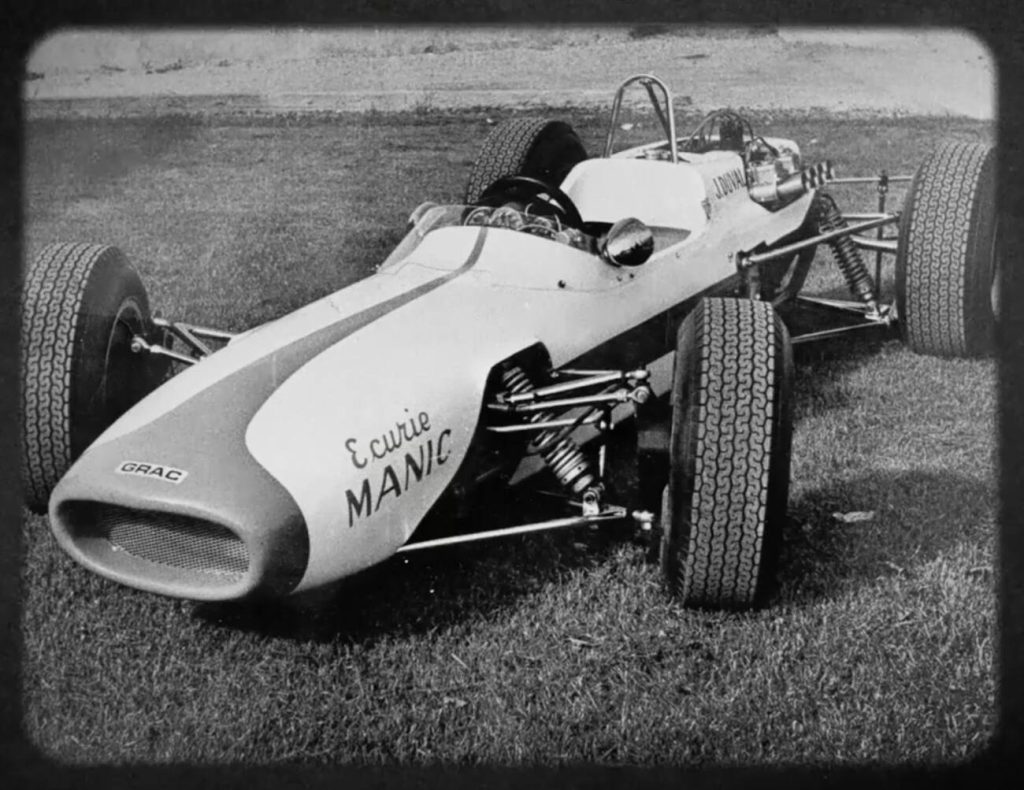
Even before launching a road car, however, he understood the importance of establishing technical credibility through motorsport. To this end, he obtained a license to produce a single-seater based on a French GRAC design, intended for Formula C. The resulting model, known as the Manic-GRAC, was equipped with Alfa Romeo engines and quickly proved competitive in local championships, achieving significant results and helping to consolidate the young manufacturer’s technical reputation.
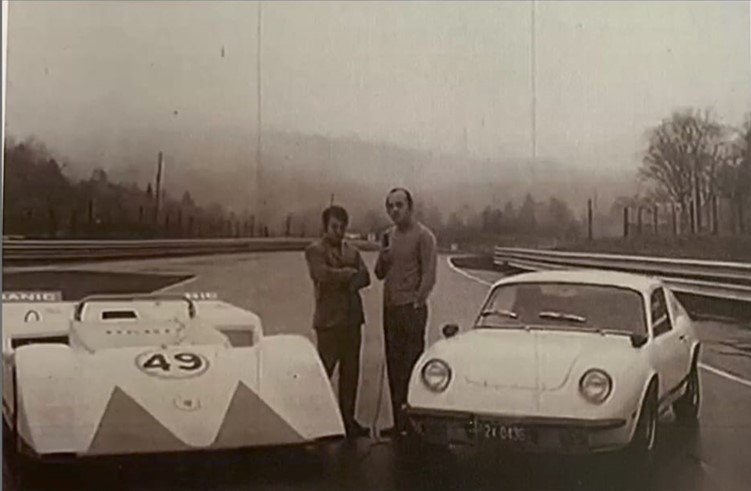
This initial effort in motorsports was fundamental in enabling the next step: the development of a production sports car. With financial support from private investors, government incentives, and industrial partnerships, About led the creation of the Manic GT, presented to the public at the 1969 Montreal Motor Show. The model embodied a clear proposition: to unite European design, structural lightness—thanks to the fiberglass body—and mechanics derived from Renault, especially the Renault 8, resulting in an accessible and technically interesting sports car. There were even ambitious plans for mass production, with targets reaching thousands of units annually.
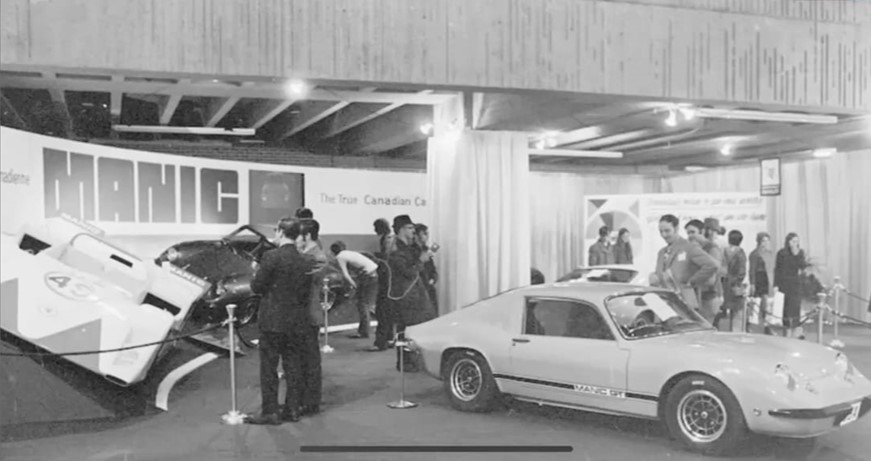
However, despite the initial enthusiasm and positive reception, the project proved structurally fragile. Dependence on components supplied by Renault exposed Manic to logistical and commercial limitations, while strategic decisions, such as the construction of a new industrial plant, significantly increased the financial pressure on the company. In a short time, supply difficulties, high costs, and insufficient cash flow compromised the continuity of the venture. Production of the Manic GT, which began in 1969, ended in 1971, with approximately 160 units manufactured, sealing the premature end of the company.
About the Manic PA-II
In this context, the PA II emerged as the natural evolution of a philosophy that, from the beginning, sought legitimacy on the racetrack. The Manic PA-II was developed in the late 1960s as a natural evolution of the company’s involvement with motorsport, which began with the Manic-GRAC single-seater.
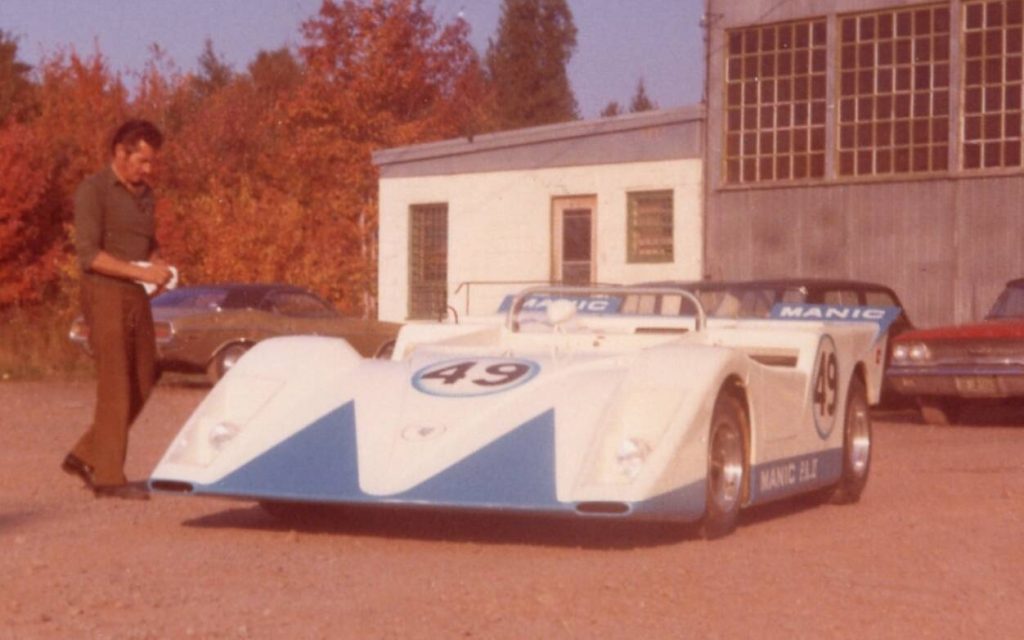
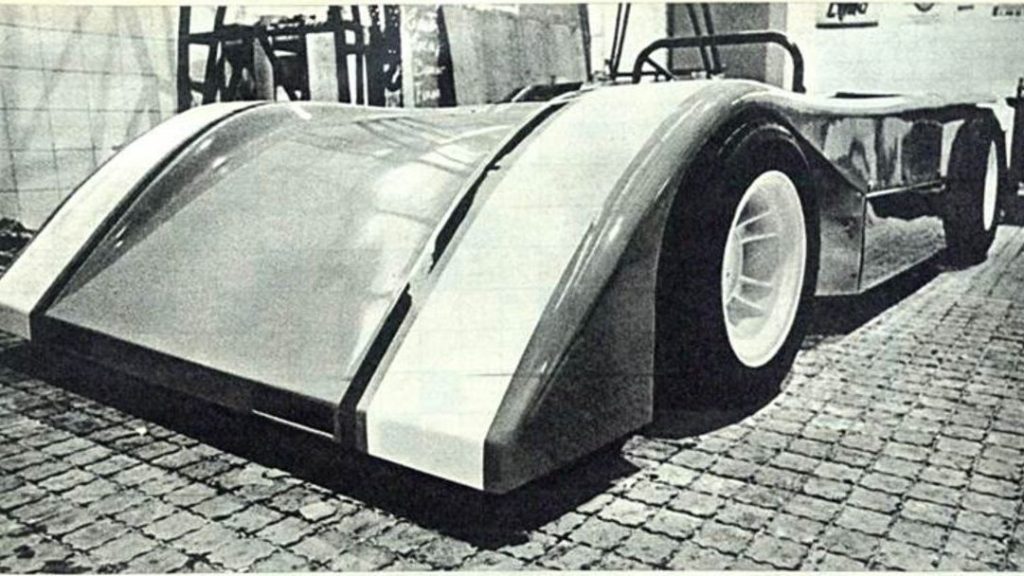
It was a car specifically designed for endurance races according to Group 6 regulations, conceived as a pure competition prototype, incorporating solutions typical of European sport-prototypes of the time.
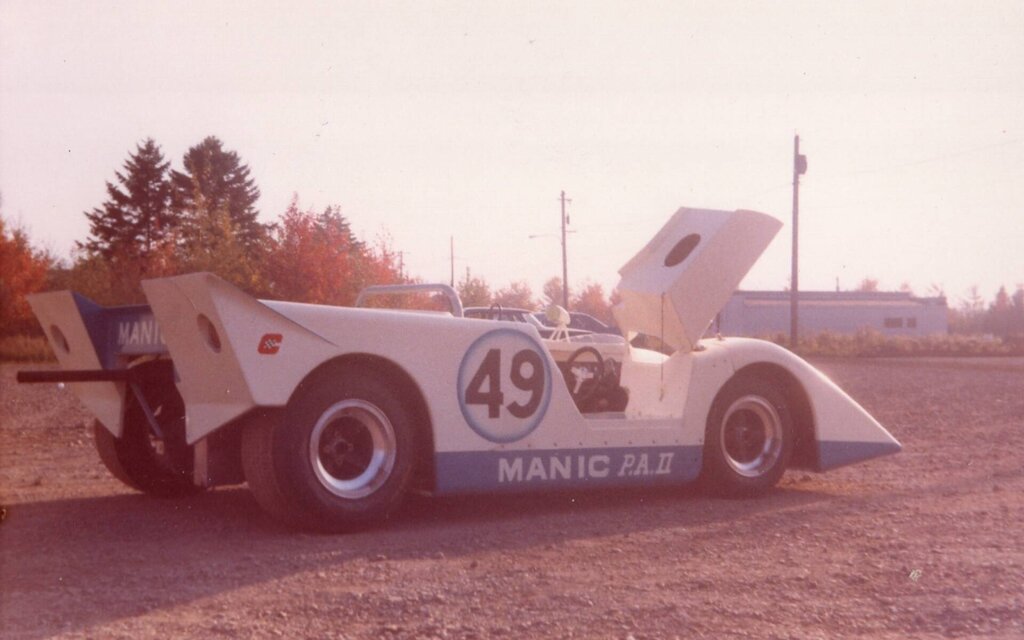
The chassis was inspired by Lotus Formula 2 single-seaters, with a barchetta-style (open) body. The prototype was equipped with an inline four-cylinder engine prepared by Brian Hart, a specialist in racing engines, coupled to a Hewland transaxle.
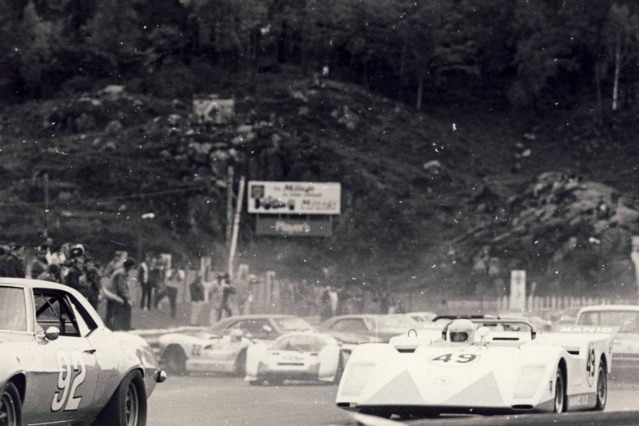
This setup positioned the PA II technically close to contemporary European prototypes, highlighting Manic’s ambition to compete at an international level. The PA II’s only competitive appearance was in October 1970, during the 6 Hours of Mont-Tremblant (6 Hours of ACAM), an endurance race held in Canada, resulting in a retirement due to a suspension failure.
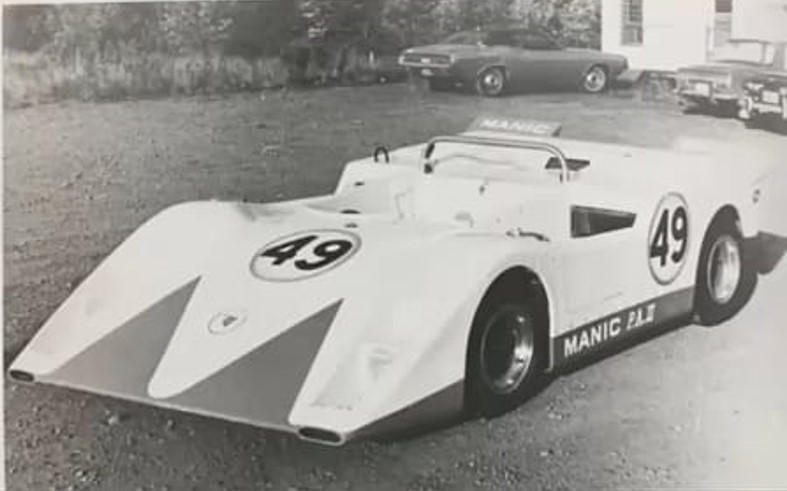
There were plans to expand the sports program with up to three cars, possibly driven by names like Jacques Couture and John Cannon, indicating a broader competition strategy—which, however, never materialized. After its brief participation in competitions, the Manic PA II was not continued, and the car was stored at the Manic factory. With the company’s bankruptcy in 1971, it is believed that it was sold along with the assets during the liquidation.
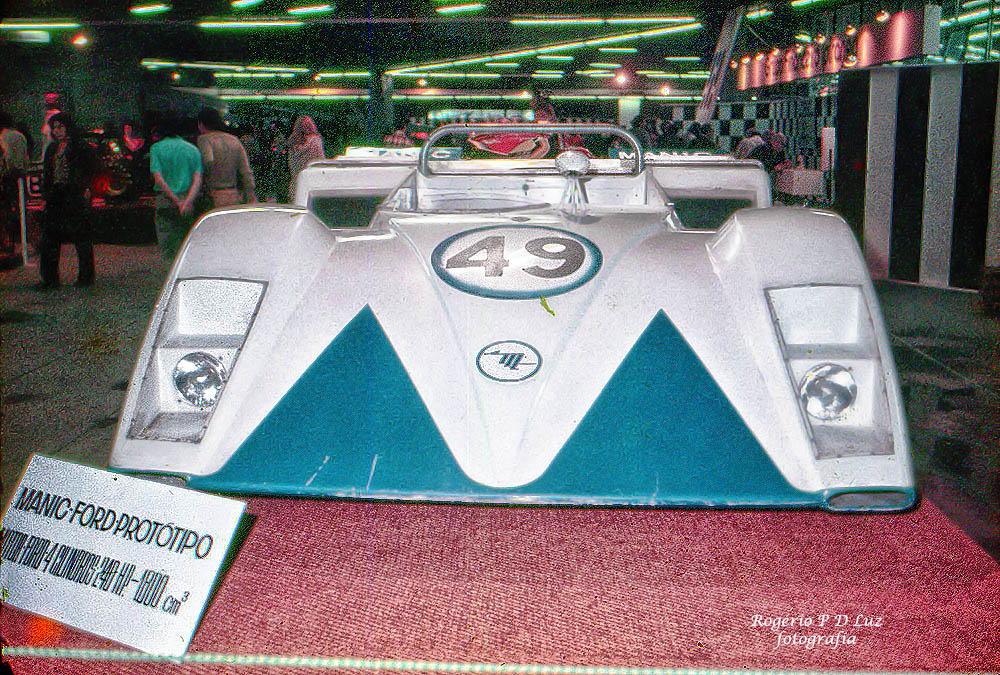
Interestingly, the prototype appeared in Brazil in 1972 during the Fittipaldi Motor Show, as evidenced by the record published by photographer Rogério P.D. Luz, who kindly provided the images for this publication. There are no extensive records of its survival, restoration, or subsequent use, which contributes to its status as a project practically lost in the history of Canadian motorsport.
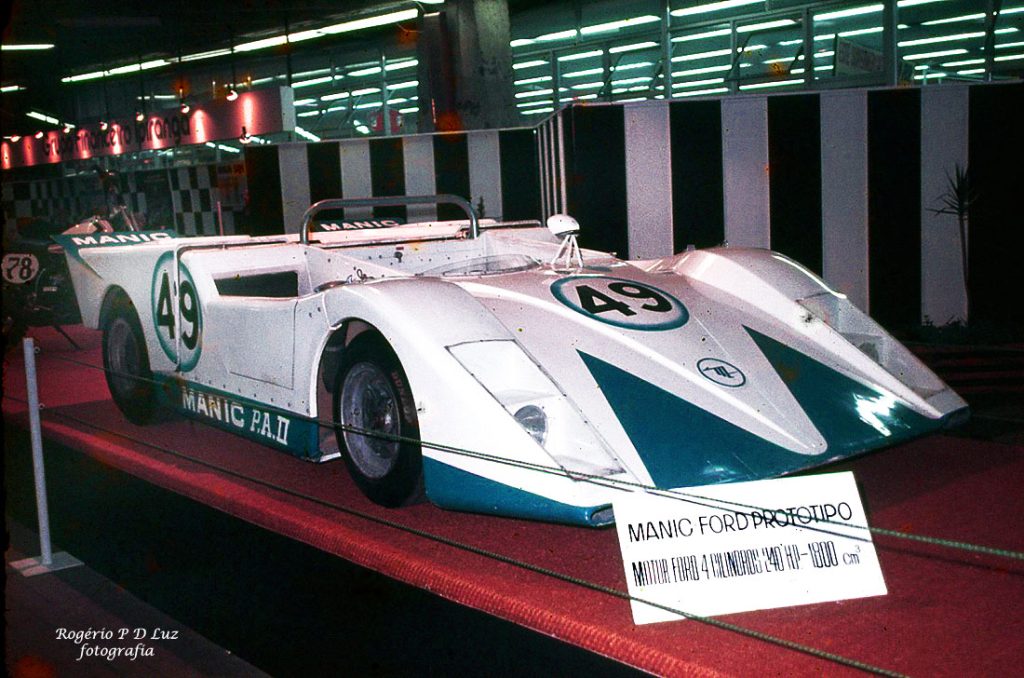
Despite its short lifespan, the Manic PA II represents one of the most ambitious moments in the Canadian motorsport industry. It demonstrates Manic’s attempt to go beyond being a manufacturer of road cars and position itself as a true builder of competition prototypes, aligned with international trends of the time.
Acknowledgments
We thank photographer Rogério PD Luz for granting us permission to reproduce his images for this post and to illustrate other publications on the site (more news coming soon!). In fact, the idea for this post came from curiosity after seeing one of his many photographs of our motorsports, so feel free to follow his Facebook page, which is regularly updated with photos from various eras and categories.
You might also be interested in:
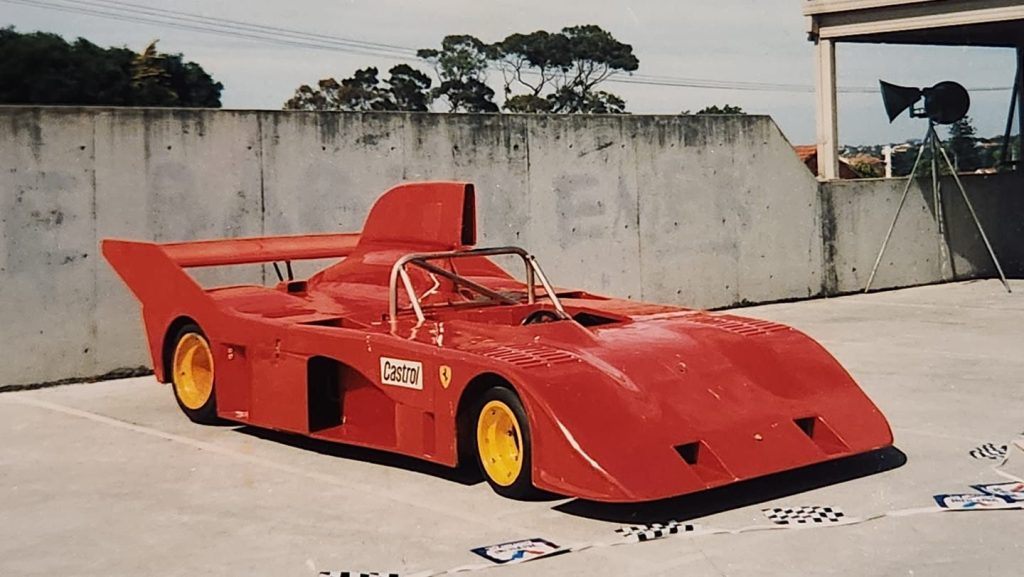
1972 Momo 5000
In the 1970s, the famous steering wheel manufacturer and gentleman driver Giampiero Moretti ventured into car manufacturing with the innovative but problematic Momo 5000.
1972 ENE 272
Developed as a graduation project by six graduating students from the Engineering course at UFRJ, the ENE-272 never got to compete.
Sources:
The 1961–77 Alpine A110 packs a rally pedigree and French charisma. Available at: https://www.hagerty.com/media/market-trends/valuation/1961-77-alpine-a110-packs-a-rally-pedigree-and-french-charisma/
La folle histoire de la Manic. Available at: https://www.7jours.ca/2022/06/11/la-folle-histoire-de-la-manic
1971 Manic GT. Available at: https://www.canadianautomotivemuseum.com/cars/1971-manic-gt
The Brief and Tumultuous Tale of Canada’s Manic GT. Available at: https://www.hagerty.com/media/car-profiles/the-brief-and-tumultuous-tale-of-canadas-manic-gt/
La Manic : un documentaire sur la voiture québécoise. Available at: https://www.guideautoweb.com/articles/57126/la-manic-un-documentaire-sur-la-voiture-quebecoise/
Avis de recherche : connaissez-vous cette voiture québécoise? Available at: https://www.guideautoweb.com/articles/57222/avis-de-recherche-connaissez-vous-cette-voiture-quebecoise/
Les 6 Heures ACAM du Circuit. Available at: https://www.guideautoweb.com/articles/57222/avis-de-recherche-connaissez-vous-cette-voiture-quebecoise/
The Manic GT- Canadian Automotive Museum Talk. Available at: https://www.youtube.com/watch?v=FzqNrpJLLq8
Manic GT. Available at: https://en.wikipedia.org/wiki/Manic_GT