
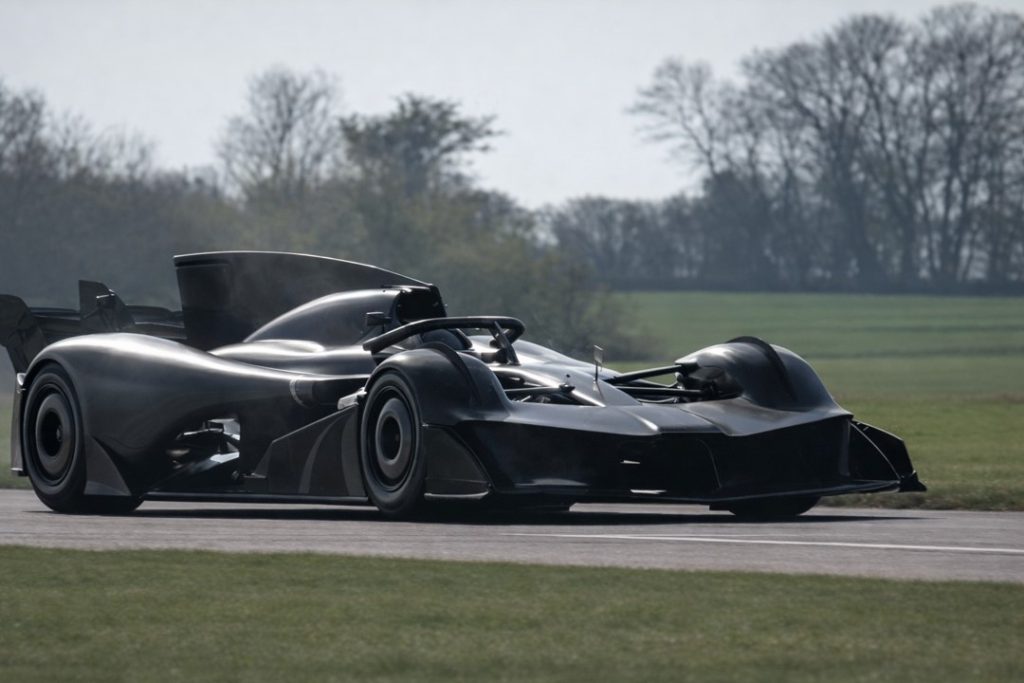
A potential contender for the world’s fastest car has emerged in a video posted this week by user Scubache 1969. The prototype, which blends elements of Formula 1 and the Aston Martin Valkyrie LMH, has attracted attention for its extreme design and potential performance.
From the video, we can see that the car is equipped with a naturally aspirated engine, with a sound similar to the V12 engine of the Valkyrie that competes at Le Mans, however, no official information has been released about the project.
Yesterday (April 11th), the website Auto Motor und Sport published the news that the car was commissioned by the American billionaire investor Ken Griffin. The objective was to develop the fastest racing car in the world, with rumors suggesting that the car could be 10 seconds faster than an F1 car.
Tech Analysis
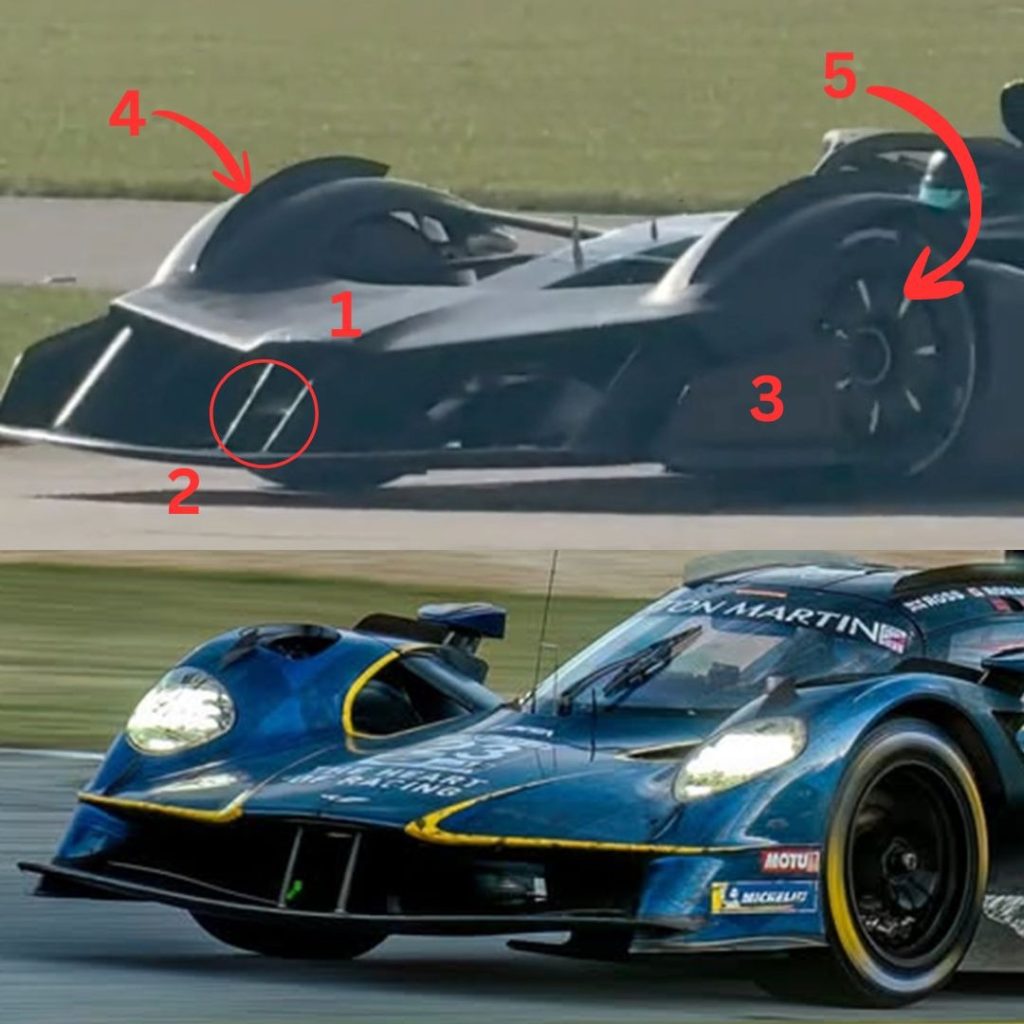
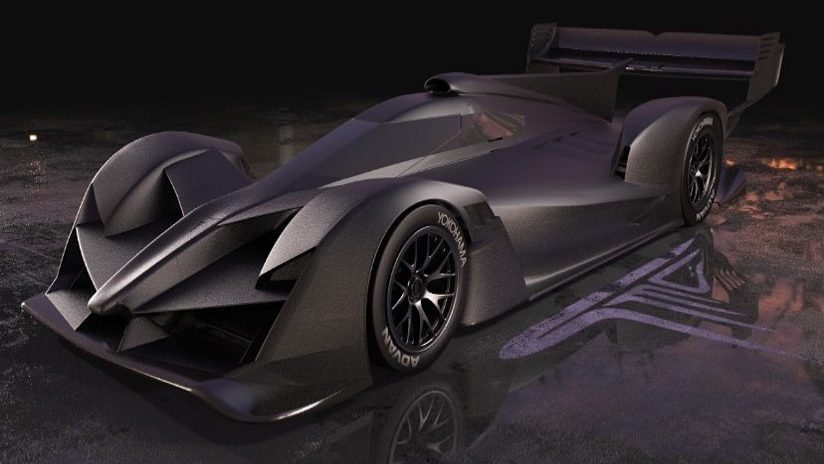
Interestingly, the car, which may still be a test mule, features some curious solutions. Starting with the front of the prototype, the nose (1) is reminiscent of the Valkyrie LMH, especially the wing support (2), but the front wing has a different shape, including an extension in the footplate area (3). Aerodynamic fences (4) have been positioned over the wheel arches. Incidentally, the wheels and tires look like they came directly from the British manufacturer’s Formula 1 cars (5).
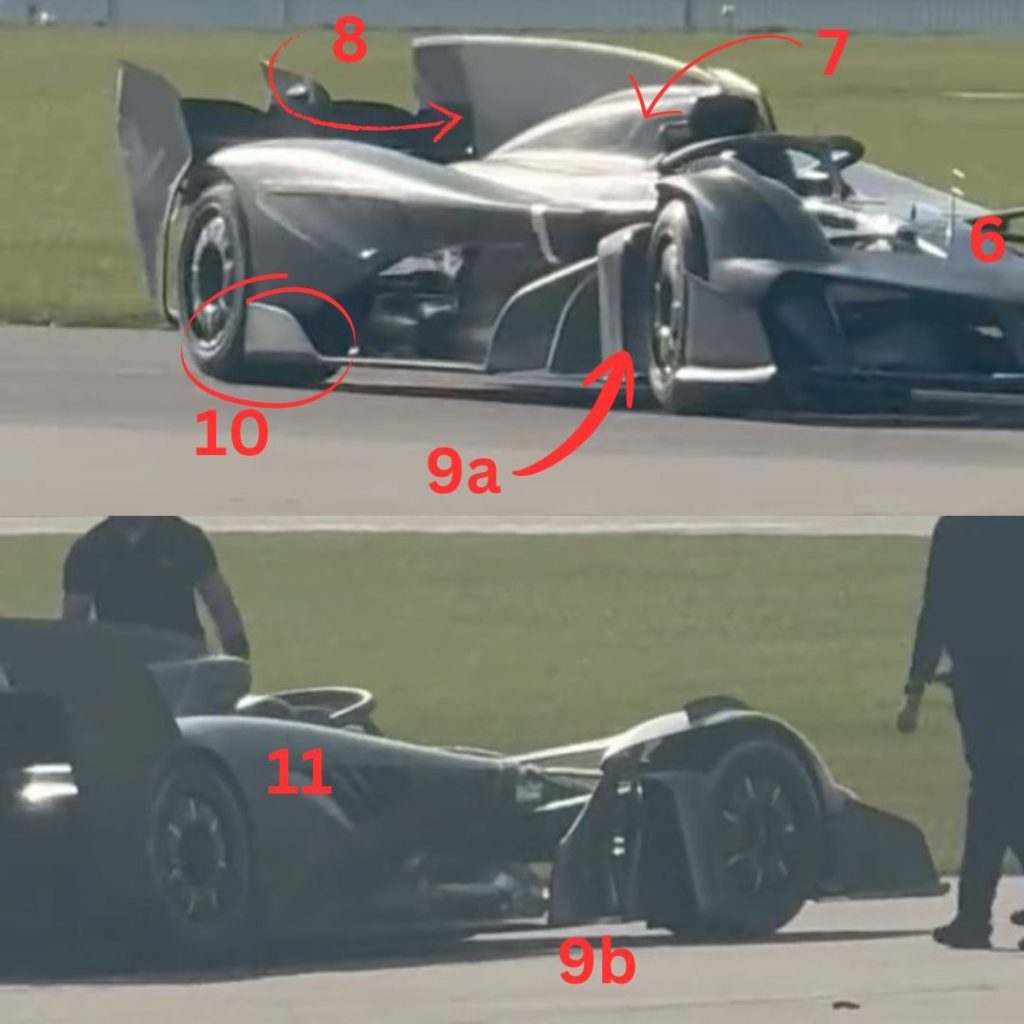
The car’s central section is practically that of a Formula 1 car (and perhaps it really is the monocoque of a past F1 car), with a suspension layout typical of single-seaters (6) and the presence of a HALO. The central air intake is also typical of F1 (7), with a robust dorsal fin above the engine cover (8). The wheel well outlets blend closed elements from the Valkyrie LMH (9a) with bargeboards (9b) similar to those used in the last generation of LMP1 prototypes. Added to this is a floor covering the entire perimeter of the car, with a kind of footplate (10) in front of the rear wheel wells. Incidentally, the sidepods (11) have a typical prototype shape, but the air intakes for the radiators are not completely visible in the images published so far.
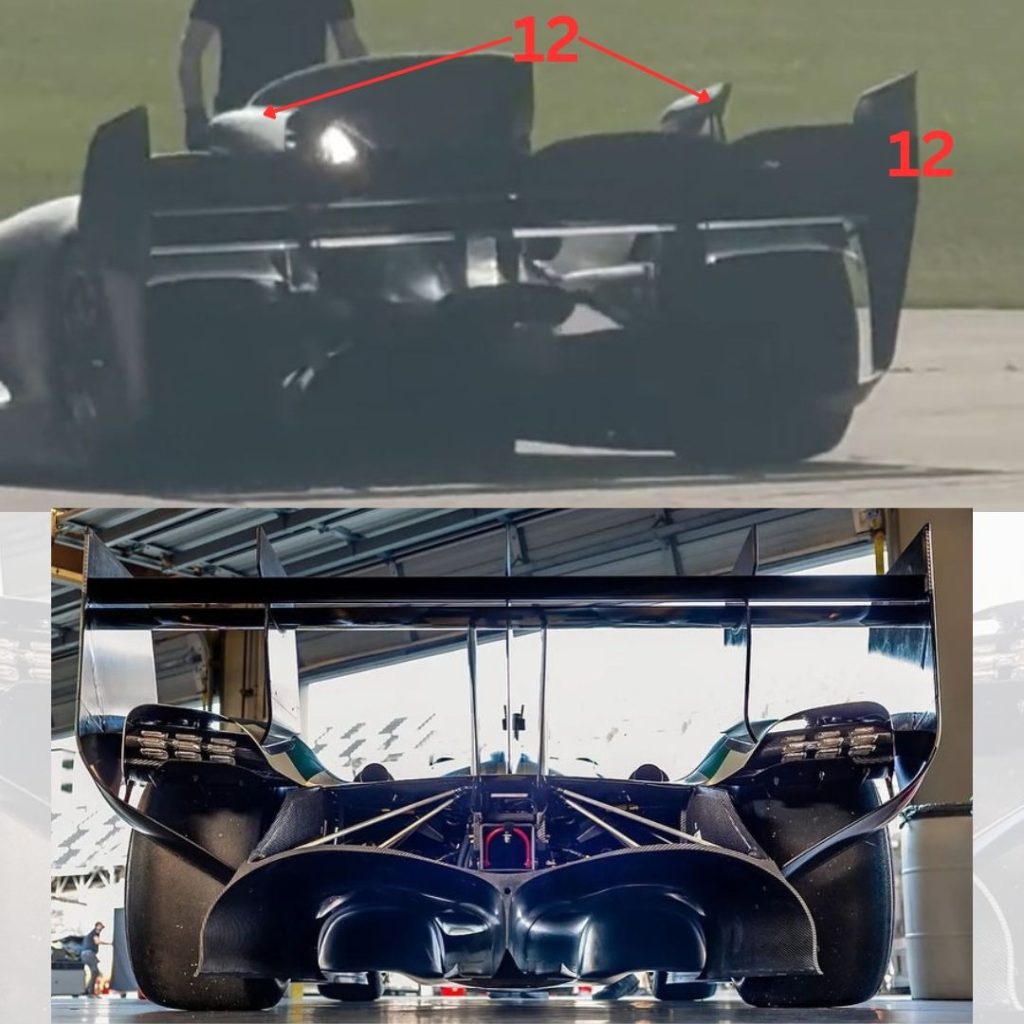
At the rear, the design philosophy is again similar to the Valkyrie LMH, with a two-element wing spanning the entire width of the car and connecting to the lower part of the diffuser (12). The same aerodynamic fence style as the Valkyrie and other Hypercars connected to the rear wing is also present (13). The diffuser itself is not fully visible, but what little can be seen indicates that it is similar to that of the Valkyrie, possibly with a larger expansion volume.
Sources:
Schneller als F1 und nur für diesen Sammler. Available at: https://www.auto-motor-und-sport.de/formel-1/aston-martin-protoyp-formel-1-rekorde/.
You might also be interested in:
2020 TMC M1
One of the most anticipated projects in Brazil is the TMC M1, from the company of the same name owned by former F1 driver Tarso Marques. More than just a racing prototype, the M1 will be a prologue and test laboratory for a hypercar that TMC has in its plans.
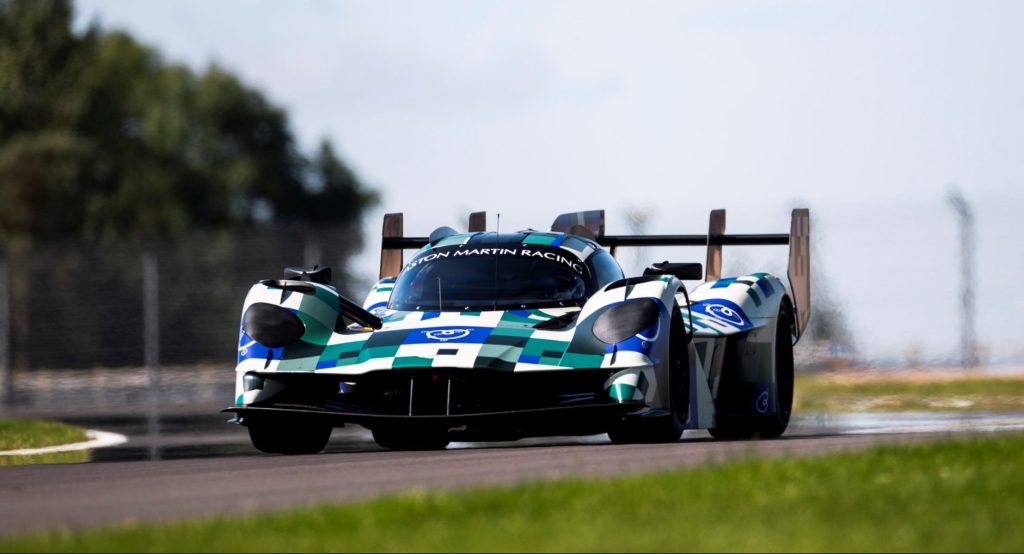
First Impressions – Aston Martin Valkyrie AMR-LMH
Our preliminary review of the Valkyrie LMH.

If the car really is 10 seconds faster than an F1 car, it could completely change our expectations for hypercar performance. I’m especially curious how the unique front nose and wing design will affect aerodynamics and handling on the track.
A prototype inspired by both Formula 1 engineering and the Aston Martin Valkyrie is genuinely extraordinary — the aerodynamic principles borrowed from top-tier motorsport translate into breathtaking performance potential. It’s remarkable to see this level of engineering ambition documented so clearly. Would love to see the full technical breakdown.
Fascinating engineering write-up. The design philosophy inspired by F1 aerodynamics really shows in how aggressively the body panels are sculpted — the Valkyrie’s influence is unmistakable. I’d love to see a suspension geometry breakdown once that data becomes available.
Blending Valkyrie-style aero with an F1-derived chassis is an ambitious combination, though it’s hard to judge top speed claims from a single TikTok clip without more context on the powertrain. Would love to see this outlet follow up if any dyno numbers or official specs surface later.
The aerodynamic efficiency targets cited here — getting drag coefficient below what current production hypercars achieve at comparable downforce — would represent a meaningful leap if the prototype validates the CFD modeling. Formula 1’s influence on road car architecture has always been strongest at the component level rather than overall philosophy, so the Valkyrie lineage makes sense as a reference point. Curious to see the full performance envelope when testing data is released.
Fascinating engineering concept — blending Formula 1 aerodynamics with road car design philosophy is an ambitious goal. Would love to see more technical detail on the powertrain approach.
Very informative. Give Rhyme Game a try if you like word games, it runs right in the browser.
A practical tip for those preparing files for congress presentations: converting 3D models can be a hurdle, but converting directly in the browser keeps your data private. If you work with BIM or prototypes, a quick 3mf to stl workflow helps when preparing technical figures. Hope the rescheduling goes smoothly.
If the car really is 10 seconds faster than an F1 car, it could completely change our expectations for hypercar performance. I’m especially curious how the unique front nose and wing design will affect aerodynamics and handling on the track.