Some racing cars are born from a carefully defined rule book, with every component designed around a specific set of regulations. Others are built because their creators simply want to see how far they can go. As you will find out, the Manderson Whiteland MW01 belongs firmly to the second group.
From MCR to Whiteland
The story of the MW01 actually begins years before the car itself. In 2004, Manderson approached Brazilian engineer Luiz Fernando Cruz with the idea of developing a Sports 2000 car for the British market. The collaboration resulted in MCR UK — Manderson Cruz Racing. Two cars were sent from Brazil to Britain in early 2005, with the British version adapted to the local regulations and differing from the Brazilian cars in several technical details.

Manderson raced the MCR in British Sports 2000 before eventually leaving the operation, which continued in Britain under Clive Hayes. The experience, however, left him with a direct connection to the MCR chassis that would later become the foundation of his most ambitious project, as Manderson began building what was initially known as the Whiteland Mk1.
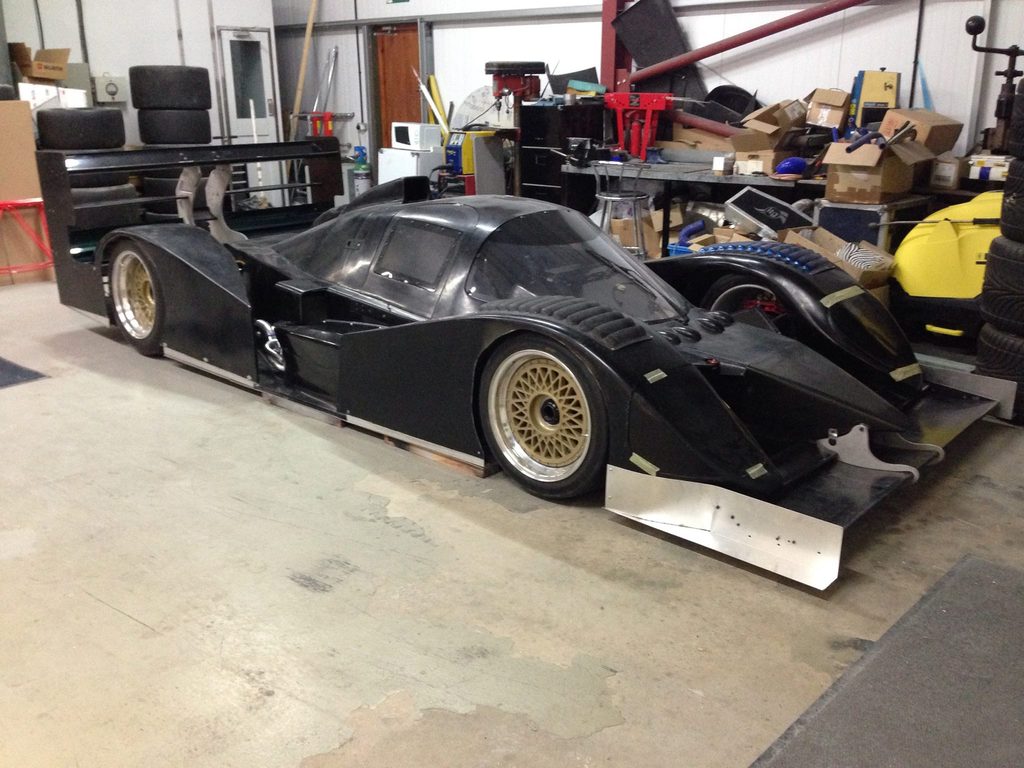
The project had originally been intended for Britcar, and by October 2016 had already consumed roughly seven years of work, Manderson describing the car as having been built by himself “with help from some amazing friends”. This, whoever, meant the construction process was lengthy and in the meanwhile Britcar regulations changed before the car was completed, as the Class 1 which previously allowed for a wide array of prototypes and GT machinery moved to a GT-only base.
This way, Manderson announced his intention to race it in the Open Sports Series (OSS) during 2017, as the series was almost tailor-made for Manderson’s philosophy. He liked the series precisely because it encouraged home-built cars and had very few restrictions providing a place for his creation to compete.
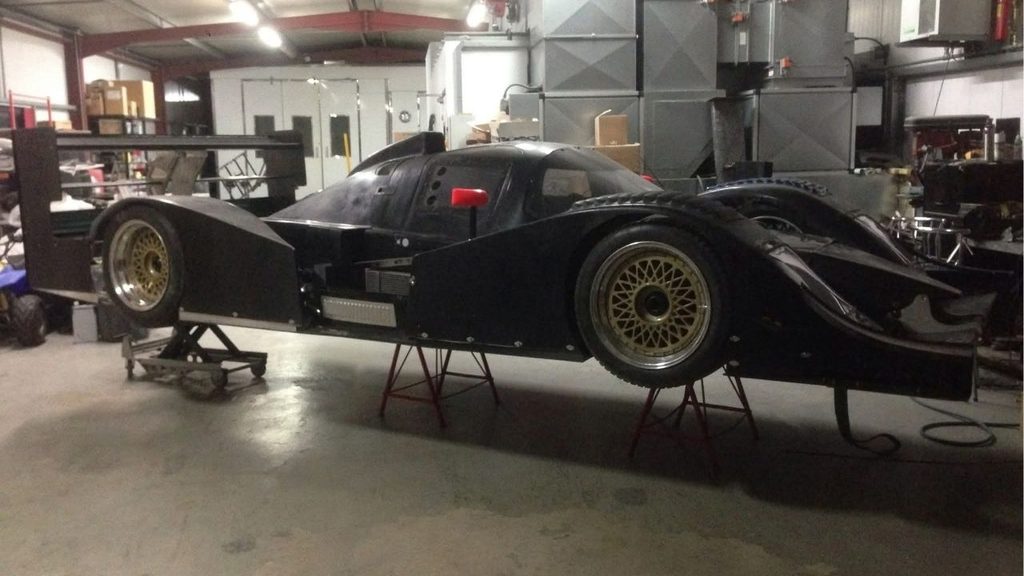
An open formula for an open-minded car
The MW01 was conceived as something of a personal interpretation of the ultimate sports prototype, described by its creator as his attempt to bring together some of his favorite eras of sports-car racing: Can-Am, Group C/GTP and Le Mans Prototypes, taking the characteristics he liked from each period and combining them into one machine, with the Allard J2X-C being one major influence on the design.
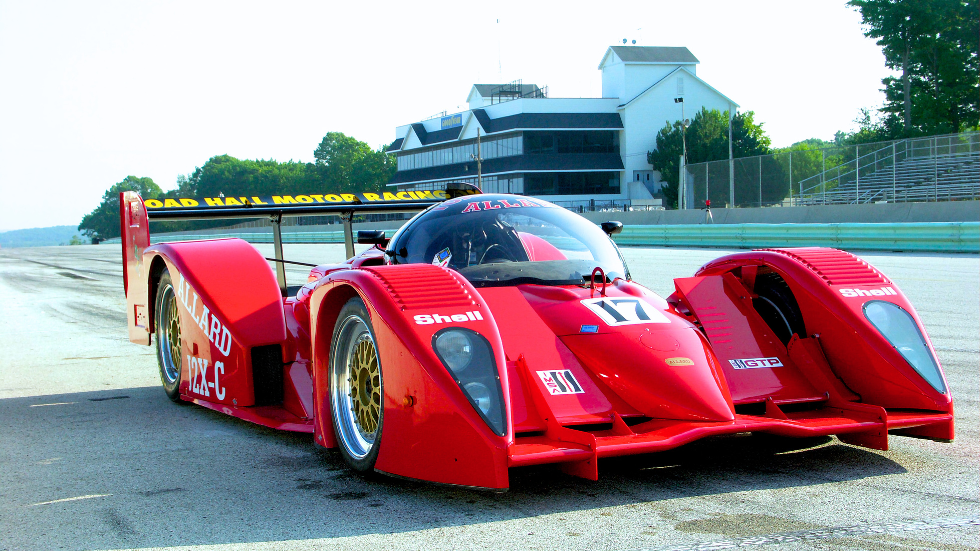
And the mixture of influences wasn’t merely theoretical. During an interview at the OSS Donington round, Manderson explained that the car incorporated a Group C car floor, front and rear wings from a relatively recent LMP, and various components from a 2004 BAR-Honda Formula 1 car. In other words, the MW01 was quite literally assembled from pieces of different generations of racing technology.
Powertrain: Twin Turbo LS9
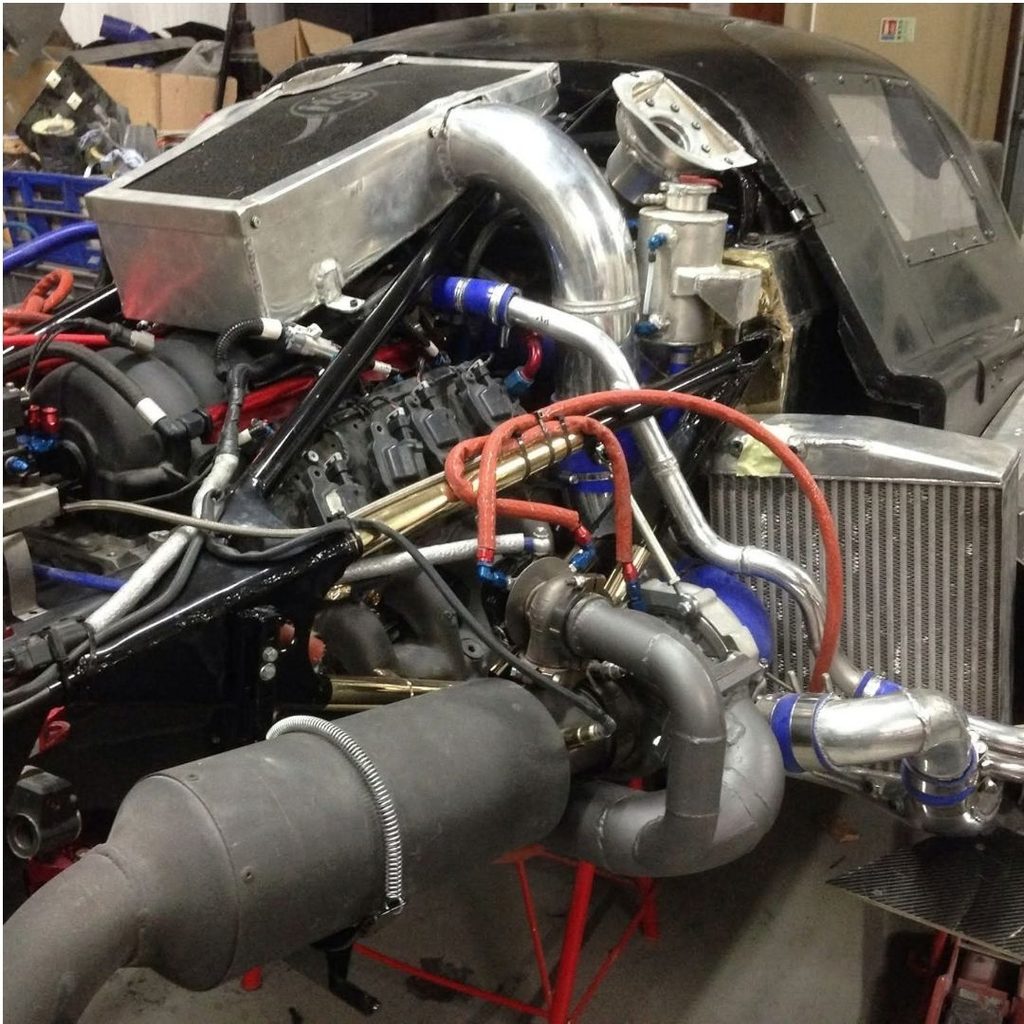
Power came from a 6.2-litre Chevrolet LS9 V8, originally developed as the supercharged engine of the Corvette ZR1.
Manderson replaced the standard forced-induction arrangement with two Garrett GT37 turbochargers, creating a twin-turbocharged powerplant intended to produce enormous amounts of power and torque, with a development target of around 1,200 hp.
The engine’s dyno testing demonstrated that the numbers were not entirely fanciful. Manderson reported that testing had been stopped after the engine reached 1,000 lb-ft of torque at 5,000 rpm (roughly translating to 950 HP), with the power still climbing strongly and approximately another 2,000 rpm available. The test was stopped rather than pushed to the engine’s ultimate limit, meaning the 1,000 lb-ft figure should be regarded as a measured point rather than the engine’s maximum torque output.
An engine producing that sort of torque required something considerably stronger than a conventional Sports 2000 transmission. Manderson chose a Raytec sequential six-speed gearbox. He described it as essentially a modern version of the March Group C gearbox, a design lineage associated with a number of major sports-prototype applications such as Jaguar’s Le Mans-winning prototypes, Mazda, Dan Gurney’s Toyota Eagle Mk III and Dyson Racing’s Riley & Scott. The unit installed in the MW01 was a new six-speed sequential version specifically built to cope with high torque.
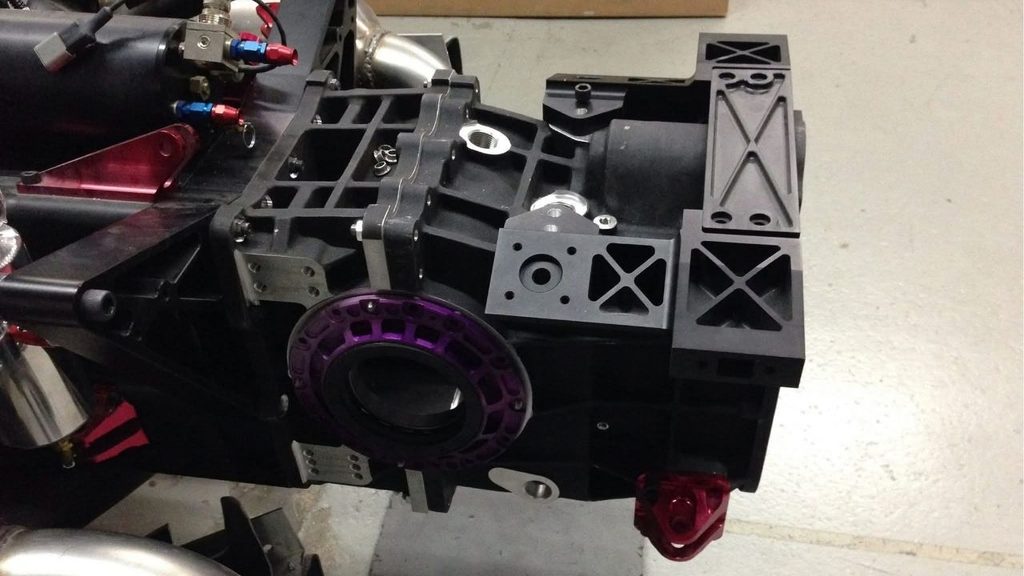
Even so, Manderson’s own comment about the transmission was telling: he hoped it would “do the job.”
Chassis: An MCR underneath, but very little Sports 2000 left
The starting point was an MCR Sports 2000 chassis, but Manderson went considerably further than simply modifying an existing race car.
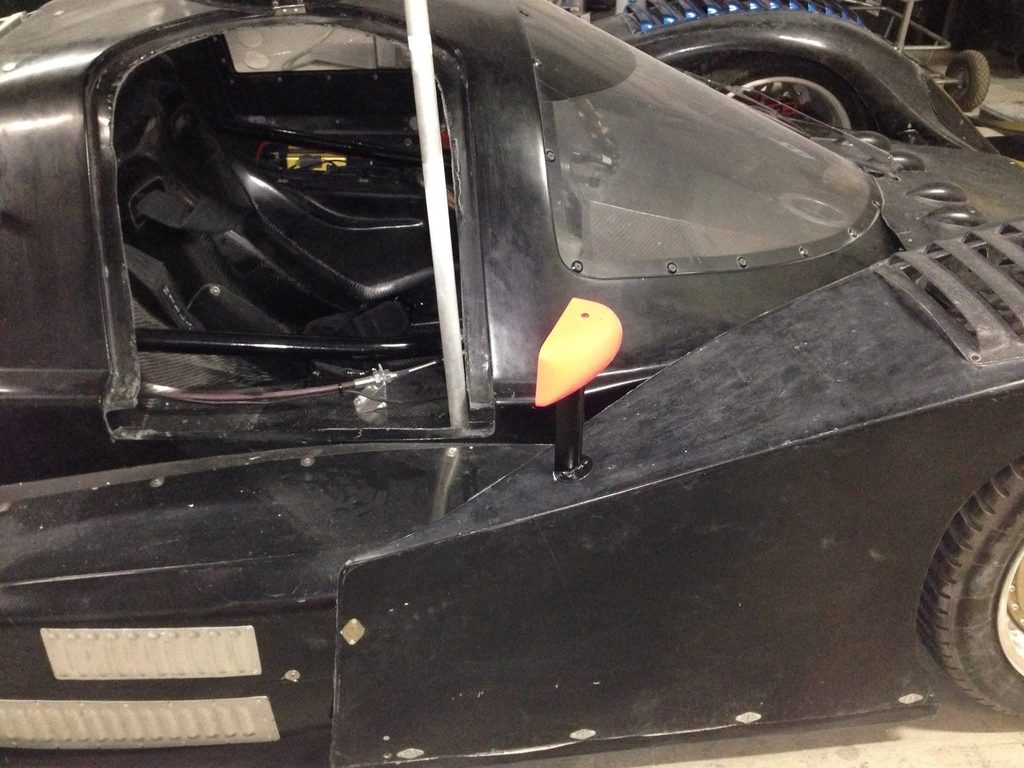
A carbon-fibre tub was built around an aluminium honeycomb structure, while the suspension and engine frame were the work of Chiron WSC.
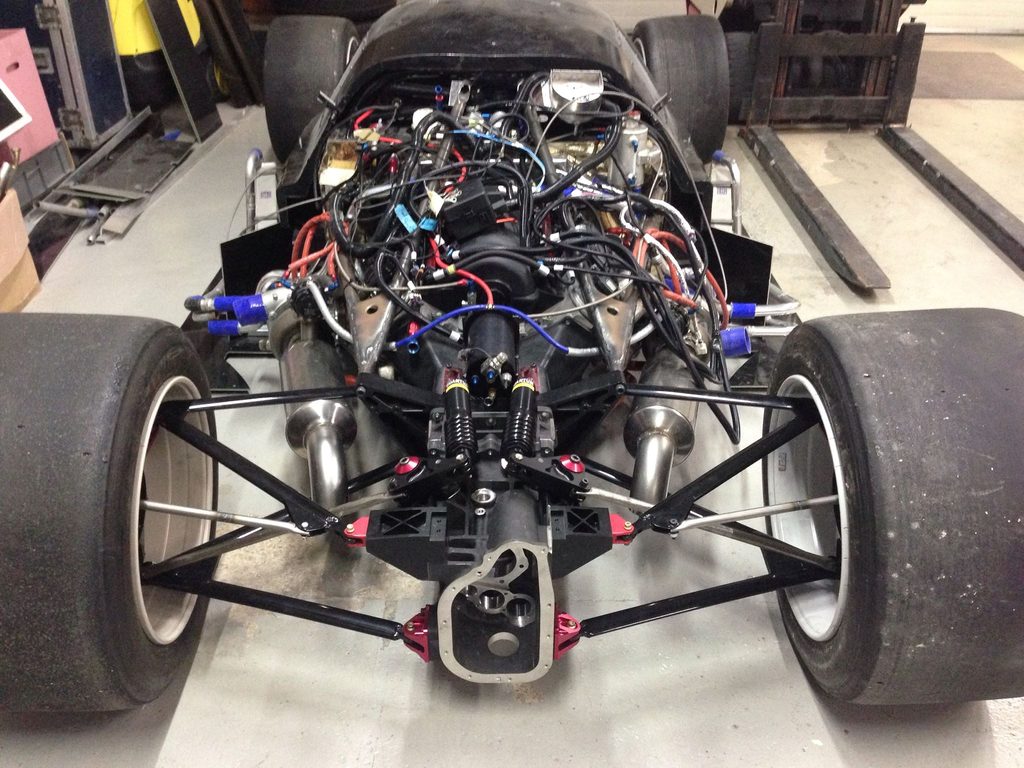
Once construction was finished, Manderson reported that the car weighed approximately 920 kg without a driver. The resulting machine retained a connection with the MCR lineage, but its engineering philosophy was now far removed from the relatively lightweight Sports 2000 cars for which the chassis had originally been developed.
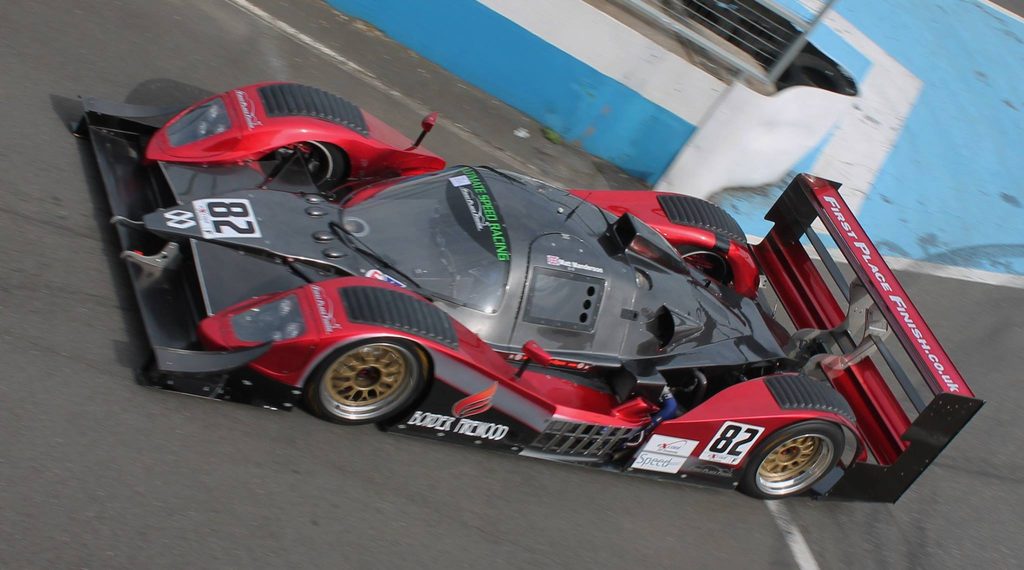
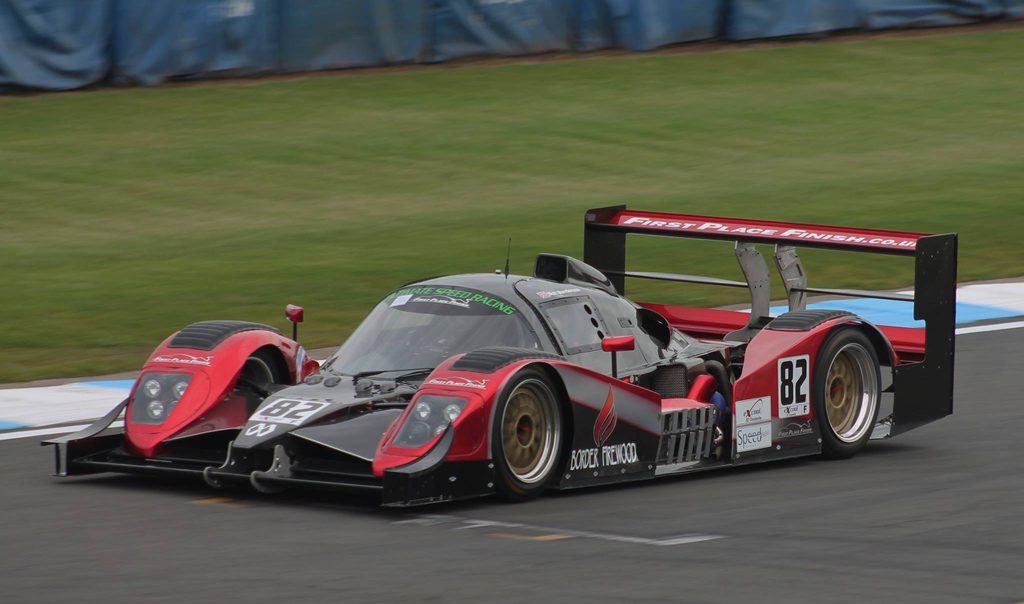
Visually, the result had an unmistakably LMP-like appearance, something noted by contemporary reporting when the car first reached the circuit.
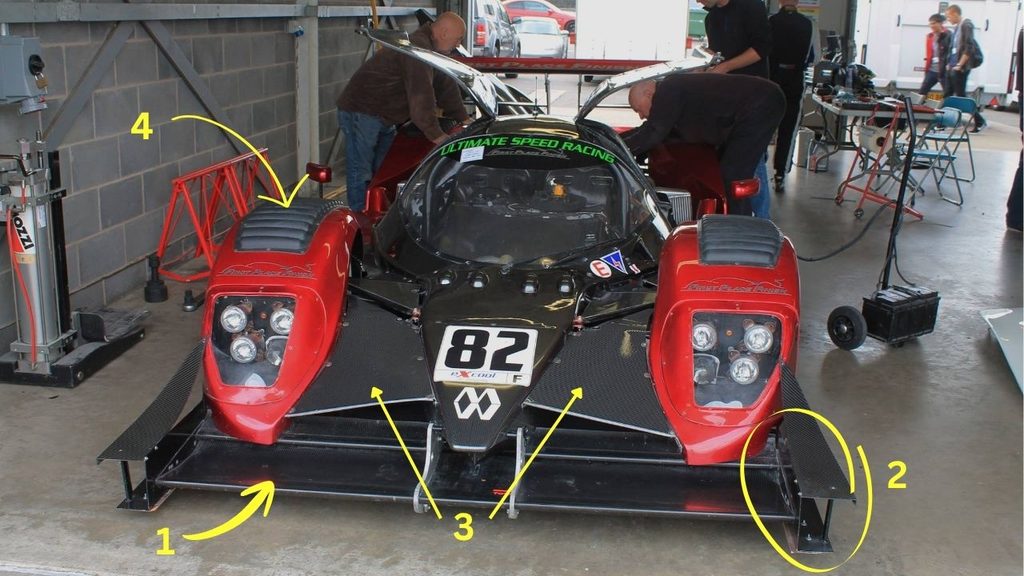
The car was reported as being able to generate up to 3.000 kgf of downforce at an unquoted speed. The front end bodywork features a two element wing (1) with a canard connected to the region of the footplate (2) and a pair of vanity panels covering the front suspension arms (3). The wheel wells are ventilated through louvres on top of the fenders (4).
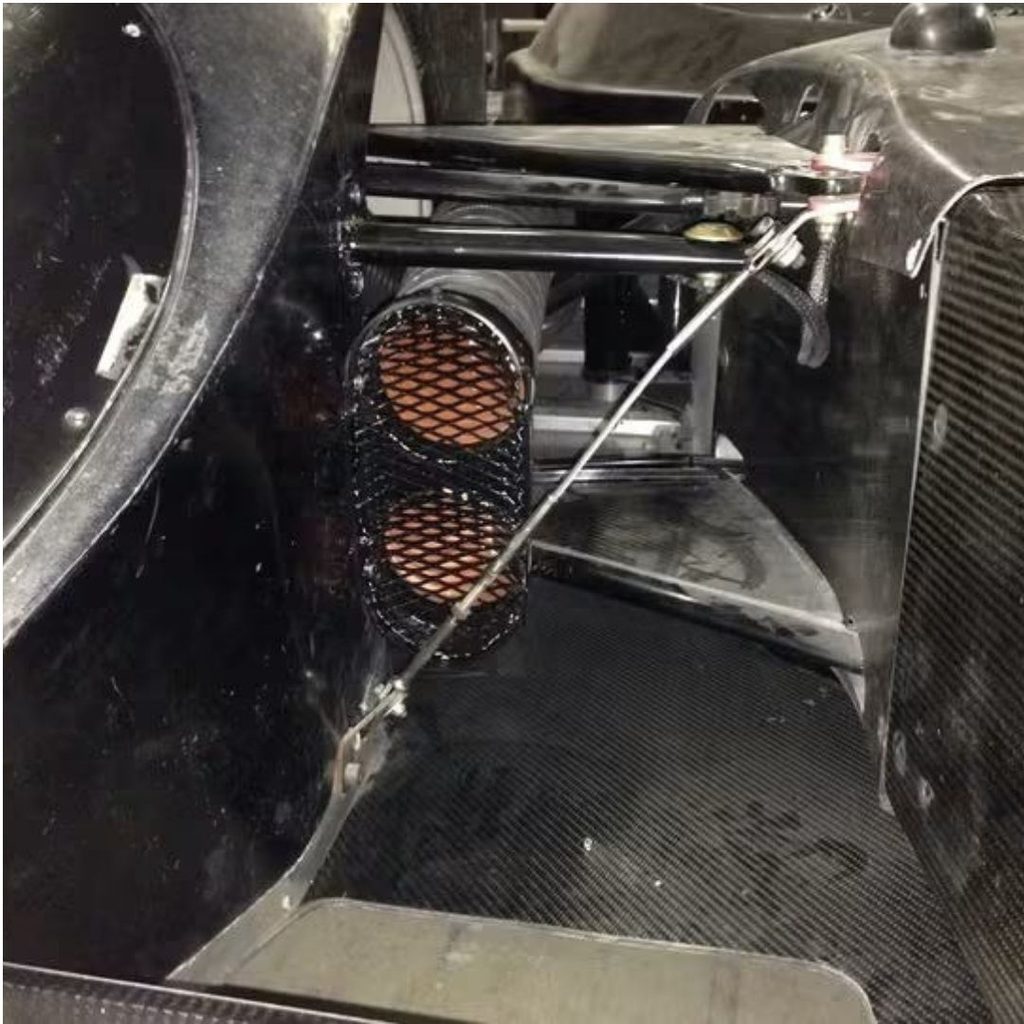
The front brakes are cooled with air ducts below the vanity panels.
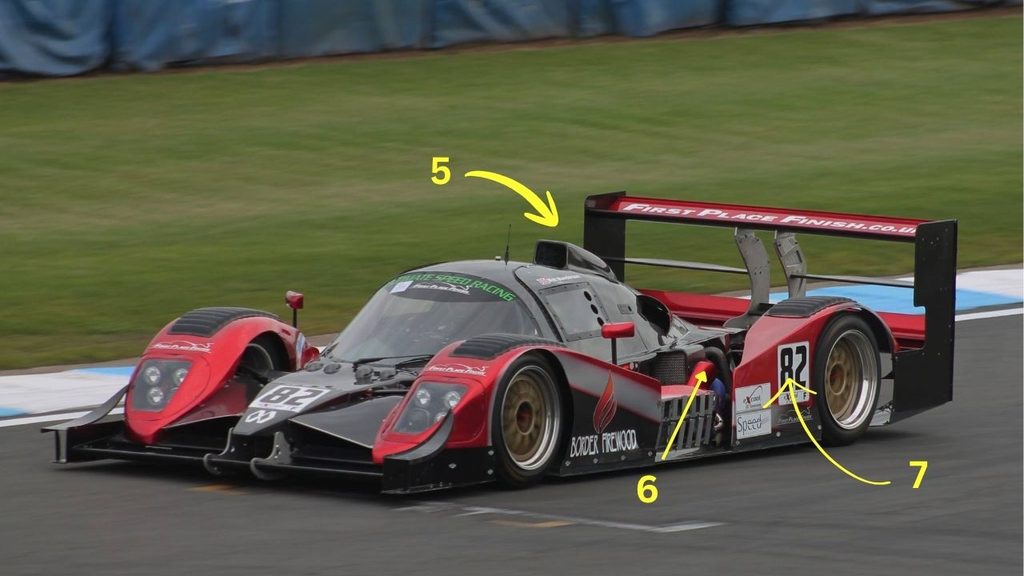
On the side, there is a roof scoop for the air intake (5) and the sidepod features a chimney style exhaust (6) and pontoon rear fenders (7) with venting louvres on top.
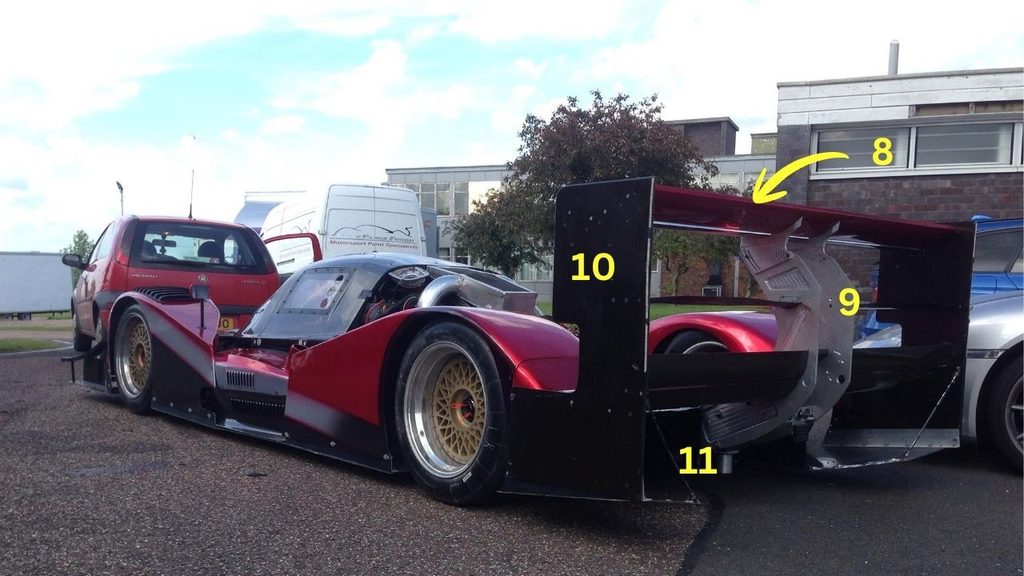
The rear end features a two element rear wing (8) with lower mount central supports (9) and full height endplates (10).
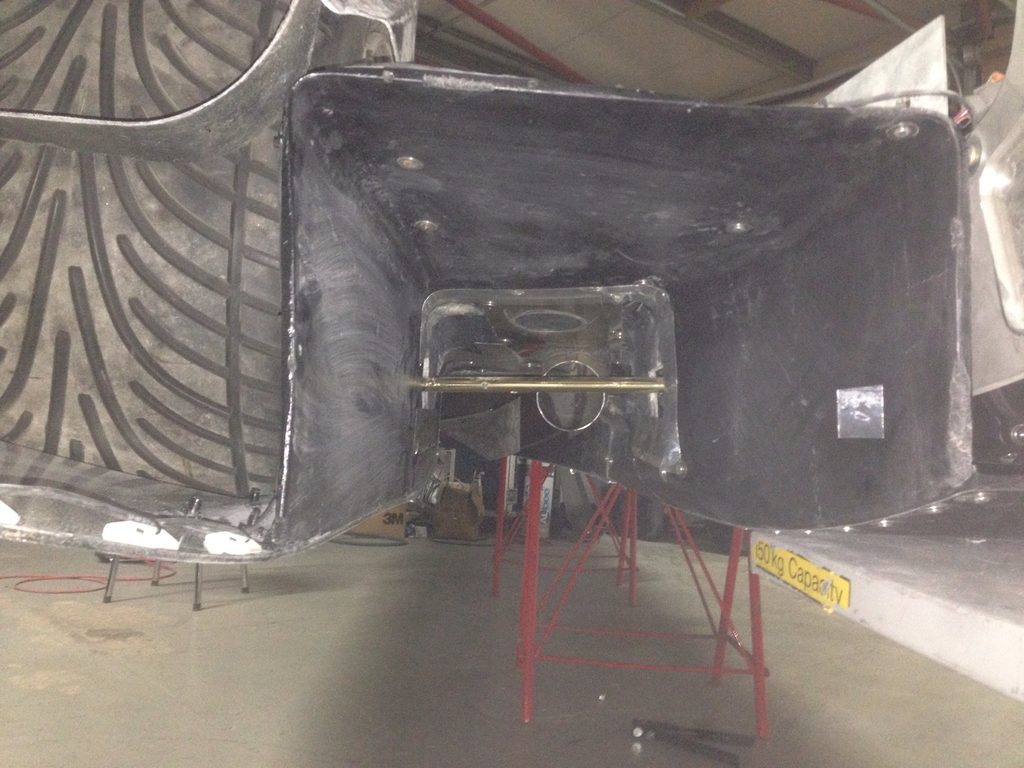
The diffuser features two tunnels with the exhaust placed inside them, in what looks to be a blown diffuser set up.
Finally on track
After seven years of construction, the MW01 finally reached Donington Park in 2017. The first outing was a shakedown rather than a perfectly sorted racing debut. Manderson reported some initial oil-related teething problems, but the car had finally made it onto a racing circuit.
The MW01 subsequently debuted in the BRSCC Open Sports at Donington. Manderson qualified on a modest 11th place with a time of 1m34s026, retiring from the first race after just 4 laps, and race 2 after 6 laps. Nevertheless, even with so little track time, Manderson was able to improve nearly 1 second from his qualifying time during race 2, a glimpse of how much potential was left in the machine.

For a project that had started years earlier as a home-built experiment and had survived a change in its originally intended regulations, simply reaching the grid was an achievement in itself.
Unfortunately, the car never received the opportunity to fulfil its enormous potential. After its debut, the MW01 saw relatively little further track action and eventually spent a considerable amount of time in storage, as Manderson focused his money and time on his son’s go-kart career. Next year Manderson expects to get the MW01 ready again with some fuel and oil systems upgrades, as his son will graduate from karting and the duo plans continue the development and racing the MW01 to its full potential.
Acknowledgments
We thank Matt Manderson for his review of the publication and his comments regarding the fate of the MW01, which enriched this publication.
Sources:
O nascimento do MCR. Available at: https://blogdosanco.blogspot.com/2009/08/o-nascimento-do-mcr.html.
British GT Championship – Round 8 – 23rd/24th September – Donington Park – 2017. Available at: https://www.tsl-timing.com/event/173805/session/rc1osc.
You might also be interested in:
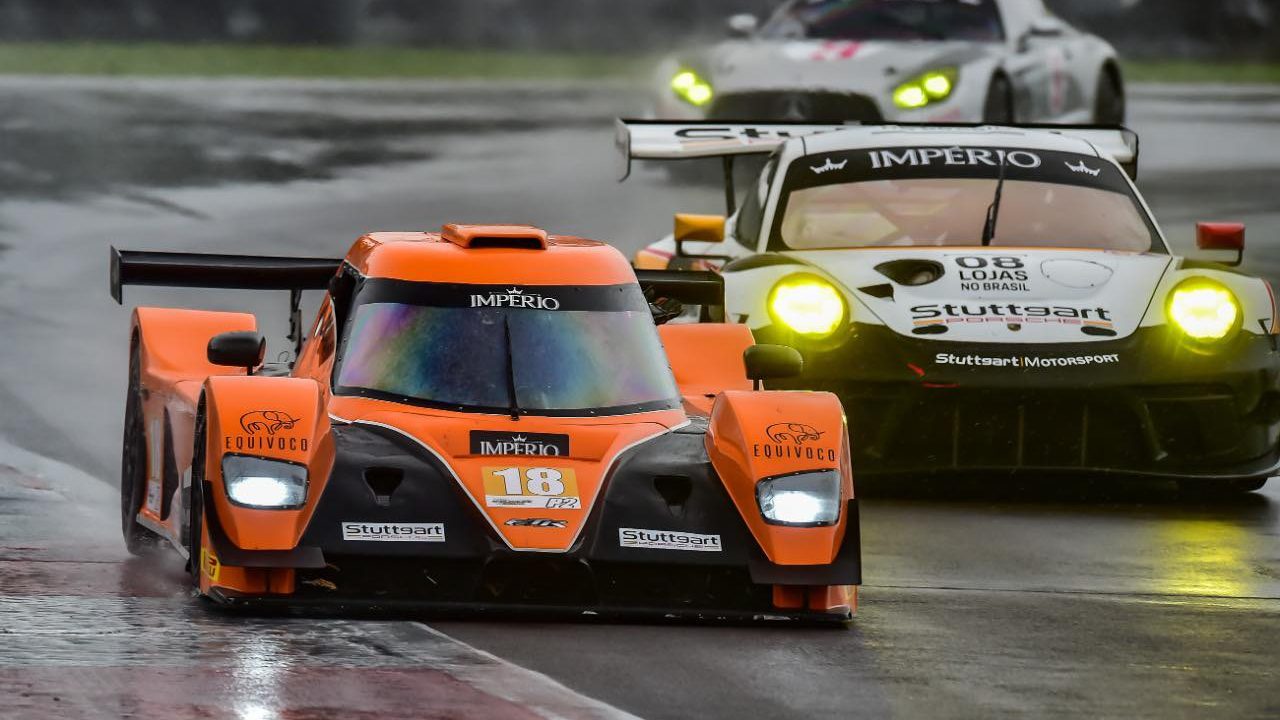
The latest creation of renowned engineer Luiz Fernando Cruz, the MCR Grand Am was built to the specifications of driver Fernando Poeta, utilizing the engine and transmission from a Lamborghini Gallardo GT3. The model’s achievements include an overall victory at the 2016 12 Hours of Tarumã.

The Colombian prototype that represents a milestone in the country’s racing car industry, combining performance with a relatively affordable cost.