In its 50th anniversary year, MC Tubarão officially unveiled the MC50 CA, a prototype marking a new phase for the long-standing team from Santa Catarina. In addition to making its debut in the Gaúcho Endurance Championship, the project will serve as the foundation for a future platform aimed at gentleman drivers and track day events. According to the team, a second unit of the model is already under construction.
The name MC50 CA brings together various elements of the team’s history. The acronym MC refers to the former Mecânica Carlinhos—a workshop founded by Carlinhos de Andrade that gave rise to MC Tubarão. The number 50 celebrates the team’s five decades, featuring the traditional stylized “5” from its visual identity, while the letters CA pay tribute to its founder. The new identity also incorporates a stylized fin, evoking the traditional shark (tubarão) that has been part of the team since its earliest prototypes.
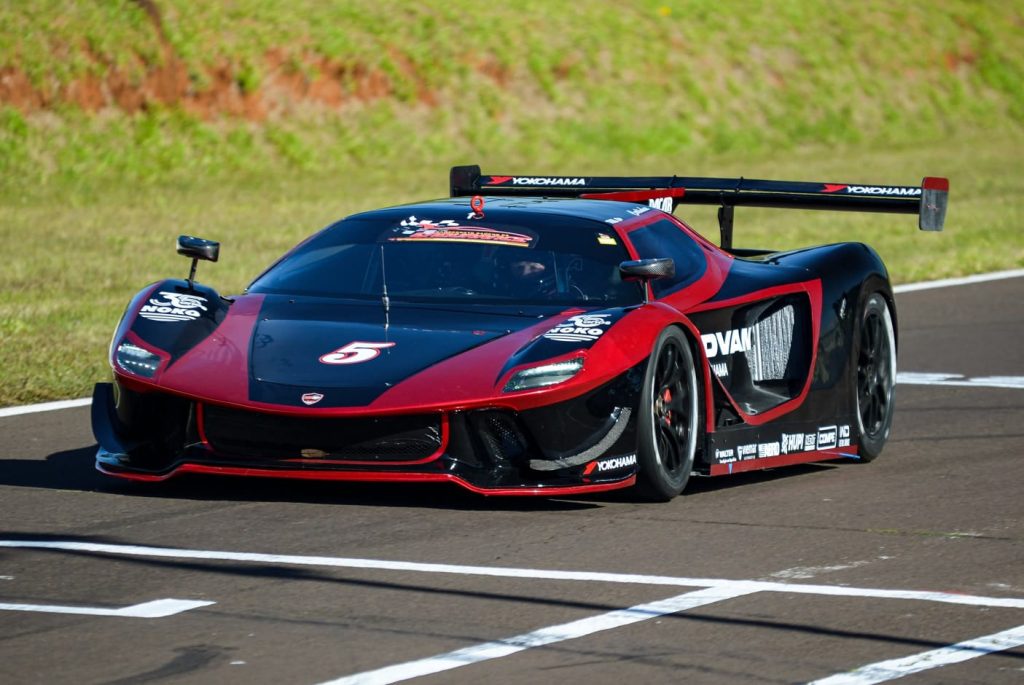
For the new car’s debut, the team will not prioritize on-track results. The entry will serve a development purpose, aiming to validate the prototype’s behavior under real race conditions, gather data, and accelerate the project’s evolution for the upcoming stages of the season.
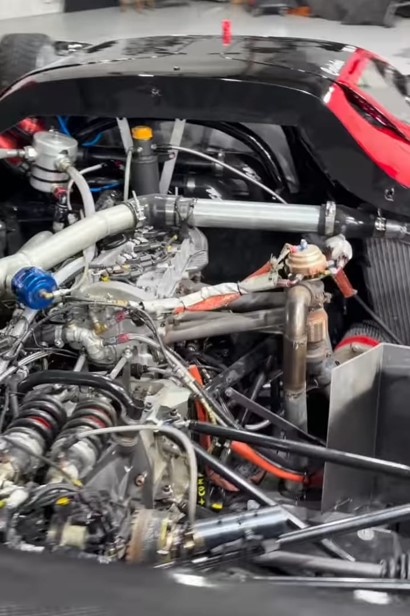
The MC50 CA features a mechanical setup comprising an Audi 20V Turbo engine tuned by Dacar Motorsport and a Hewland TMT transaxle—a combination already familiar from domestic prototype racing. The car is also equipped with Brembo brakes and 18-inch Yokohama Advan tires, and it weighs approximately 900 kg. Unlike the MC40, the powertrain is mounted longitudinally, and the rear suspension is a pushrod setup, with the dampers mounted atop the Hewland transaxle.
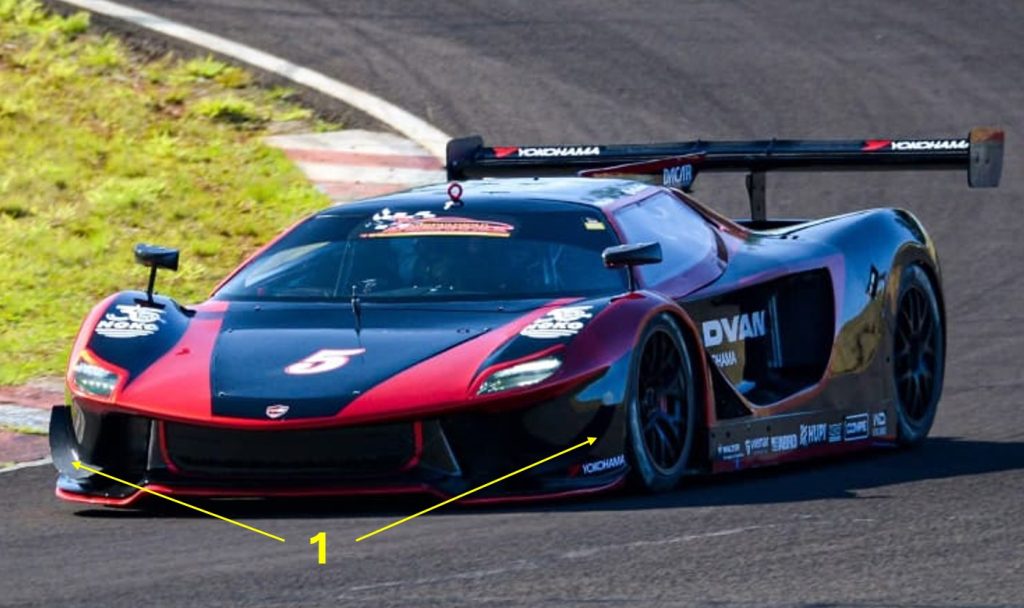
Up front, the styling follows the lines of modern GTs, reminiscent of Italian models yet without directly resembling any specific car. Additionally, we can see the canards (1), and it is interesting to note the absence of hood vents or wheel arch louvers.
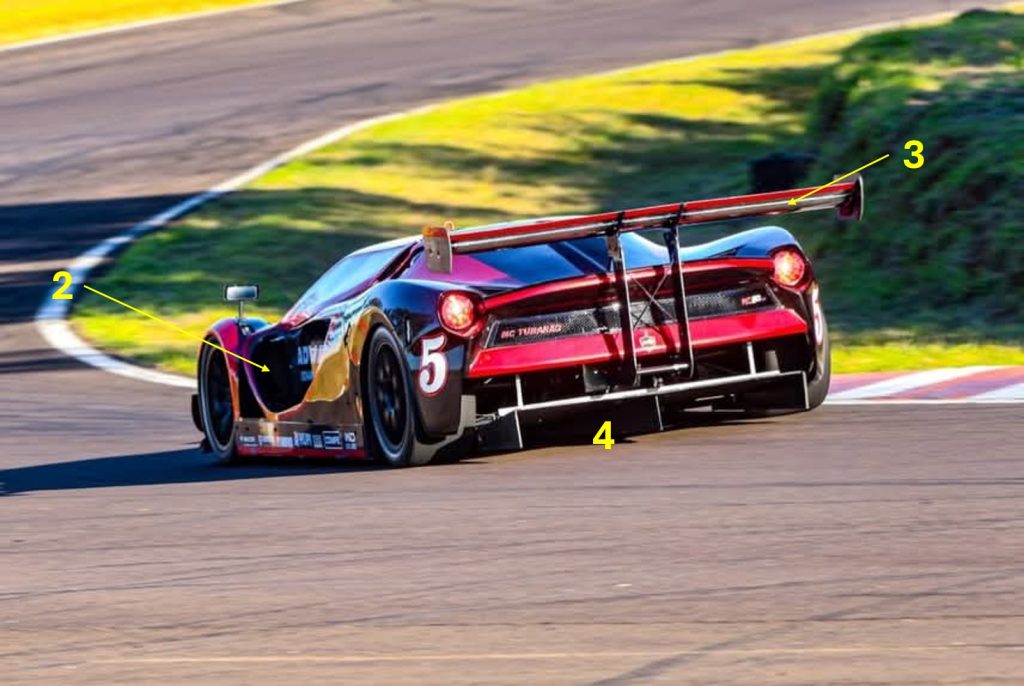
This absence is likely compensated for by the ventilation openings positioned just behind the front wheels (2). In this image, we can see the two-element rear wing (3)—featuring traditional bottom-mounted supports attached directly to the transaxle—and the rear diffuser (4), which has a central flow divider.
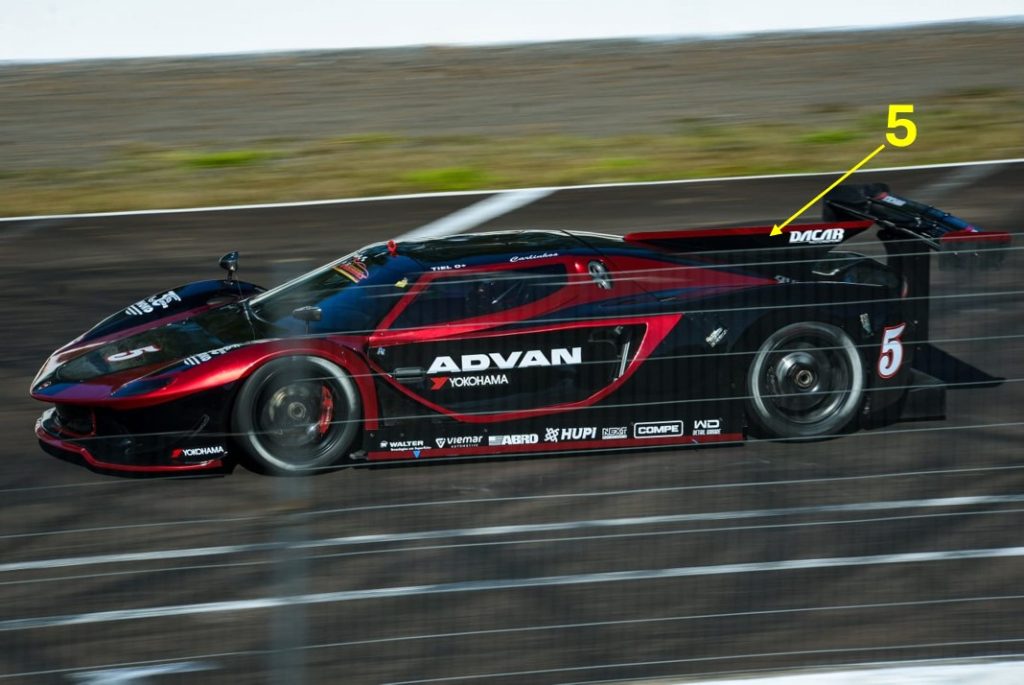
Below is the dorsal fin (5), an item that became common in the Campo Bom team’s projects, both due to its function and its relationship with the team’s name. The rear light group consists of a circular element on each side as a taillight, in addition to the rain light that has an intermittent function when the vehicle is in pit stop mode.
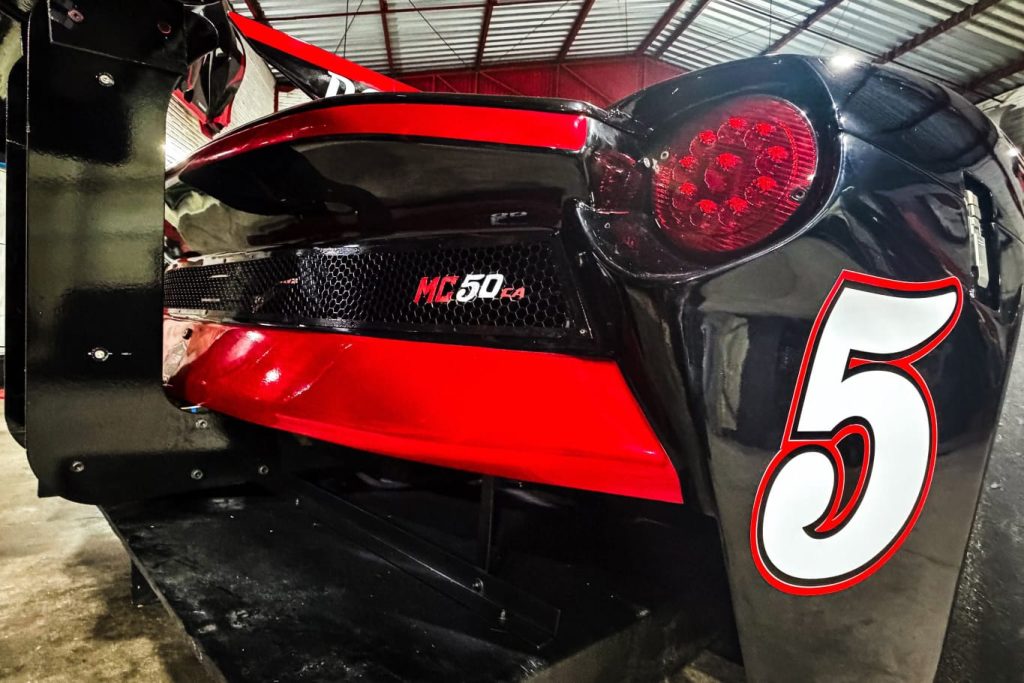
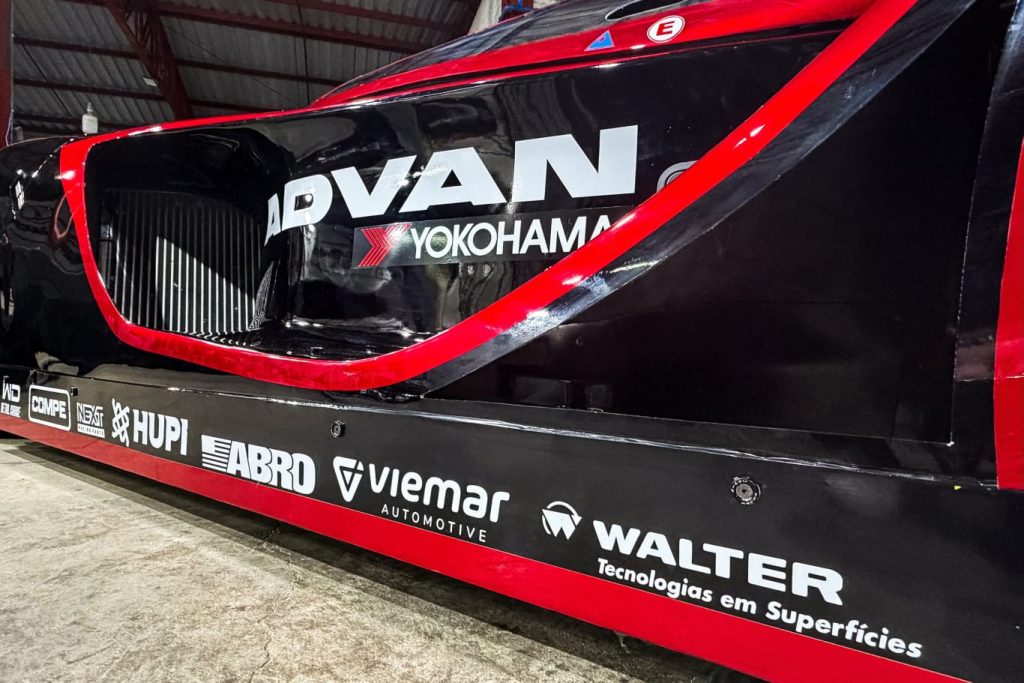
Another interesting detail is the layout of the cooling system. The air intake on the right side feeds the intercooler, with the engine air intake positioned just behind it, while the left air inlet serves the oil cooler—demonstrating a focus on thermal efficiency and component balance.
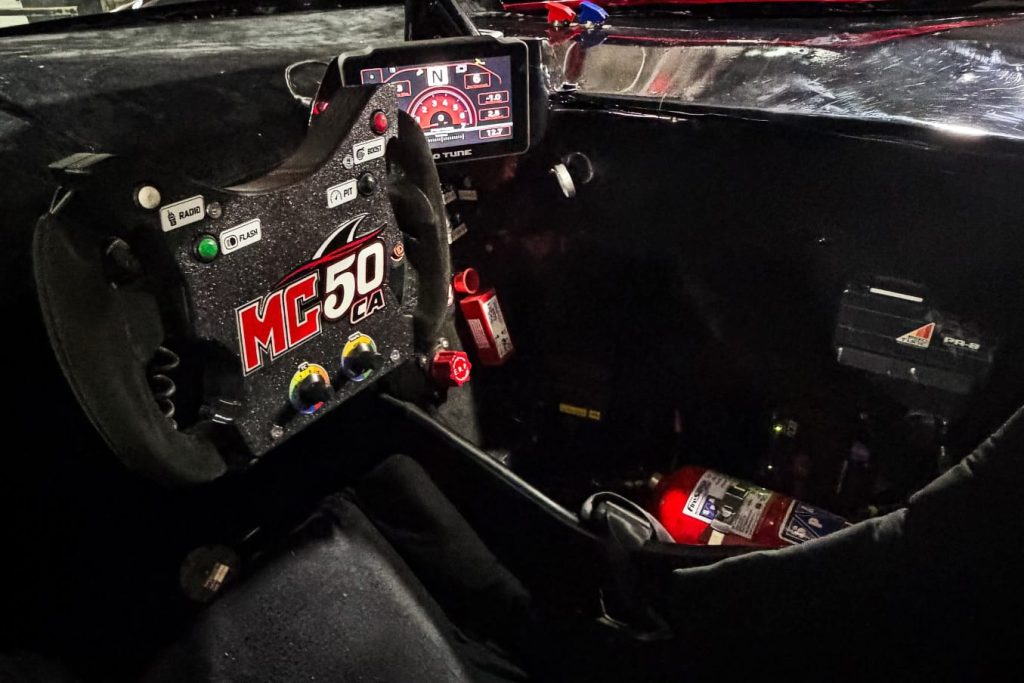
In the cockpit, the new steering wheel—based on the Lotse Volantes R-Line model—stands out. The assembly features a unique housing designed by João Wecker and 3D-printed, lending a modern, personalized look to the prototype’s interior.
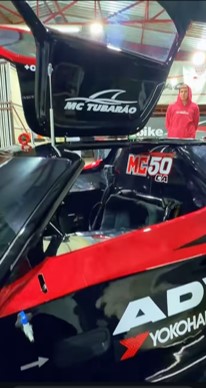
Interestingly, the cockpit features gull-wing doors that do not open all the way down to the bottom; instead, they are closer to the flip-up windows found on prototypes, yet offer a better entry angle without compromising structural rigidity.
According to team principal Carlos Geison “Né” Andrade, the debut represents just the first step of a project designed to evolve over the coming years.
“We are experiencing a very important moment for MC Tubarão. After months of intense work in the workshop, the time has come to put the MC50 CA on the track. We know that we still have a lot of development ahead, but this first step marks the beginning of a new story for the team. In addition to paying homage to our father, Carlinhos de Andrade, the MC50 CA represents the future of MC Tubarão and a project designed to evolve in the coming years.”
Driver Tiel de Andrade explains that the objective goes beyond competitions, envisioning the commercialization of the platform for future clients.
“The MC50 CA represents much more than just a new car. We specifically chose this name because it symbolizes our father’s legacy—one we aim to preserve and carry into the future. This will be a development-focused run, allowing us to better understand the car’s behavior and continue its evolution. It is merely the first step in a project designed for long-term continuity. Our intention is to develop future versions of the MC50 CA and offer this platform to clients and drivers seeking a modern, competitive car developed by MC Tubarão.”
The debut of the MC50 CA marks the beginning of a new generation of prototypes from the Santa Catarina-based team. More than just replacing previous models, the project demonstrates a strategy focused on the continuous development of a proprietary platform capable of serving both endurance racing competitions and the growing market for track-day cars and gentleman drivers.
You might also be interested in:
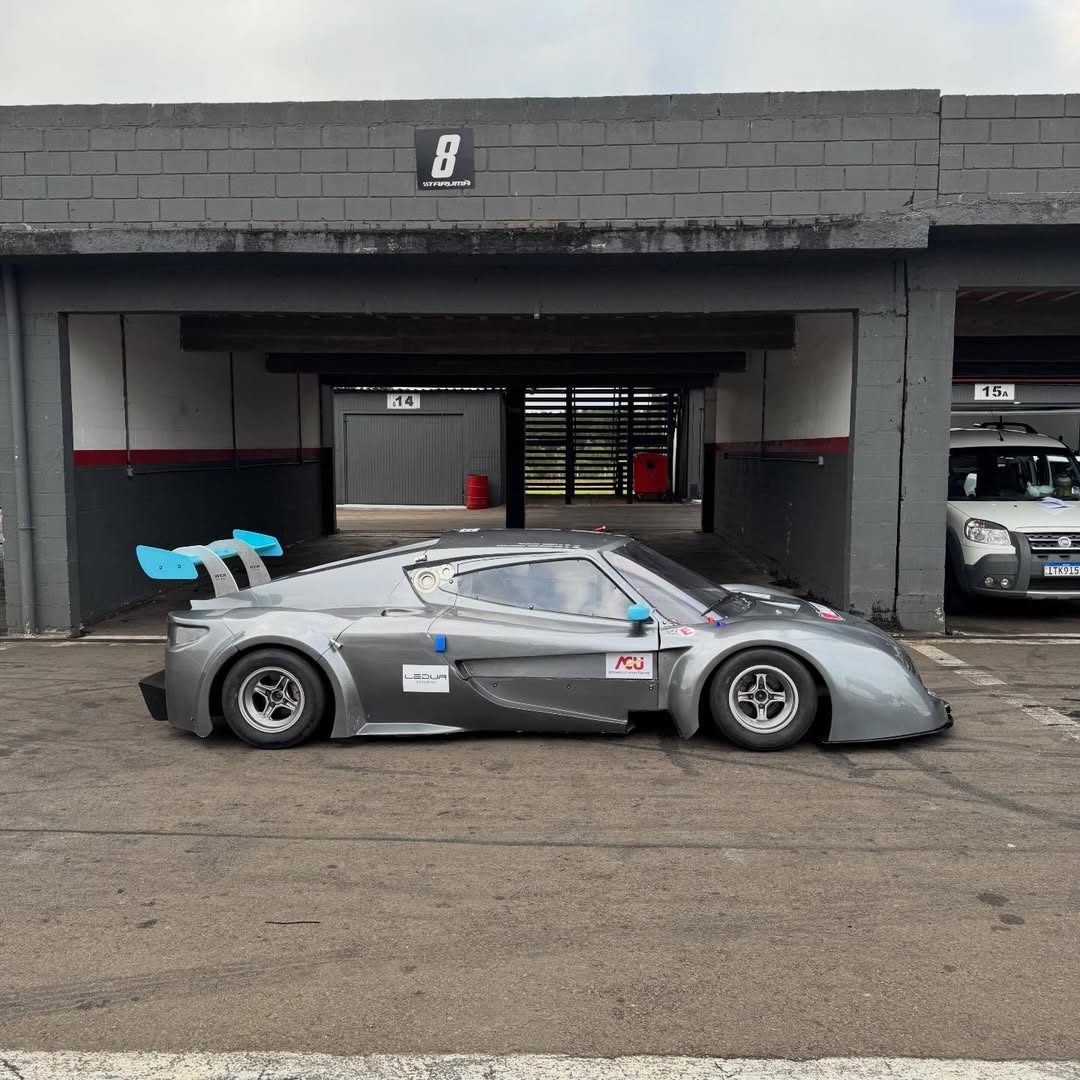
Created in the mid-2000s, Maurício Domingues’ project finally hit the track in the P4 class of the Gaúcho Endurance championship.
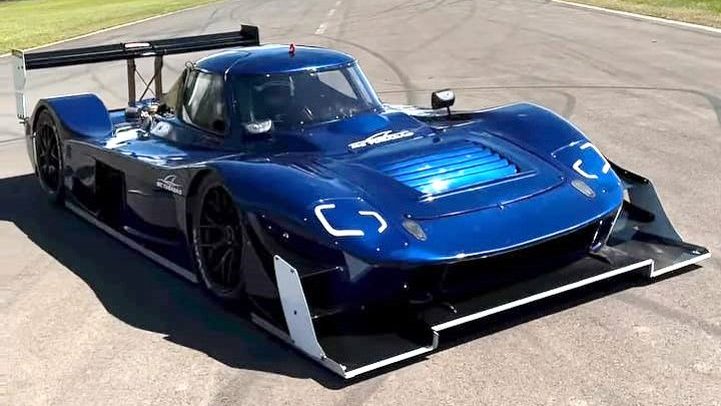
Built upon the first MR18 ever manufactured and incorporating concepts from the Superturismo RS MC40, MC Tubarão’s new prototype brings a hypercar vibe to Brazilian endurance racing.